

World Pneumonia Day 2026: Warning Signs, Causes, Prevention & Treatment

World Pneumonia Day 2026 is observed on November 12 to raise awareness about one of the world’s most serious respiratory infections. Pneumonia can affect people of every age, but young children, older adults and people with weakened immune systems are particularly vulnerable.
Have you ever wondered why an ordinary cough or fever sometimes develops into a serious lung infection? The answer may be pneumonia. It is a disease that affects the tiny air sacs inside our lungs and can make breathing difficult.
World Pneumonia Day reminds us that awareness, timely medical attention, vaccination, good nutrition and cleaner air can help protect lives.
इस दिन का उद्देश्य लोगों को निमोनिया के बारे में सही जानकारी देना है। कई बार सामान्य खांसी, बुखार और सांस लेने में परेशानी को लोग मामूली समझकर नजरअंदाज कर देते हैं। लेकिन कुछ मामलों में ये निमोनिया के संकेत हो सकते हैं। समय पर पहचान और सही इलाज से गंभीर समस्याओं का खतरा कम किया जा सकता है।
This article explains pneumonia in simple English and Hindi, including its causes, early warning signs, risk factors, prevention methods, treatment options and important facts.
Quick Information: World Pneumonia Day 2026
| Information | Details |
| Observance | World Pneumonia Day |
| Date | 12 November 2026 |
| Day | Thursday |
| First observed | 2009 |
| Main subject | Pneumonia awareness |
| Health focus | Lung health and respiratory infections |
| Main objective | Prevention, early diagnosis and treatment |
| Most vulnerable groups | Young children, older adults and people with certain health conditions |
| Important prevention measures | Vaccination, clean air, hygiene and proper nutrition |
Why is this World Pneumonia Day 2026 is important?
Pneumonia remains a major global health challenge. UNICEF reports that pneumonia claims the lives of more than 700,000 children under five every year. Many of these deaths are preventable with timely healthcare, vaccination and appropriate treatment.
Table of Contents
- What Is World Pneumonia Day?
- What Is Pneumonia? Understanding the Disease
- How Do Healthy Lungs Work?
- What Happens Inside the Lungs During Pneumonia?
- Main Causes of Pneumonia
- Common Symptoms and Early Warning Signs
- Pneumonia in Children: Symptoms Parents Should Know
- Who Is at Higher Risk?
- Types of Pneumonia Explained
10. Pneumonia vs Common Cold vs Flu
- How Is Pneumonia Diagnosed?
- Treatment Options and Medical Care
- 10 Practical Ways to Prevent Pneumonia
- Vaccination and Its Role in Prevention
- Air Pollution and Pneumonia: Understanding the Connection
- Important Pneumonia Facts and Statistics
- Myths vs Facts About Pneumonia
- What Should You Do If Someone Has Pneumonia?
- Frequently Asked Questions (FAQs)
- Key Takeaways
- Conclusion
- PREVIOUS POST : National Education Day 2026: What Makes China’s Education Unique?
1. What Is World Pneumonia Day?
World Pneumonia Day is an international health awareness observance held every year on November 12.
It was first observed in 2009 to draw attention to pneumonia and encourage governments, healthcare organisations and communities to take action against the disease.
The day focuses on three important goals:
- Increasing public awareness about pneumonia.
- Improving access to vaccination, diagnosis and treatment.
- Protecting children and vulnerable communities from preventable deaths.
हिंदी में समझिए: ( World Pneumonia Day 2026 )
World Pneumonia Day हर साल 12 नवंबर को मनाया जाता है। इसकी शुरुआत वर्ष 2009 में हुई थी। इसका मुख्य उद्देश्य निमोनिया के प्रति लोगों को जागरूक करना और इस बीमारी से होने वाली गंभीर स्वास्थ्य समस्याओं को कम करना है।
इस दिन अस्पतालों, स्वास्थ्य संगठनों, स्कूलों और सामाजिक संस्थाओं के माध्यम से लोगों को फेफड़ों की सेहत, टीकाकरण और समय पर इलाज के बारे में जानकारी दी जाती है।
2. What Is Pneumonia? Understanding the Disease
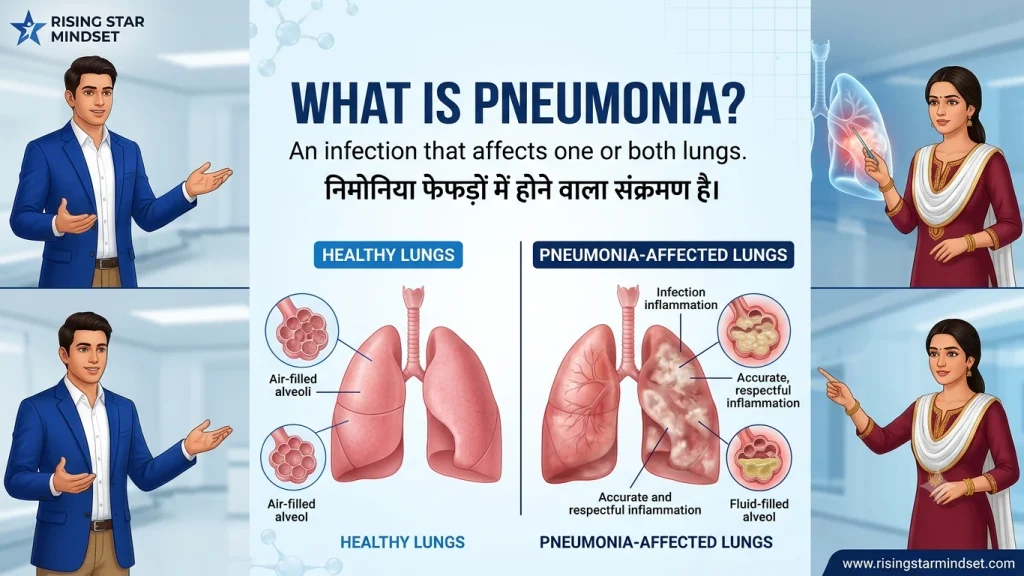
Pneumonia is an infection that causes inflammation in one or both lungs. It usually affects the alveoli, which are tiny air sacs responsible for exchanging oxygen and carbon dioxide.
During pneumonia, these air sacs may fill with fluid or pus. As a result, breathing can become difficult and the body may not receive enough oxygen.
Pneumonia can be caused by bacteria, viruses or fungi. Its severity ranges from mild to life-threatening.
हिंदी में निमोनिया क्या है? ( World Pneumonia Day 2026 )
निमोनिया फेफड़ों में होने वाला एक संक्रमण है। इसमें फेफड़ों की छोटी-छोटी वायु थैलियों (Alveoli) में सूजन आ सकती है और उनमें तरल पदार्थ या मवाद भर सकता है।
इस कारण व्यक्ति को सांस लेने में परेशानी, खांसी, बुखार और सीने में दर्द हो सकता है।
यह बीमारी बच्चों से लेकर बुजुर्गों तक किसी को भी हो सकती है।
3. How Do Healthy Lungs Work? ( World Pneumonia Day 2026 )
To understand pneumonia, it is important to know how our lungs normally function.
Our lungs are essential organs of the respiratory system. When we breathe in, oxygen enters the lungs and reaches millions of tiny air sacs called alveoli.
The oxygen passes into the blood, while carbon dioxide moves from the blood into the lungs and leaves the body when we breathe out.
Important Parts of the Respiratory System
| Part | Function |
| Nose | Filters and warms incoming air |
| Trachea | Carries air towards the lungs |
| Bronchi | Distribute air into both lungs |
| Bronchioles | Carry air into smaller lung passages |
| Alveoli | Exchange oxygen and carbon dioxide |
| Diaphragm | Helps the lungs expand during breathing |
हिंदी में समझिए: ( World Pneumonia Day 2026 )
जब हम सांस लेते हैं, तो हवा नाक से होकर श्वासनली और फेफड़ों तक पहुंचती है। फेफड़ों में मौजूद लाखों छोटी वायु थैलियां ऑक्सीजन को रक्त तक पहुंचाने और कार्बन डाइऑक्साइड को बाहर निकालने में मदद करती हैं।
यही कारण है कि फेफड़ों में संक्रमण होने पर सांस लेने की सामान्य प्रक्रिया प्रभावित हो सकती है।
4. What Happens Inside the Lungs During Pneumonia?
In healthy lungs, the alveoli are generally filled with air. During pneumonia, infection causes inflammation and may lead to fluid accumulation inside these tiny air sacs.
This reduces the efficiency of oxygen exchange.
| Healthy Lungs | Lungs Affected by Pneumonia |
| Air sacs mainly contain air | Air sacs may contain fluid or pus |
| Oxygen exchange works normally | Oxygen exchange may become difficult |
| Breathing is usually comfortable | Breathing may become painful or difficult |
| No infection-related inflammation | Inflammation due to infection |
हिंदी में: ( World Pneumonia Day 2026 )
स्वस्थ फेफड़ों में वायु थैलियां हवा से भरी होती हैं। लेकिन निमोनिया होने पर उनमें तरल पदार्थ या मवाद जमा हो सकता है। इससे शरीर को पर्याप्त ऑक्सीजन मिलने में परेशानी हो सकती है।
इसी वजह से निमोनिया को केवल सामान्य खांसी की बीमारी समझना सही नहीं है।
5. Main Causes of Pneumonia ( World Pneumonia Day 2026)
Pneumonia does not have just one cause. Different microorganisms can cause this infection.
A. Bacterial Infection
Bacterial pneumonia is caused by bacteria. Streptococcus pneumoniae is one of the major bacterial causes.
It may produce symptoms such as fever, cough, chest discomfort and breathing difficulties.
B. Viral Infection
Viruses such as influenza viruses and respiratory syncytial virus (RSV) can cause pneumonia.
Viral respiratory infections sometimes spread from the upper respiratory tract to the lungs.
C. Fungal Infection
Certain fungi can cause pneumonia, particularly in people with weakened immune systems or specific environmental exposures.
Other Factors That Increase Risk ( World Pneumonia Day 2026 )
- Exposure to tobacco smoke.
- Indoor air pollution.
- Outdoor air pollution.
- Poor nutrition.
- Lack of vaccination.
- Certain chronic health conditions.
- Reduced immunity.
हिंदी में: ( World Pneumonia Day 2026 )
निमोनिया के प्रमुख कारण बैक्टीरिया, वायरस और फंगस हैं। इसके अलावा धूम्रपान, प्रदूषित हवा, कमजोर रोग प्रतिरोधक क्षमता और कुपोषण भी बीमारी का खतरा बढ़ा सकते हैं।
ध्यान रखें कि निमोनिया के सभी मामले एक जैसे नहीं होते। बीमारी का कारण जानना सही इलाज चुनने के लिए जरूरी है।
6. Common Symptoms and Early Warning Signs

Recognising pneumonia symptoms early can help people seek medical care before the condition becomes severe.
Common Symptoms
| Symptom | English Explanation | हिंदी में अर्थ |
| Cough | Persistent or worsening cough | लगातार या बढ़ती खांसी |
| Fever | Higher body temperature | बुखार |
| Chills | Feeling unusually cold or shivering | ठंड लगना या कंपकंपी |
| Chest Pain | Pain while breathing or coughing | सांस लेने या खांसने पर सीने में दर्द |
| Shortness of Breath | Difficulty in breathing | सांस फूलना |
| Fatigue | Feeling unusually tired | अत्यधिक थकान |
| Sweating | Excessive sweating | अधिक पसीना आना |
| Confusion | Changes in awareness, especially in older adults | भ्रम या मानसिक स्थिति में बदलाव |
Not everyone experiences all these symptoms. Some older adults may develop confusion or weakness without having a high fever.
When Should You Seek Medical Help?
Do not ignore the following warning signs:
- Difficulty breathing.
- Rapid or laboured breathing.
- Severe chest pain.
- Bluish lips or face.
- New confusion or unusual drowsiness.
- Inability to drink or keep fluids down.
These symptoms need urgent medical assessment. Severe breathing difficulty, blue lips or reduced consciousness require emergency care.
हिंदी में जरूरी सलाह: ( World Pneumonia Day 2026 )
अगर किसी व्यक्ति को तेज सांस फूलना, सीने में तेज दर्द, होंठों का नीला पड़ना या बेहोशी जैसी परेशानी हो रही है, तो तुरंत चिकित्सा सहायता लें।
केवल घरेलू उपचार के भरोसे न रहें।
7. Pneumonia in Children: Symptoms Parents Should Know ( World Pneumonia Day 2026 )
Young children, particularly babies and children under five, are vulnerable to serious pneumonia.
Parents should pay close attention to changes in a child’s breathing, feeding and activity.
Important Warning Signs in Children
- Cough accompanied by difficulty breathing.
- Breathing faster than normal.
- Chest pulling inward during breathing.
- Difficulty drinking milk or eating.
- Unusual sleepiness or reduced activity.
- Convulsions or unconsciousness in severe cases.
A child with these warning signs should be assessed by a healthcare professional promptly.

बच्चों में निमोनिया के संकेत: ( World Pneumonia Day 2026 )
छोटे बच्चों में निमोनिया की पहचान करना कभी-कभी मुश्किल हो सकता है। यदि बच्चा तेजी से सांस ले रहा है, दूध नहीं पी पा रहा है, सांस लेते समय छाती अंदर की ओर खिंच रही है या असामान्य रूप से सुस्त है, तो तुरंत डॉक्टर से संपर्क करें।
छोटे बच्चों में इलाज में देरी खतरनाक हो सकती है।
8. Who Is at Higher Risk? ( World Pneumonia Day 2026 )
Although pneumonia can affect anyone, certain groups are more vulnerable.
| Group | Why They May Be at Higher Risk |
| Infants and young children | Their immune systems are still developing |
| Adults aged 65 and above | Immunity and lung function may decline with age |
| People with asthma or COPD | Existing respiratory problems may increase complications |
| People with diabetes | Certain infections may be more difficult to manage |
| People with weakened immunity | The body may have difficulty fighting infections |
| Smokers | Tobacco smoke damages the lungs’ natural defence mechanisms |
| Malnourished individuals | Poor nutrition can weaken immune responses |
हिंदी में: ( World Pneumonia Day 2026 )
बच्चों, बुजुर्गों, धूम्रपान करने वालों और पहले से किसी गंभीर बीमारी से प्रभावित लोगों को निमोनिया के प्रति अधिक सतर्क रहना चाहिए।
इन लोगों में लक्षण दिखाई देने पर जल्द डॉक्टर से जांच करवाना विशेष रूप से महत्वपूर्ण है।
9. Types of Pneumonia Explained
Pneumonia can be classified in different ways, including the organism responsible and the place where the infection develops.
| Type | Meaning |
| Bacterial Pneumonia | Caused by bacteria |
| Viral Pneumonia | Caused by viruses |
| Fungal Pneumonia | Caused by fungi |
| Community-Acquired Pneumonia (CAP) | Develops outside a hospital or healthcare facility |
| Hospital-Acquired Pneumonia (HAP) | Develops during a hospital stay |
| Aspiration Pneumonia | Develops when food, liquid or other material enters the lungs |
The type of pneumonia matters because the cause influences diagnosis and treatment.
हिंदी में: ( World Pneumonia Day 2026 )
निमोनिया के अलग-अलग प्रकार होते हैं। कुछ संक्रमण बैक्टीरिया से, कुछ वायरस से और कुछ फंगस से होते हैं। इसके अलावा संक्रमण कहां हुआ है, इसके आधार पर भी इसे अलग-अलग श्रेणियों में बांटा जाता है।
हर प्रकार का इलाज एक जैसा नहीं होता।
10. Pneumonia vs Common Cold vs Flu

Many people confuse pneumonia with a common cold or seasonal flu. Although some symptoms overlap, these conditions are different.
| Feature | Common Cold | Influenza (Flu) | Pneumonia |
| Main cause | Different respiratory viruses | Influenza viruses | Bacteria, viruses or fungi |
| Fever | Usually mild or absent | Often present | May be present |
| Cough | Usually mild | Often dry | May be persistent or severe |
| Breathing difficulty | Uncommon | Can occur in complications | An important warning sign |
| Chest pain | Uncommon | Sometimes | Can occur |
| Severity | Usually mild | Can range from mild to severe | Can be serious or life-threatening |
| Medical attention | Often not required | Depends on symptoms and risk | Important when suspected |
Important: Flu and other respiratory infections can sometimes lead to pneumonia.
हिंदी में अंतर समझिए: ( World Pneumonia Day 2026 )
सर्दी-जुकाम में आमतौर पर नाक बहना, छींक और हल्की खांसी होती है। फ्लू में बुखार, शरीर दर्द और थकान अधिक हो सकती है। वहीं निमोनिया में फेफड़ों का संक्रमण होने के कारण सांस लेने में परेशानी और सीने में दर्द हो सकता है।
सिर्फ लक्षण देखकर बीमारी की पुष्टि नहीं की जा सकती। सही जांच के लिए डॉक्टर की सलाह जरूरी है।
11. How Is Pneumonia Diagnosed?
Doctors use a combination of medical history, physical examination and diagnostic tests to identify pneumonia.
Common Diagnostic Methods
| Test | Purpose |
| Physical Examination | Checks breathing sounds and general condition |
| Chest X-ray | Helps identify lung inflammation or areas of infection |
| Pulse Oximetry | Measures oxygen saturation |
| Blood Tests | May help identify infection and inflammation |
| Sputum Test | May help identify the microorganism causing infection |
| CT Scan | Used in selected cases when additional imaging is needed |

Not every patient needs every test. The doctor decides based on symptoms, age and severity.
हिंदी में: ( World Pneumonia Day 2026 )
निमोनिया की जांच के लिए डॉक्टर मरीज की खांसी, बुखार और सांस लेने की स्थिति देखते हैं। जरूरत पड़ने पर Chest X-ray, Blood Test और Oxygen Level की जांच की जाती है।
जांच का उद्देश्य संक्रमण की गंभीरता और उसके संभावित कारण को समझना है।
12. Treatment Options and Medical Care
Pneumonia treatment depends on its cause, severity and the patient’s overall health.
Bacterial Pneumonia
Doctors may prescribe antibiotics when bacterial pneumonia is diagnosed or strongly suspected.
Patients should follow the prescribed dose and duration. Antibiotics should not be taken without medical advice.
Viral Pneumonia
Antibiotics do not treat viral infections. Depending on the virus and patient’s condition, doctors may recommend supportive care or specific antiviral medicines.
Severe Pneumonia
Some patients may require hospital treatment, oxygen support, intravenous fluids or other medical interventions.
Supportive Care ( World Pneumonia Day 2026 )
Doctors may recommend:
- Adequate rest.
- Sufficient fluids, if medically appropriate.
- Monitoring of breathing and oxygen levels.
- Appropriate fever management.
- Follow-up medical appointments.
हिंदी में इलाज: ( World Pneumonia Day 2026 )
निमोनिया का इलाज उसके कारण और गंभीरता पर निर्भर करता है। बैक्टीरियल निमोनिया में डॉक्टर एंटीबायोटिक दे सकते हैं, जबकि वायरल निमोनिया में एंटीबायोटिक काम नहीं करते।
गंभीर स्थिति में अस्पताल में भर्ती और ऑक्सीजन की जरूरत पड़ सकती है।
महत्वपूर्ण: बिना डॉक्टर की सलाह के एंटीबायोटिक शुरू न करें और अपनी मर्जी से दवा बंद भी न करें।
13. 10 Practical Ways to Prevent Pneumonia
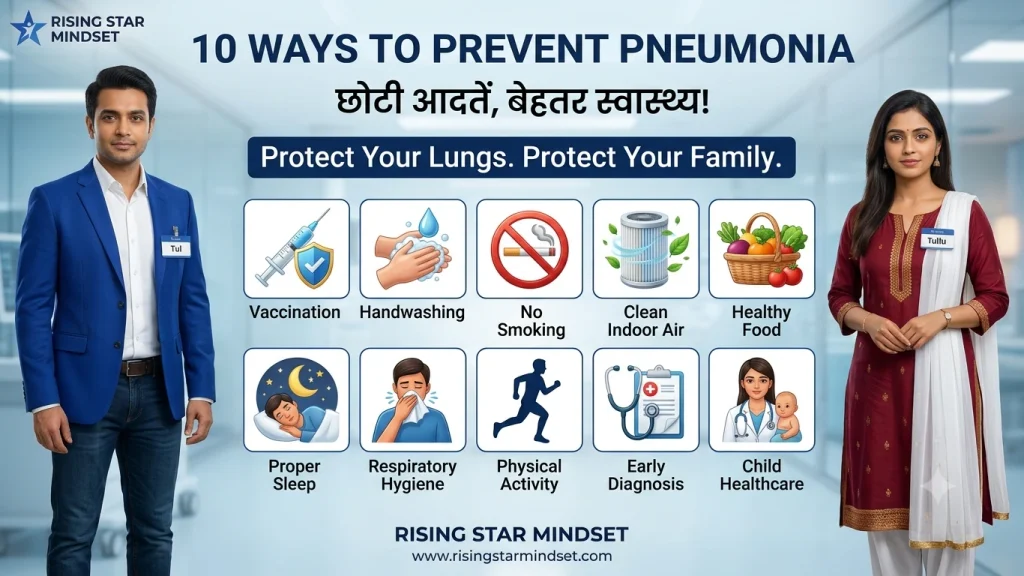
Prevention plays an important role in reducing the risk of pneumonia.
Here are ten practical measures that individuals and families can follow.
| No. | Prevention Method | How It Helps |
| 1 | Get recommended vaccinations | Helps protect against several infections that can cause pneumonia |
| 2 | Wash hands regularly | Reduces the spread of germs |
| 3 | Avoid smoking | Protects lung health |
| 4 | Avoid second-hand smoke | Reduces exposure to harmful substances |
| 5 | Improve indoor air quality | Limits exposure to indoor pollutants |
| 6 | Eat a balanced diet | Supports normal immune function |
| 7 | Ensure adequate sleep | Supports overall health |
| 8 | Maintain respiratory hygiene | Helps reduce the spread of respiratory infections |
| 9 | Seek early medical care | Helps prevent delays in diagnosis and treatment |
| 10 | Follow child healthcare advice | Helps protect young children through immunisation and nutrition |
A Simple Daily Lung-Health Routine
- Keep your home well ventilated.
- Wash your hands before eating.
- Avoid smoking and tobacco exposure.
- Eat nutritious meals.
- Stay physically active according to your health condition.
- Avoid close contact with people who have contagious respiratory symptoms.
- Keep vaccinations up to date.
हिंदी में: ( World Pneumonia Day 2026 )
फेफड़ों को स्वस्थ रखने के लिए साफ हवा, पौष्टिक भोजन, नियमित हाथ धोना और धूम्रपान से दूरी बनाना जरूरी है।
बच्चों और बुजुर्गों के टीकाकरण का विशेष ध्यान रखें। यदि सांस संबंधी परेशानी हो तो समय पर डॉक्टर से सलाह लें।
14. Vaccination and Its Role in Prevention
Vaccination is one of the most effective ways to reduce the risk of several infections that can cause pneumonia.
Some important vaccines include:
| Vaccine | Protection |
| Pneumococcal Vaccine | Protects against certain pneumococcal infections |
| Hib Vaccine | Protects against Haemophilus influenzae type b |
| Influenza Vaccine | Helps prevent influenza and its complications |
| Measles Vaccine | Helps prevent measles, which can lead to pneumonia |
| Pertussis Vaccine | Helps prevent whooping cough and its complications |
Vaccine recommendations vary according to age, medical history and national immunisation guidelines. Consult a healthcare professional about the appropriate vaccination schedule.
भारत में माता–पिता के लिए जानकारी:
बच्चों के नियमित टीकाकरण का रिकॉर्ड सुरक्षित रखें। सरकारी टीकाकरण कार्यक्रम और डॉक्टर की सलाह के अनुसार सभी जरूरी टीके समय पर लगवाएं।
हर व्यक्ति के लिए एक ही टीकाकरण योजना उपयुक्त नहीं होती।
15. Air Pollution and Pneumonia: Understanding the Connection
Air pollution is an important environmental risk factor for respiratory diseases.
Smoke from vehicles, industries, burning waste, household fuels and tobacco can expose people to harmful pollutants.
Children are particularly vulnerable because their lungs and bodies are still developing.
UNICEF’s July 2026 report highlights the connection between environmental pollution and respiratory illness in children. It also emphasises the importance of cleaner household fuels, reduced smoke exposure and better air quality.
Common Sources of Air Pollution
| Source | Possible Health Impact |
| Vehicle emissions | Exposure to harmful particles and gases |
| Industrial smoke | Respiratory irritation and pollution exposure |
| Burning garbage | Releases harmful smoke |
| Tobacco smoke | Damages respiratory health |
| Indoor cooking smoke | Increases indoor air pollution |
| Dust and construction activities | Can irritate the respiratory system |
हिंदी में: ( World Pneumonia Day 2026 )
प्रदूषित हवा हमारे फेफड़ों के लिए नुकसानदायक हो सकती है। गाड़ियों का धुआं, कचरा जलाना, फैक्ट्रियों का धुआं और रसोई में निकलने वाला धुआं सांस संबंधी बीमारियों का खतरा बढ़ा सकते हैं।
बच्चों को विशेष रूप से धुएं और प्रदूषण से बचाना चाहिए।
16. Important Pneumonia Facts and Statistics
Understanding the global impact of pneumonia helps explain why awareness is important.
| Fact | Information |
| Global impact | Pneumonia is a leading infectious cause of death among children under five |
| Annual child deaths | UNICEF reports more than 700,000 deaths among children under five every year |
| Major causes | Bacteria, viruses and fungi |
| Main affected organ | Lungs |
| Main prevention methods | Vaccination, nutrition, hygiene and cleaner air |
| Treatment | Depends on the cause and severity |
| High-risk age groups | Young children and older adults |
A fact worth remembering: ( World Pneumonia Day 2026 )
UNICEF estimates that a child dies from pneumonia every 43 seconds globally. This highlights the importance of timely diagnosis, preventive healthcare and access to treatment.
The figures are global estimates, not a count of deaths occurring on World Pneumonia Day.
17. Myths vs Facts About Pneumonia
There are many misunderstandings about pneumonia. Knowing the facts can help people make better health decisions.
| Myth | Fact |
| Pneumonia affects only children | It can affect people of every age |
| Pneumonia is always caused by bacteria | Viruses and fungi can also cause it |
| Antibiotics cure every type of pneumonia | Antibiotics work against bacterial infections, not viral infections |
| Pneumonia always causes a high fever | Some patients, particularly older adults, may not develop a high fever |
| Only cold weather causes pneumonia | Pneumonia is an infection, not simply a result of cold weather |
| A person with pneumonia always needs hospitalisation | Many cases can be treated outside hospital under medical supervision |
| A cough always means pneumonia | Many other conditions can cause a cough |
हिंदी में: ( World Pneumonia Day 2026 )
निमोनिया को लेकर कई गलत धारणाएं हैं। ठंड लगने मात्र से निमोनिया नहीं होता। यह संक्रमण के कारण होता है। इसी तरह हर निमोनिया में एंटीबायोटिक की जरूरत नहीं होती।
सही जानकारी और चिकित्सकीय सलाह ही सबसे बेहतर रास्ता है।
18. What Should You Do If Someone Has Pneumonia?
If someone in your family is diagnosed with pneumonia, proper care and medical guidance are important.
Helpful Steps for Family Members
- Follow the doctor’s treatment instructions.
- Ensure the patient takes prescribed medicines correctly.
- Encourage rest and adequate fluids, as advised.
- Keep the surroundings clean and ventilated.
- Avoid exposing the patient to cigarette smoke.
- Monitor symptoms and breathing.
- Attend follow-up appointments.
- Seek urgent medical attention if symptoms worsen.
What Should You Avoid?
- Do not self-prescribe antibiotics.
- Do not ignore worsening breathing problems.
- Do not stop prescribed treatment without medical advice.
- Do not depend entirely on home remedies.
- Do not delay emergency care when serious warning signs appear.
परिवार के लिए जरूरी सलाह: ( World Pneumonia Day 2026 )
मरीज को समय पर दवा देना, आराम का ध्यान रखना और डॉक्टर की सलाह का पालन करना जरूरी है। यदि सांस लेने में परेशानी बढ़ती है या मरीज की हालत बिगड़ती है तो तुरंत अस्पताल जाएं।
19. Frequently Asked Questions (FAQs)
Q1. When is World Pneumonia Day 2026?
World Pneumonia Day 2026 will be observed on November 12, Thursday.
हिंदी: वर्ष 2026 में World Pneumonia Day 12 नवंबर, गुरुवार को मनाया जाएगा।
Q2. Why is World Pneumonia Day celebrated?
It is observed to increase awareness about pneumonia prevention, early diagnosis, treatment and access to healthcare.
हिंदी: इस दिन का उद्देश्य निमोनिया से बचाव, समय पर पहचान और सही इलाज के प्रति जागरूकता बढ़ाना है।
Q3. What is the main cause of pneumonia?
Pneumonia can be caused by bacteria, viruses or fungi.
हिंदी: निमोनिया बैक्टीरिया, वायरस या फंगस के संक्रमण से हो सकता है।
Q4. What are the first signs of pneumonia?
Common signs include cough, fever, difficulty breathing, fatigue and chest pain. Symptoms vary from person to person.
हिंदी: खांसी, बुखार, सांस लेने में परेशानी, थकान और सीने में दर्द इसके सामान्य संकेत हो सकते हैं।
Q5. Is pneumonia contagious?
Some germs that cause pneumonia can spread from person to person through respiratory droplets or contact. However, not every type of pneumonia spreads in the same way.
हिंदी: निमोनिया पैदा करने वाले कुछ संक्रमण एक व्यक्ति से दूसरे व्यक्ति तक फैल सकते हैं, लेकिन सभी प्रकार एक जैसे संक्रामक नहीं होते।
Q6. Can pneumonia be prevented?
The risk can be reduced through recommended vaccinations, good hygiene, proper nutrition and reduced exposure to smoke and air pollution.
हिंदी: टीकाकरण, साफ-सफाई, पौष्टिक भोजन और प्रदूषण से बचाव के जरिए जोखिम कम किया जा सकता है।
Q7. Can pneumonia be treated?
Yes. Many cases can be treated successfully with appropriate medical care. Treatment depends on the cause and severity.
हिंदी: हां, सही समय पर उचित चिकित्सा मिलने पर निमोनिया के कई मामलों का इलाज संभव है।
Q8. Is pneumonia dangerous for babies?
Yes. Babies and young children can develop serious complications, so early medical assessment is important.
हिंदी: हां, छोटे बच्चों में निमोनिया गंभीर हो सकता है। लक्षण दिखाई देने पर तुरंत डॉक्टर से संपर्क करना चाहिए।
Q9. Do antibiotics work against viral pneumonia?
No. Antibiotics treat bacterial infections, not viral infections. A doctor decides the appropriate treatment.
हिंदी: नहीं। एंटीबायोटिक बैक्टीरिया के संक्रमण के लिए होती हैं, वायरस के लिए नहीं।
Q10. Can air pollution increase the risk of pneumonia?
Exposure to air pollution can damage respiratory health and increase the risk of respiratory infections, particularly in children.
हिंदी: हां, प्रदूषण फेफड़ों की सेहत को प्रभावित कर सकता है और सांस संबंधी संक्रमणों का खतरा बढ़ा सकता है।
20. Key Takeaways: What Should We Remember?
World Pneumonia Day gives us an opportunity to learn about an important health issue and take practical steps to protect ourselves and our families.
Remember these seven points:
- Pneumonia is an infection that affects the lungs.
- It can be caused by bacteria, viruses or fungi.
- Children and older adults may face a higher risk of severe illness.
- Difficulty breathing is an important warning sign.
- Vaccination can help prevent several infections associated with pneumonia.
- Cleaner air, good nutrition and hygiene support respiratory health.
- Early medical attention can make a significant difference.
A Message for Everyone ( World Pneumonia Day 2026 )
Healthy lungs are essential for a healthy life. Awareness is the first step towards prevention.
स्वस्थ फेफड़े स्वस्थ जीवन का आधार हैं। निमोनिया के लक्षणों को पहचानें, सही जानकारी अपनाएं और जरूरत पड़ने पर समय पर चिकित्सा सहायता लें।
21. Conclusion: Small Steps Can Help Protect Lives
World Pneumonia Day 2026 is more than an awareness event. It is a reminder that many serious health problems can be reduced through knowledge, prevention and timely medical care.
Pneumonia affects millions of people across the world, especially vulnerable children. However, vaccination, proper nutrition, clean air, good hygiene and access to healthcare can help reduce its impact.
We should not ignore persistent cough, fever or breathing difficulties, particularly in young children and older adults.
Let us use this World Pneumonia Day to spread awareness, encourage preventive healthcare and help more families understand the importance of healthy lungs.
जानकारी साझा करें, जागरूकता बढ़ाएं और स्वास्थ्य को प्राथमिकता दें।

Disclaimer: This article is intended for general health awareness and educational purposes only. It does not replace professional medical advice, diagnosis or treatment. Always consult a qualified healthcare professional if pneumonia is suspected or serious symptoms occur.
Article prepared for: Rising Star Mindset
Website: www.risingstarmindset.com