

World Day for Audiovisual Heritage 2026: Theme, Facts, Data and Why Old Recordings Matter ( Your Window to the World )

Date: October 27, 2026 ( Your Window to the World )
2026 Theme: Your Window to the World
Category: Education, Culture and Awareness
Have you ever wondered what your grandparents’ voices sounded like when they were young? Or how your village, city, or country looked several decades ago?
Old films, radio broadcasts, music recordings, interviews, and family videos can answer questions that written history alone may not fully explain. They preserve voices, sights, languages, traditions, and everyday experiences that might otherwise disappear.
However, many audiovisual records face serious preservation challenges. Old tapes deteriorate, playback machines become obsolete, and digital files can be lost without proper backups.
That is why World Day for Audiovisual Heritage 2026, observed on October 27, is an important opportunity to understand how recorded memories can be protected for future generations.
This article explores the day’s history, the official 2026 theme, important preservation data, a simple data graph, India’s cultural perspective, and practical ways to safeguard valuable recordings.
Table of Contents ( Your Window to the World )
- What Is World Day for Audiovisual Heritage?
- What Is the 2026 Theme?
- Important Facts and Figures
- Audiovisual Heritage Data Graph
- Why Are Old Recordings at Risk?
- How Audiovisual Heritage Helps Society
- India’s Cultural Heritage and Local Memories
- How to Preserve Old Recordings
- English and Hindi Explanation
- Frequently Asked Questions
- Conclusion
- Previous Post : The Courage to Begin Again: A Powerful Life Lesson
1. What Is World Day for Audiovisual Heritage? ( Your Window to the World )
World Day for Audiovisual Heritage is observed every year on October 27 to raise awareness about the importance of preserving films, videos, sound recordings, and other audiovisual documents.
UNESCO’s General Conference adopted the Recommendation for the Safeguarding and Preservation of Moving Images on October 27, 1980. In 2005, UNESCO proclaimed October 27 as World Day for Audiovisual Heritage.
The observance recognizes the work of archives, libraries, museums, broadcasters, preservation specialists, and communities that protect historical recordings.
Audiovisual heritage is more than old entertainment. It can serve as a valuable record of social change, historical events, cultural traditions, languages, and human experiences.
For example, a radio broadcast from decades ago may preserve the way people spoke, the music they enjoyed, and the news they heard. Similarly, an old documentary may show how a town or community changed over time.
Official reference: UNESCO — World Day for Audiovisual Heritage
2. What Is the Theme of World Day for Audiovisual Heritage 2026? ( Your Window to the World )
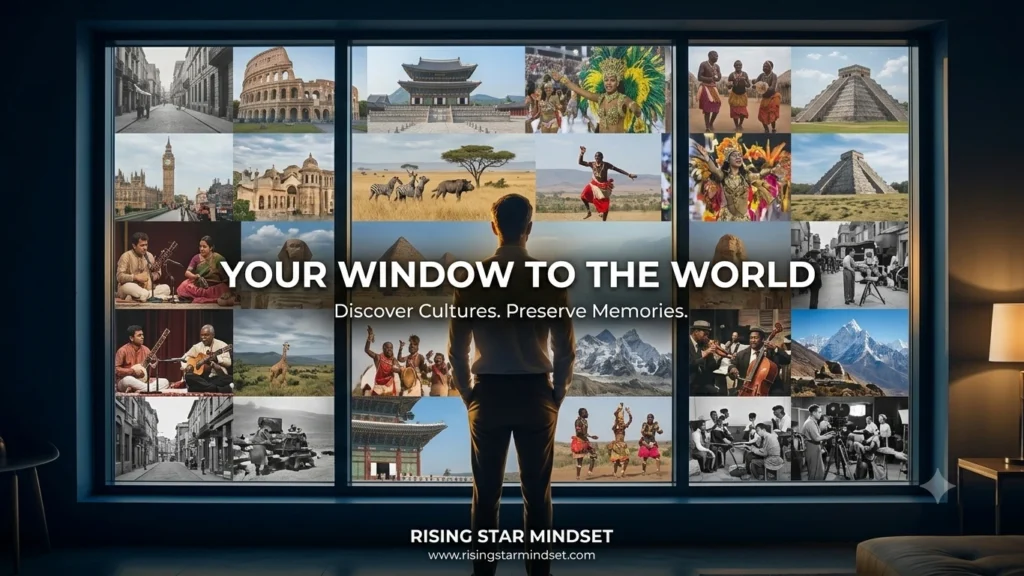
The official theme for 2026 is:
“Your Window to the World”
The theme highlights how audiovisual records help people understand societies, cultures, and experiences beyond their immediate surroundings.
Think of a window. It allows you to see what is happening outside your room. In a similar way, historical recordings can offer a view into the lives of people who lived in different places and periods.
A traditional song recorded many years ago may preserve a local musical style. An old newsreel may document an important public event. A family video may capture a custom that is no longer commonly practised.
These recordings allow future generations to experience parts of the past through sound and moving images.
The 2026 theme is also a reminder that access matters. Preserving a recording is important, but making it discoverable and understandable, where appropriate, is equally valuable.
3. Important Facts and Figures About Audiovisual Heritage

Data helps explain why audiovisual preservation deserves attention. The following figures come from documented UNESCO projects and publications. They refer to specific surveys and initiatives, not a complete count of every audiovisual record worldwide.
Key facts at a glance ( Your Window to the World )
| Fact or data point | What it tells us |
| October 27 | Annual date of World Day for Audiovisual Heritage |
| 1980 | Year UNESCO adopted its Recommendation on safeguarding and preserving moving images |
| 2005 | Year UNESCO proclaimed the annual observance |
| Approximately 45,000 analogue tape recordings | Recordings held by Radio Mogadishu that UNESCO reported efforts to preserve and digitize in 2026 |
| More than 8.5 million audiovisual items | Items reported to UNESCO and the International Association of Sound and Audiovisual Archives by October 2020 through the Magnetic Tape Alert Project |
| 76 countries | Countries represented in the Magnetic Tape Alert Project responses reported by October 2020 |
| Up to 80% | An estimate in a UNESCO publication that audiovisual collections held by research institutions and cultural bodies may not be adequately safeguarded |
Important note about the data: The 8.5 million figure is a reported survey total, not the total
discussed in a UNESCO publication, not a newly measured global percentage for 2026.
Sources:
- UNESCO: World Day for Audiovisual Heritage 2026
- UNESCO: Magnetic Tape Alert Project data
- UNESCO: Towards Sustainable Preservation and Accessibility of Documentary Heritage
What does the 45,000-recording project mean? ( Your Window to the World )
In 2026, UNESCO reported preservation work focused on approximately 45,000 analogue tape recordings held by Radio Mogadishu in Somalia.
These recordings include material such as local news, political speeches, music, entertainment programmes, and everyday stories. Together, they help document the country’s history and cultural identity.
The project demonstrates why old recordings matter: they can preserve not only major public events but also the voices and experiences of ordinary people.
It also shows that preservation involves more than scanning or copying. Specialists must consider the condition of the original media, the equipment needed to read it, and the long-term accessibility of the resulting digital files.
4. Audiovisual Heritage Data Graph ( Your Window to the World )

The Magnetic Tape Alert Project gathered information about audiovisual holdings reported by participating institutions. By October 2020, more than 8.5 million items had been reported, including approximately 4.4 million audio items and 4.1 million video items.
5. Why Are Old Recordings at Risk? ( Your Window to the World )
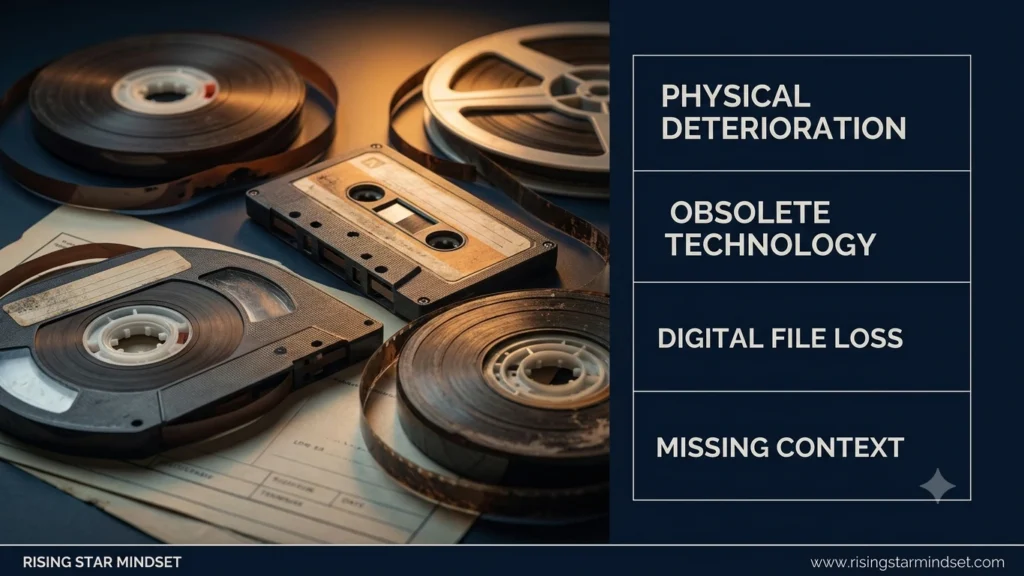
Audiovisual records can be fragile even when they look perfectly normal.
Physical deterioration
Film, magnetic tape, and other analogue media can deteriorate because of age, environmental conditions, or unsuitable storage. Damage may make the recording difficult or impossible to play.
Obsolete technology
Some old tapes require playback machines and components that are no longer commonly manufactured. Even when a recording survives physically, finding working equipment can be difficult.
Digital file loss
Digital recordings face different risks. Hard drives can fail, files can become corrupted, and people may accidentally delete valuable material. A file stored in only one place is particularly vulnerable.
Missing context
A recording without a date, location, description, or information about its creator may become difficult to identify. Future viewers might see the images but not understand their historical significance.
Disasters and unsuitable storage
Fire, flooding, extreme temperatures, and other hazards can threaten both physical and digital collections. Archives need preservation plans that address these risks.
The solution is not simply to keep old tapes in a cupboard or copy every file onto a single hard drive. Preservation requires suitable storage, documentation, multiple copies, and periodic checks.
6. How Audiovisual Heritage Helps Society ( Your Window to the World )

Audiovisual heritage supports education, research, cultural understanding, and the preservation of community memories.
It protects historical evidence
Recordings can provide evidence of events, public speeches, performances, and social changes. Researchers can compare them with written records to develop a fuller understanding of the past.
It preserves languages and oral traditions
An audio recording can capture pronunciation, storytelling styles, songs, and expressions that may not be fully represented in written material.
This is especially valuable for communities working to document local languages and oral histories.
It makes education more engaging
Students can listen to historical speeches, view documentary footage, or study recordings of cultural practices. These materials can make abstract historical topics more concrete.
It strengthens connections between generations
A family video can help younger people understand the lives of relatives they never met. A community archive can preserve memories of local festivals, occupations, and traditions.
It encourages cultural understanding
Recordings from different communities help people learn about other ways of life. When presented with proper context, they can support respectful discussion and cross-cultural understanding.
7. India’s Cultural Heritage and Local Memories ( Your Window to the World )

India has a rich variety of languages, folk traditions, musical forms, festivals, oral histories, and regional art. Audiovisual recordings can help preserve these traditions for future generations.
Consider a video of a village festival recorded twenty years ago. It may show traditional clothing, local songs, decorations, rituals, or the way people gathered for a celebration.
A younger generation watching that video may discover details that have changed or are no longer commonly practised. However, the recording becomes much more useful when its context is preserved.
For example, the person who saves the video could record:
- The village, town, or region where it was filmed.
- The approximate year and name of the event.
- The names of people who can be identified, where appropriate.
- The local language, song, or tradition shown.
- Any restrictions on sharing the recording publicly.
This information helps future viewers understand the material rather than treating it as an unidentified clip.
A practical example ( Your Window to the World )
Imagine a family has a cassette containing a grandparent’s folk songs. If the cassette is left in unsuitable conditions, the sound may deteriorate. If the family carefully digitizes it, keeps more than one backup, and records the singer’s name and the song’s background, the material may remain useful for years to come.
This is a simple example of how individuals can contribute to cultural preservation without operating a formal archive.
Preserving local memories is one way to keep cultural knowledge connected to the people and places that created it.
8. How Can You Preserve Old Recordings? Seven Practical Steps ( Your Window to the World )

You do not need expensive professional equipment for every preservation task. The right approach depends on the format and condition of the recording.
Step 1: Identify valuable material
Look for old family videos, audio cassettes, recorded interviews, local performances, or films that document important memories.
Step 2: Record the details
Write down the date or approximate year, location, people involved, event, language, and any known background information.
Step 3: Handle originals carefully
Avoid exposing old media to heat, moisture, dust, or unnecessary handling. If a tape or film is fragile or valuable, consult a qualified preservation specialist rather than attempting risky repairs.
Step 4: Digitize using suitable equipment
Digitization can make recordings easier to access and copy. Use appropriate equipment or a reputable service for the particular format.
Step 5: Keep multiple copies
Maintain more than one copy, preferably on different storage media or in separate locations. A backup stored beside the original device may not protect against theft, fire, or other local damage.
Step 6: Check files periodically
Open files occasionally to confirm they remain readable. Keep storage devices in good condition and migrate files when necessary to maintain access.
Step 7: Share responsibly
Before uploading recordings publicly, consider privacy, consent, copyright, and cultural sensitivities. Some recordings may be important to preserve but inappropriate to publish openly.
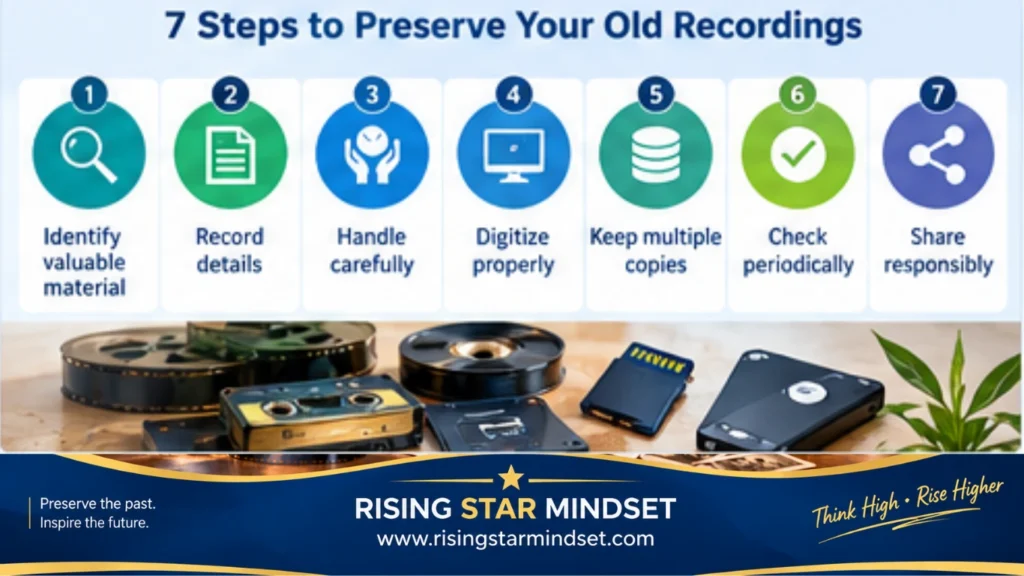
These steps will not guarantee that every recording survives indefinitely, but they can reduce avoidable risks and improve future access.
9. English and Hindi Explanation ( Your Window to the World )
English explanation ( Your Window to the World )
World Day for Audiovisual Heritage reminds us that films, videos, and sound recordings are valuable records of human history and culture. They preserve voices, languages, traditions, and events that might otherwise be forgotten.
The 2026 theme, “Your Window to the World,” highlights how these recordings connect people with other cultures and earlier periods. UNESCO’s preservation projects and survey data demonstrate the scale of the work required to protect audiovisual collections.
Individuals can also help by identifying old recordings, documenting their context, digitizing them carefully, keeping multiple backups, and respecting privacy when sharing them.
हिंदी में समझिए ( Your Window to the World )
विश्व दृश्य–श्रव्य विरासत दिवस हर साल 27 अक्टूबर को मनाया जाता है। इसका उद्देश्य पुरानी फिल्मों, वीडियो, ऑडियो रिकॉर्डिंग और अन्य दृश्य-श्रव्य सामग्री को सुरक्षित रखने के महत्व के बारे में जागरूकता बढ़ाना है।
साल 2026 की थीम “Your Window to the World” है, जिसका सरल अर्थ है—दुनिया को देखने की आपकी खिड़की।
पुरानी रिकॉर्डिंग हमें इतिहास, लोकगीतों, भाषाओं, त्योहारों और लोगों की जीवनशैली को समझने में मदद करती हैं। गाँव में कई साल पहले मनाए गए किसी त्योहार का वीडियो आने वाली पीढ़ियों को उस समय की परंपराओं के बारे में बता सकता है।
UNESCO से जुड़े एक सर्वे में अक्टूबर 2020 तक भाग लेने वाली संस्थाओं ने 85 लाख से अधिक audiovisual items की जानकारी दी थी। इनमें लगभग 44 लाख ऑडियो और 41 लाख वीडियो आइटम शामिल थे। यह संख्या पूरी दुनिया की सभी रिकॉर्डिंग का हिसाब नहीं है, बल्कि उस सर्वे में दर्ज सामग्री का आँकड़ा है।
पुरानी रिकॉर्डिंग को सुरक्षित रखने के लिए उसकी सही जानकारी लिखना, उचित तरीके से डिजिटल कॉपी बनाना, एक से अधिक बैकअप रखना और समय-समय पर फाइलों की जाँच करना उपयोगी है।
मुख्य सीख: हमारी पुरानी आवाज़ें, तस्वीरें और वीडियो केवल यादें नहीं हैं। वे हमारी सांस्कृतिक पहचान और इतिहास को आने वाली पीढ़ियों तक पहुँचाने में मदद कर सकते हैं।
10. Frequently Asked Questions (FAQs) ( Your Window to the World )
When is World Day for Audiovisual Heritage celebrated?
It is celebrated every year on October 27.
What is the official theme for 2026?
The theme is “Your Window to the World.”
Why was October 27 chosen?
The date marks UNESCO’s adoption, on October 27, 1980, of the Recommendation for the Safeguarding and Preservation of Moving Images.
What does audiovisual heritage include?
It includes films, videos, recorded sounds, broadcasts, and related materials that document human experiences, culture, and history.
How many audiovisual items were reported in the Magnetic Tape Alert Project?
By October 2020, more than 8.5 million audiovisual items had been reported to the project, including approximately 4.4 million audio items and 4.1 million video items. These are survey figures, not a global census.
What was the Radio Mogadishu preservation project?
UNESCO reported efforts in 2026 to preserve and digitize approximately 45,000 analogue tape recordings held by Radio Mogadishu in Somalia.
How can an ordinary person preserve old recordings?
Identify important recordings, document their background, digitize them carefully, keep multiple backups, check files periodically, and respect privacy and copyright before sharing them.
Does digitizing a recording guarantee its preservation?
No. Digitization can improve access and reduce dependence on ageing playback formats, but digital files still need backups, suitable storage, documentation, and ongoing maintenance.
11. Conclusion: Keep the Window to the Past Open
History does not exist only in books, monuments, or museums. It also lives in an old song, a radio broadcast, a family video, and the recorded voices of people who shaped our communities.
The World Day for Audiovisual Heritage 2026 theme, “Your Window to the World,” reminds us that these records help connect the past with the present and future.
The data presented here also shows that audiovisual preservation is a substantial task. Institutions must assess collections, protect fragile media, digitize suitable material, and maintain long-term access. Families and communities can contribute by protecting their own recordings and documenting the stories behind them.
This October 27, consider finding one meaningful recording in your family or community and making sure its story is not lost.
A recording can preserve a moment. Protecting it can help preserve the memory of a generation. ( Your Window to the World )
For more educational articles, cultural awareness topics, and meaningful life lessons, explore Rising Star Mindset.
Website: https://risingstarmindset.com/