
National Education Day 2026: What Can the World Learn from China’s Approach to Life and Education?

What makes a society successful? Is it hard work, education, discipline, family values, financial planning or the ability to adapt to change? ( National Education Day 2026 )
Different countries have different cultures, traditions and lifestyles. Yet, when we look at the everyday lives of people in different parts of the world, we can discover interesting lessons about how people study, work, save money, support their families and prepare for the future.
PREVIOUS POST : World Science Day 2026: Discover 7 Amazing Ways Science Shapes Our Future
China offers an interesting example on National Education Day 2026.
From busy morning streets in Shanghai and Beijing to small towns and rural communities, everyday Chinese life reflects a combination of traditional family values, changing lifestyles, educational ambition, technological development and practical thinking.
Many Chinese families place considerable importance on children’s education, long-term planning and financial security. At the same time, modern Chinese society is changing, with younger generations developing new ideas about careers, relationships, personal freedom and work-life balance.
This does not mean every Chinese person follows the same lifestyle. China is a huge and diverse country, just like India, the United States and other nations.
However, understanding some of the social and cultural patterns found in China can help people around the world think differently about education and everyday life.
On National Education Day 2026, celebrated in India on 11 November, let us explore what the world can learn from China’s approach to life, learning, family, discipline and personal development.

राष्ट्रीय शिक्षा दिवस 2026 के अवसर पर हम केवल शिक्षा व्यवस्था की बात नहीं करेंगे, बल्कि यह भी समझेंगे कि चीन के आम लोगों की जीवनशैली में कौन-सी ऐसी बातें दिखाई देती हैं जिनसे दुनिया के दूसरे देशों के लोग भी कुछ सीख सकते हैं।
चीन में परिवार, बच्चों की शिक्षा, भविष्य की योजना, बचत, मेहनत और तकनीक के प्रति बदलता नजरिया कई दिलचस्प पहलुओं को सामने लाता है।
इसका अर्थ यह नहीं है कि चीन का हर व्यक्ति एक जैसा जीवन जीता है या किसी दूसरे देश की संस्कृति कम महत्वपूर्ण है। हर समाज की अपनी खूबियाँ और चुनौतियाँ होती हैं।
आइए समझते हैं कि चीन के सामाजिक और सांस्कृतिक अनुभव हमें अपने जीवन को बेहतर बनाने के लिए क्या सिखा सकते हैं।
Table of Contents of National Education Day 2026
- What Is National Education Day 2026?
- Maulana Abul Kalam Azad and His Educational Vision
- Understanding the Everyday Life of Ordinary Chinese People
- 7 Life Lessons We Can Learn from Chinese Society
- Why Chinese Families Give Importance to Education
- Chinese Lifestyle vs Other Countries: A Balanced Comparison
- The Role of Family, Saving and Long-Term Planning
- Discipline, Hard Work and Daily Routines
- How Technology Is Changing Everyday Chinese Life
- What Other Countries Can Learn from China
- Challenges Behind China’s Lifestyle and Education System
- A Practical 7-Day Life Improvement Challenge
- Important Facts and Comparison Tables
- Quiz for Students
- Frequently Asked Questions
- Final Message on National Education Day 2026
1. What Is National Education Day 2026?
National Education Day is observed in India every year on 11 November to commemorate the birth anniversary of Maulana Abul Kalam Azad, the first Education Minister of independent India.
The Government of India announced the observance in 2008, and the first National Education Day was celebrated on 11 November 2008.
The day highlights the importance of education in building an informed, responsible and progressive society.
Educational institutions mark the occasion through:
- Educational seminars and discussions.
- Essay and speech competitions.
- Quiz programmes and debates.
- Activities promoting literacy.
- Discussions about educational opportunities and challenges.
Hindi Explanation of National Education Day 2026
भारत में प्रत्येक वर्ष 11 नवंबर को राष्ट्रीय शिक्षा दिवस मनाया जाता है। यह दिन स्वतंत्र भारत के पहले शिक्षा मंत्री मौलाना अबुल कलाम आजाद की जयंती के अवसर पर मनाया जाता है।
इस दिवस का मुख्य उद्देश्य शिक्षा के महत्व को समझाना और समाज में ज्ञान, जागरूकता तथा समान शैक्षणिक अवसरों को बढ़ावा देना है।
2. Maulana Abul Kalam Azad and His Educational Vision
Maulana Abul Kalam Azad was born on 11 November 1888. He was a freedom fighter, scholar, journalist and an important educational leader.
He served as India’s first Education Minister from 1947 to 1958.
His educational vision included:
- Expanding access to education.
- Strengthening higher education.
- Encouraging scientific research.
- Supporting educational institutions.
- Promoting cultural and intellectual development.
His message remains relevant today because education should not simply help people earn qualifications. It should help them become thoughtful, capable and responsible citizens.
Hindi Explanation of National Education Day 2026
मौलाना अबुल कलाम आजाद का मानना था कि शिक्षा प्रत्येक व्यक्ति के विकास का महत्वपूर्ण आधार है।
उनका उद्देश्य केवल साक्षरता बढ़ाना नहीं था, बल्कि ऐसा समाज बनाना था जिसमें लोग ज्ञान, विज्ञान, संस्कृति और विचारों के माध्यम से देश की प्रगति में योगदान दे सकें।
उनकी सोच हमें यह याद दिलाती है कि शिक्षा का वास्तविक उद्देश्य इंसान को बेहतर बनाना है।
3. Understanding the Everyday Life of Ordinary Chinese People at National Education Day 2026.

China is one of the world’s largest and most diverse societies. The lifestyles of people in major cities can be very different from those in smaller towns and villages.
However, several interesting patterns can be observed in discussions of Chinese society.
A. Family remains an important part of life
Family relationships have traditionally played a significant role in Chinese culture.
Many families place importance on supporting parents, helping children with education and maintaining relationships between generations.
For some households, parents and grandparents also contribute to childcare and educational decisions.
This family-centred approach is sometimes described as intergenerational family support.
Hindi Explanation: चीन के कई परिवारों में माता-पिता, बच्चों और बुजुर्गों के बीच सहयोग को महत्वपूर्ण माना जाता है। परिवार के सदस्य बच्चों की पढ़ाई, देखभाल और भविष्य की योजना में एक-दूसरे की सहायता कर सकते हैं।
हालांकि शहरीकरण और आधुनिक जीवनशैली के कारण परिवारों के रहने और काम करने के तरीके बदल रहे हैं।
B. Education is often connected with future opportunities
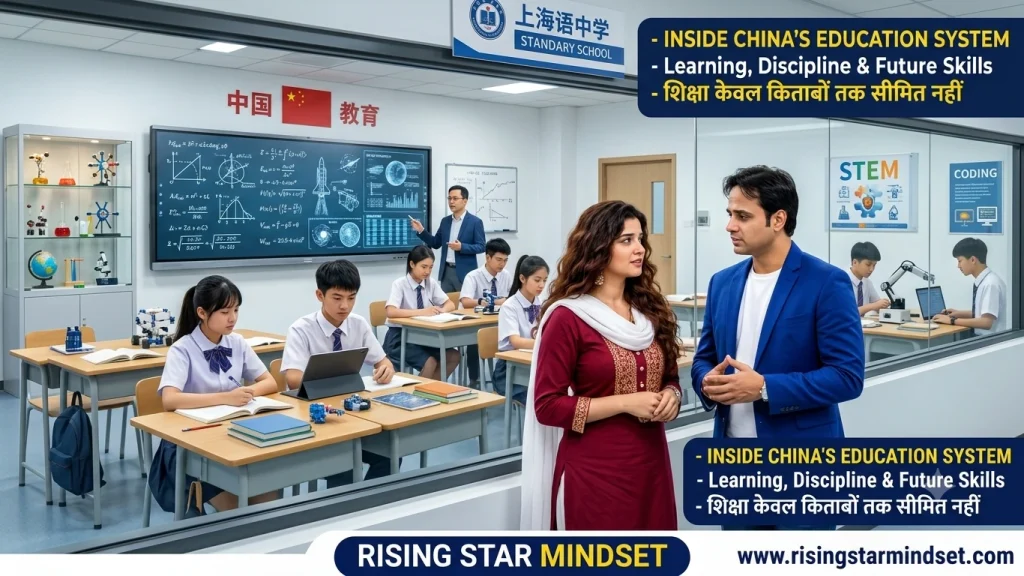
For many Chinese families, education is considered an important route to better employment and social mobility.
Parents may invest considerable time, money and attention in their children’s learning.
The National College Entrance Examination, known as Gaokao, is particularly important because it plays a major role in university admissions.
However, the pressure associated with competitive examinations is also a serious concern.
Hindi Explanation: चीन में कई परिवार शिक्षा को बेहतर भविष्य और रोजगार के अवसरों से जोड़कर देखते हैं। बच्चों की पढ़ाई में परिवार का योगदान महत्वपूर्ण हो सकता है।
लेकिन Gaokao जैसी प्रतिस्पर्धी परीक्षाओं का दबाव विद्यार्थियों के लिए तनाव भी पैदा कर सकता है।
इसलिए शिक्षा के साथ मानसिक स्वास्थ्य और संतुलित जीवन पर ध्यान देना भी जरूरी है।
C. Practical thinking and technological adoption
China has experienced major changes in digital payments, online shopping, transportation, manufacturing and digital services.
In many urban areas, people regularly use mobile applications for payments, food delivery, transport and shopping.
These developments demonstrate how technology can become part of everyday life.
Hindi Explanation: चीन के कई शहरों में डिजिटल भुगतान, ऑनलाइन खरीदारी और मोबाइल ऐप्स रोजमर्रा के जीवन का हिस्सा बन चुके हैं।
इससे यह सीख मिलती है कि तकनीक का सही उपयोग समय बचाने, सुविधाएँ बढ़ाने और काम को आसान बनाने में मदद कर सकता है।
D. Work, family and personal life are changing
It is a mistake to imagine that every Chinese person works continuously or lives only for economic success.
Research published in the Journal of Chinese Sociology in April 2026, using World Values Survey data from 1990 to 2018, describes a broader shift in Chinese work-life values from a production-centred orientation towards a more life-centred orientation.
The research also discusses the continuing importance of family and the growing importance of leisure.
This shows that Chinese society is not static. People’s priorities change as their economic and social circumstances change.
Hindi Explanation: चीन में भी लोगों की जीवनशैली लगातार बदल रही है। आज कई लोग काम और कमाई के साथ परिवार, आराम और व्यक्तिगत जीवन को भी महत्व देते हैं।
इसलिए चीन को केवल मेहनत और अनुशासन से जोड़कर देखना अधूरा दृष्टिकोण होगा।
4. Seven Life Lessons We Can Learn from Chinese Society

Different cultures offer different lessons. The following seven ideas are useful examples of habits and social approaches that people around the world can consider.
1. Think Long-Term Instead of Living Only for Today
Long-term planning is an important part of financial and educational decision-making in many Chinese households.
Some families plan years ahead for their children’s education, housing and financial security.
This does not mean everyone has the same financial opportunities. However, planning ahead can be useful for anyone.
Example: Instead of spending all your income immediately, create a savings goal for education, emergencies or future investments.
Hindi: केवल आज की जरूरतों के बारे में सोचने के बजाय भविष्य की योजना बनाना सीखें। छोटी–छोटी बचत और नियमित योजना लंबे समय में मददगार हो सकती है।
2. Take Education Seriously on National Education Day 2026
Education is often viewed as a major opportunity for improving one’s future.
Students are encouraged in many families to work hard, practise regularly and develop academic skills.
But education should not become a race in which marks are more important than understanding.
Hindi: शिक्षा को केवल परीक्षा पास करने का माध्यम न मानें। नई चीजें सीखना, सवाल पूछना और ज्ञान को वास्तविक जीवन में इस्तेमाल करना भी जरूरी है।
3. Respect Family Responsibilities on National Education Day 2026
Family support can provide emotional and practical stability.
Helping parents, supporting children and maintaining relationships across generations are valuable practices in many societies, including China.
Hindi: परिवार के प्रति जिम्मेदारी निभाना और एक–दूसरे की मदद करना जीवन को अधिक संतुलित बना सकता है।
4. Build Consistent Daily Habits
Success is rarely the result of one extraordinary day.
Regular study, practice, preparation and patience can gradually improve a person’s abilities.
This lesson is universal and does not belong to any one country.
Hindi: रोज थोड़ा–थोड़ा सीखने और मेहनत करने की आदत डालें। लगातार किया गया छोटा प्रयास लंबे समय में बड़ा बदलाव ला सकता है।
5. Use Technology to Save Time
Technology can make everyday tasks easier when used wisely.
Digital payments, online learning and useful mobile applications can reduce unnecessary effort.
Hindi: तकनीक का इस्तेमाल केवल मनोरंजन के लिए नहीं, बल्कि पढ़ाई, काम, जानकारी और समय बचाने के लिए भी करें।
6. Value Practical Skills
Academic knowledge becomes more useful when people can apply it to real situations.
Communication, financial literacy, problem-solving and digital skills are valuable in modern life.
Hindi: केवल किताबों का ज्ञान पर्याप्त नहीं है। जीवन में सफलता के लिए व्यावहारिक कौशल और समस्याओं को हल करने की क्षमता भी जरूरी है।
7. Adapt to Change
Societies change with technology, economic development and new generations.
People who remain willing to learn and adapt can respond more effectively to changing circumstances.
Hindi: समय के साथ खुद को बदलना और नई चीजें सीखते रहना जरूरी है। पुरानी अच्छी आदतों को बनाए रखते हुए नए अवसरों को अपनाना चाहिए।
5. Why Do Many Chinese Families Give Importance to Education?
One of the most interesting aspects of Chinese society is the importance many families place on education.
There are historical, cultural, social and economic reasons behind this.
The role of educational competition
The Gaokao is China’s national college entrance examination. It is a major examination used in university admissions.
For students and families, performance can influence access to different universities and future opportunities.
Family investment in learning
Some households spend substantial resources on tuition, books, educational activities and academic support.
UNESCO’s 2026 Global Education Monitoring Report notes that households with members in higher education spent 32% of their total disposable income on education, based on an analysis of a 2019 household survey.
This figure illustrates the financial importance of higher education for some Chinese families. It should not be interpreted as the spending pattern of every household.
Expansion of higher education
UNESCO’s 2026 China country case study reports that the share of young people under 24 holding a tertiary qualification increased from 6% in 2000 to 41% in 2020.
The report also states that China’s tertiary gross graduation ratio reached 53% in 2024.
These figures reflect the major expansion of higher education in China.
Hindi Explanation of National Education Day 2026
चीन में शिक्षा को महत्व देने के पीछे कई कारण हैं। इनमें बेहतर रोजगार की संभावना, विश्वविद्यालयों में प्रवेश की प्रतिस्पर्धा और परिवार की आर्थिक स्थिति सुधारने की इच्छा शामिल हैं।
हालांकि शिक्षा पर अधिक खर्च करना हर परिवार के लिए संभव नहीं है। ग्रामीण और शहरी क्षेत्रों में संसाधनों और अवसरों का अंतर भी मौजूद है।
यहाँ से एक महत्वपूर्ण सीख मिलती है: शिक्षा में निवेश केवल पैसों से नहीं होता। समय देना, बच्चों का मार्गदर्शन करना और सीखने के लिए अच्छा वातावरण बनाना भी उतना ही महत्वपूर्ण है।
6. Chinese Lifestyle vs Other Countries: A Balanced Comparison on National Education Day 2026
Can we say that Chinese people live differently from people in India, America or European countries?
In some ways, yes. But it is important to understand that these are broad cultural and social patterns, not rules that apply to every individual.
| Area of life | Some patterns discussed in Chinese society | Different patterns found across other societies |
| Family | Strong emphasis on intergenerational support in many families | Family structures and independence vary widely |
| Education | Competitive university entrance examinations play an important role | Admission systems differ between countries |
| Financial planning | Family savings and future security can be important priorities | Spending, saving and investment habits vary |
| Technology | Mobile payments and digital services are widely integrated in urban life | Digital adoption differs by country and region |
| Work culture | Strong performance expectations in some sectors | Work expectations differ across industries and countries |
| Personal life | Traditional family values coexist with changing individual aspirations | Individual and family priorities vary |
| Daily routines | Urban routines often involve technology and efficient services | Lifestyle depends on location, income and occupation |
India and China: Some similarities and differences
India and China have large populations, diverse regional cultures and strong family traditions.
Both societies have families that make sacrifices for children’s education and future opportunities.
However, differences can be found in examination systems, educational pathways, regional development, digital services and social expectations.
China and Western countries
Some Western societies place stronger cultural emphasis on personal independence and individual choice, while traditional Chinese family culture has often placed greater importance on family relationships and intergenerational responsibilities.
However, this is a broad comparison, not a fixed division.
Modern Chinese society includes people with individual ambitions, while many Western families also maintain strong intergenerational relationships.
Hindi Explanation
चीन, भारत और पश्चिमी देशों के लोगों की जीवनशैली में कुछ अंतर दिखाई दे सकते हैं। उदाहरण के लिए, शिक्षा प्रणाली, परिवार की भूमिका, डिजिटल भुगतान और व्यक्तिगत स्वतंत्रता को लेकर सामाजिक अनुभव अलग हो सकते हैं।
लेकिन किसी भी देश के सभी लोगों को एक ही सोच वाला मानना सही नहीं है।
हर देश में ऐसे लोग मिलेंगे जो परिवार को सबसे अधिक महत्व देते हैं, और ऐसे लोग भी मिलेंगे जो स्वतंत्रता, करियर और व्यक्तिगत विकास को प्राथमिकता देते हैं।
7. The Role of Family, Saving and Long-Term Planning

A person’s quality of life is not determined only by income.
Family relationships, financial security, health, education and personal time also matter.
Why family support matters
Family members can help one another during education, illness, unemployment and other difficult situations.
Support between generations can also help children learn values, traditions and practical life skills.
Why saving money matters
Saving money can help families prepare for emergencies, education expenses and unexpected changes.
A simple financial habit is to separate essential spending, savings and optional purchases.
A simple monthly budget example from National Education Day 2026
| Expense category | Suggested share |
| Essential expenses | 50% |
| Savings and emergency fund | 20% |
| Education and skill development | 10% |
| Family and personal needs | 10% |
| Recreation and optional spending | 10% |
This is an illustrative budgeting example, not a recommended formula for every household. Actual needs and income levels differ.
Hindi Explanation of National Education Day 2026.
परिवार का सहयोग और आर्थिक अनुशासन किसी भी व्यक्ति के जीवन को अधिक सुरक्षित बना सकते हैं।
हर महीने थोड़ी बचत करना, अनावश्यक खर्चों को पहचानना और शिक्षा के लिए पैसा अलग रखना अच्छी आदतें हैं।
हालांकि हर परिवार की आय और जरूरतें अलग होती हैं, इसलिए बजट भी अपनी परिस्थिति के अनुसार बनाना चाहिए।
8. Discipline, Hard Work and Daily Routines
Discipline does not mean working every hour of the day.
It means knowing what is important and giving it regular attention.
A balanced daily routine can include:
- Time for work or study.
- Physical activity.
- Family interaction.
- Reading and learning.
- Adequate rest.
- Personal interests.
In competitive educational and professional environments, consistency and preparation can make a difference.
But rest and mental well-being are equally important.
Hindi Explanation of National Education Day 2026 .
अनुशासन का अर्थ यह नहीं है कि इंसान हर समय काम करता रहे। इसका अर्थ है अपने समय और जिम्मेदारियों का सही प्रबंधन करना।
पढ़ाई, काम, परिवार, व्यायाम और आराम के बीच संतुलन बनाए रखना भी अनुशासन का ही हिस्सा है।
9. How Technology Is Changing Everyday Chinese Life

China has become an important example of large-scale digital adoption.
In many urban areas, mobile applications support everyday activities such as:
- Digital payments.
- Food delivery.
- Online shopping.
- Public transport.
- Digital communication.
- Online education.
Mobile payment platforms have made cashless transactions convenient for many users.
However, digital access is not identical everywhere. Older people, rural communities and people with limited digital skills may face difficulties.
What can other countries learn from National Education Day 2026 ?
- Make digital services easy to use.
- Improve digital literacy.
- Protect personal information.
- Provide offline alternatives for people who need them.
- Use technology to improve public services.
Hindi Explanation of National Education Day 2026.
चीन के कई शहरी क्षेत्रों में मोबाइल ऐप्स रोजमर्रा के जीवन को आसान बनाने में मदद करते हैं।
लेकिन तकनीक का सही उपयोग तभी संभव है जब सभी लोगों को डिजिटल सुविधाएँ समझने और इस्तेमाल करने का अवसर मिले।
इसलिए डिजिटल विकास के साथ डिजिटल शिक्षा और सुरक्षा भी जरूरी है।
10. What Can Other Countries Learn from China?
There is no single perfect lifestyle or education system.
However, other countries can study useful experiences from China and adapt suitable ideas to their own needs.
| Learning area | Possible lesson | Practical application |
| Education | Consistent academic preparation | Daily study and revision |
| Family | Intergenerational support | Spend meaningful time with family |
| Finance | Long-term planning | Build an emergency fund |
| Technology | Digital convenience | Learn useful digital tools |
| Skills | Practical knowledge | Work on real-life projects |
| Discipline | Consistency | Follow a realistic routine |
| Adaptability | Continuous learning | Update skills regularly |
Lessons for India on National Education Day 2026.
India can also benefit from stronger practical education, digital literacy, financial awareness and career guidance.
Schools can help students connect textbook knowledge with real-life problems.
Families can encourage learning without putting excessive pressure on children.
Young people can focus on developing skills alongside academic qualifications.
Lessons for international readers
People in every country can consider these habits:
- Learn something new every week.
- Respect family relationships.
- Save according to your financial capacity.
- Use technology responsibly.
- Maintain a healthy routine.
- Stay curious about other cultures.
11. Challenges Behind China’s Lifestyle and Education System on National Education Day 2026.

A balanced discussion must also recognise the challenges.
China’s educational and social systems have strengths, but they also face important issues.
1. Examination pressure
Competitive examinations can create stress among students and families.
2. Educational inequality
Access to educational resources and elite universities can vary by region and family income.
3. Work-life balance
Some professional environments involve demanding schedules and high performance expectations.
4. Rural and urban differences
People living in large cities may have different access to educational, healthcare and digital resources compared with those in remote areas.
5. Changing family expectations
Young people may have different ideas about marriage, careers, personal freedom and family responsibilities compared with older generations.
6. Digital dependence
Greater use of digital services can create concerns about privacy, online safety and exclusion of people who are less comfortable with technology.
Hindi Explanation – National Education Day 2026
चीन की सामाजिक और शैक्षणिक व्यवस्था में कई उपयोगी पहलू हैं, लेकिन चुनौतियाँ भी हैं।
परीक्षाओं का दबाव, ग्रामीण और शहरी क्षेत्रों के बीच अवसरों का अंतर, काम का तनाव और बदलती पारिवारिक अपेक्षाएँ महत्वपूर्ण विषय हैं।
इसलिए किसी देश से सीखने का सही तरीका उसकी अच्छी आदतों को समझना और उसकी चुनौतियों से भी सबक लेना है।
12. A Practical 7-Day Life Improvement Challenge
You do not need to move to another country or completely change your lifestyle to improve your future.
Start with small steps.
| Day | Activity | Benefit |
| Day 1 | Prepare a weekly learning plan | Better organisation |
| Day 2 | Read for 20 minutes | Knowledge development |
| Day 3 | Review monthly expenses | Financial awareness |
| Day 4 | Learn one digital skill | Digital confidence |
| Day 5 | Spend quality time with family | Stronger relationships |
| Day 6 | Practise a practical skill | Personal development |
| Day 7 | Review your progress | Self-improvement |
Hindi Explanation of National Education Day 2026.
इस सात दिवसीय चुनौती का उद्देश्य किसी दूसरे देश की जीवनशैली की नकल करना नहीं है। इसका उद्देश्य अपनी जिंदगी में अच्छी आदतें विकसित करना है।
प्रतिदिन एक छोटा सकारात्मक बदलाव भी लंबे समय में उपयोगी साबित हो सकता है।
13. Important Facts and Comparison Tables
National Education Day 2026 : Quick Facts
| Question | Answer |
| Date | 11 November |
| Country observing it | India |
| Honours | Maulana Abul Kalam Azad |
| Birth year | 1888 |
| His position | First Education Minister of independent India |
| Ministerial tenure | 1947–1958 |
| First celebration | 11 November 2008 |
China: Selected Education Facts
| Indicator | Reported figure |
| Young people under 24 with tertiary qualifications in 2000 | 6% |
| Young people under 24 with tertiary qualifications in 2020 | 41% |
| China’s tertiary gross graduation ratio in 2024 | 53% |
| Household education spending in the cited 2019 survey analysis | 32% of disposable income for households with members in higher education |
Sources and definitions differ by indicator. The figures are not directly interchangeable.

14. Quiz for Students from National Education Day 2026.
Test your knowledge of education, China and life skills.
Q1. When is National Education Day celebrated in India?
A. 5 September
B. 11 November
C. 14 November
D. 26 January
Q2. Who was India’s first Education Minister?
A. Mahatma Gandhi
B. Jawaharlal Nehru
C. Maulana Abul Kalam Azad
D. Dr. Rajendra Prasad
Q3. What is the name of China’s national college entrance examination?
A. IELTS
B. Gaokao
C. SAT
D. GCSE
Q4. What does financial planning help people do?
A. Spend without limits
B. Avoid all responsibilities
C. Prepare for future expenses
D. Stop learning
Q5. What is digital literacy?
A. Using digital technology safely and effectively
B. Playing games all day
C. Avoiding computers
D. Memorising passwords
Q6. What is lifelong learning?
A. Studying only at school
B. Learning throughout life
C. Learning only for examinations
D. Avoiding new skills
Answer Key: 1-B, 2-C, 3-B, 4-C, 5-A, 6-B.
15. Frequently Asked Questions (FAQs) from National Education Day 2026.
1. When is National Education Day 2026?
National Education Day 2026 will be observed on Wednesday, 11 November 2026, in India.
2. Why is National Education Day celebrated?
It is celebrated to honour Maulana Abul Kalam Azad and highlight the importance of education in national development.
3. What can we learn from Chinese culture?
Some useful lessons include long-term planning, family support, consistent learning, financial awareness and the practical use of technology. These are broad social patterns, not habits followed by every Chinese person.
4. Why is education important in Chinese society?
Education is considered an important route to employment and future opportunities by many Chinese families. Competitive university admissions also contribute to its importance.
5. What is Gaokao in China?
Gaokao is China’s national college entrance examination. It plays an important role in university admissions.
6. Do Chinese families place importance on saving money?
Financial security and future planning are important priorities for many households, although saving habits vary according to income, age, location and personal circumstances.
7. How is everyday life in China different from India?
Differences can be seen in digital payment systems, educational structures, urban infrastructure, regional cultures and social expectations. However, both countries have diverse populations and strong family traditions.
8. Is China’s education system free from challenges?
No. Examination pressure, unequal educational opportunities and differences between regions remain important challenges.
9. What is the most important life lesson for students?
Students should develop the habit of learning continuously, thinking independently, practising useful skills and maintaining a healthy balance between study and personal life.
10. Can other countries follow China’s lifestyle?
Countries can learn from selected experiences and practices, but they should adapt them to their own cultures, needs and circumstances rather than copying another society completely.
16. Final Message on National Education Day 2026

Every country has something valuable to teach the world.
China offers interesting examples of educational ambition, digital adoption, family support and changing approaches to everyday life. India offers its own rich traditions of family relationships, diversity, creativity and learning. Other countries also have experiences from which the world can benefit.
The goal should not be to decide which country is better.
The goal should be to understand what works, learn from different cultures and improve our own lives.
Education helps us do exactly that. It teaches us to look beyond our immediate surroundings, respect different perspectives and make informed decisions.
On National Education Day 2026, let us remember that a truly educated person does not blindly follow another society. They observe, question, understand and adopt what is useful.
दुनिया का हर देश हमें कुछ न कुछ सिखा सकता है। चीन से हम शिक्षा, भविष्य की योजना, तकनीक और परिवार के महत्व के कुछ पहलू समझ सकते हैं। भारत और अन्य देशों से भी हमें अनेक अच्छी बातें सीखने को मिलती हैं।
किसी देश की नकल करना जरूरी नहीं है। जरूरी है अच्छी बातों को समझना और उन्हें अपनी जिंदगी में सही तरीके से अपनाना।
“A better future begins when we stop comparing lives and start learning from each other.”
“बेहतर भविष्य तब शुरू होता है, जब हम एक–दूसरे से तुलना करने के बजाय एक–दूसरे से सीखना शुरू करते हैं।“
Happy National Education Day 2026!
RISING STAR MINDSET – Learn Today, Lead Tomorrow.
Explore more educational articles, inspiring ideas and useful knowledge at Rising Star Mindset.
Visit: www.risingstarmindset.com