
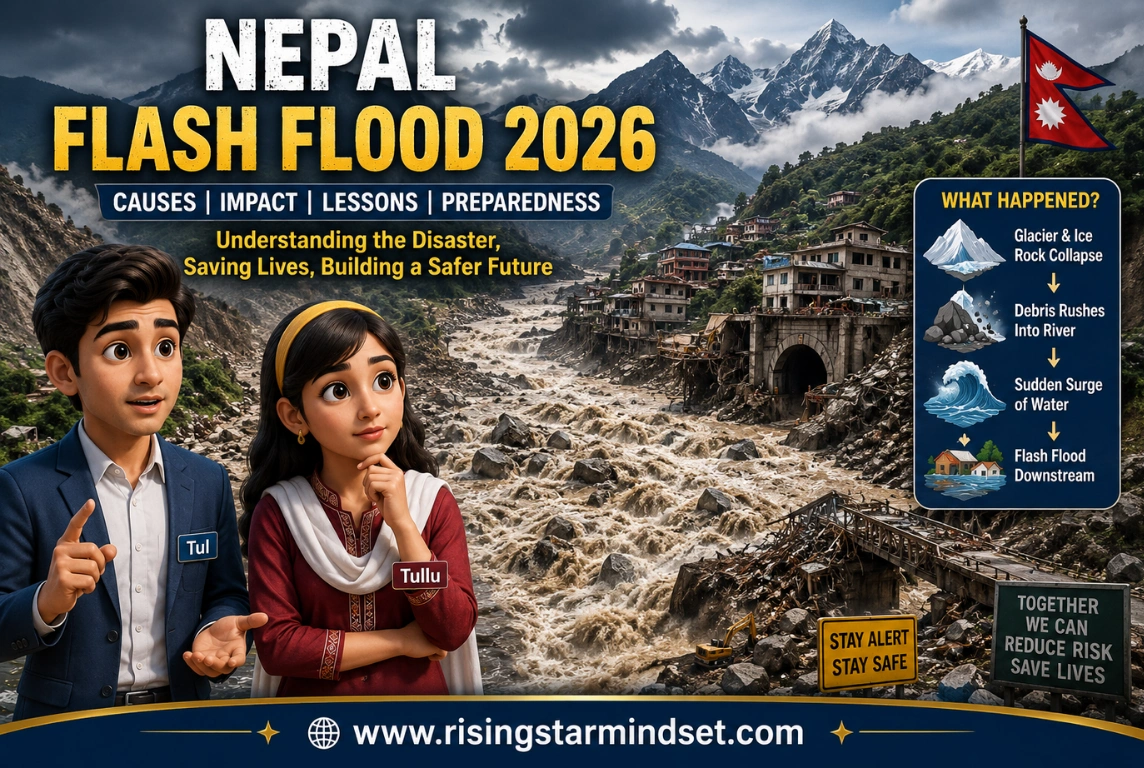
Nepal Flash Flood 2026: Causes, Impact, Glacier Collapse & Climate Change Explained

Nepal Flash Flood 2026 has emerged as a major Himalayan disaster, drawing attention because of the sudden and destructive nature of the event.
नेपाल फ्लैश फ्लड 2026 हिमालयी क्षेत्र में हुई एक बड़ी प्राकृतिक आपदा बनकर सामने आई है। इस घटना ने इसलिए भी दुनिया का ध्यान आकर्षित किया है क्योंकि यह बहुत तेजी से विकसित हुई और अपने साथ पानी, बर्फ, चट्टान, मिट्टी और मलबे की एक बेहद शक्तिशाली धारा लेकर आई।
Last Updated: 31 August 2026 ( Nepal Flash Flood 2026 )
According to the Government of Nepal’s press briefing on 31 August 2026, 903 bodies had been recovered from the affected areas, while about 4,200 people were still unaccounted for. Search, rescue, relief and recovery operations were continuing, particularly in severely affected areas and around hydropower projects. These figures may change as rescue and identification operations continue.
Source: Government of Nepal – Ministry of Foreign Affairs, Press Briefing on Bhote Koshi Flood
31 अगस्त 2026 को नेपाल सरकार की आधिकारिक प्रेस ब्रीफिंग के अनुसार, प्रभावित क्षेत्रों से 903 शव बरामद किए जा चुके थे, जबकि लगभग 4,200 लोग अभी भी लापता/अनट्रेस्ड थे। खोज, बचाव, राहत और रिकवरी अभियान लगातार जारी थे, विशेष रूप से गंभीर रूप से प्रभावित क्षेत्रों और जलविद्युत परियोजनाओं के आसपास। बचाव और पहचान की प्रक्रिया जारी रहने के कारण ये आंकड़े आगे बदल सकते हैं।
स्रोत: नेपाल सरकार – Ministry of Foreign Affairs, Bhote Koshi Flood Press Briefing
📌 At a Glance | एक नजर में ( Nepal Flash Flood 2026 )
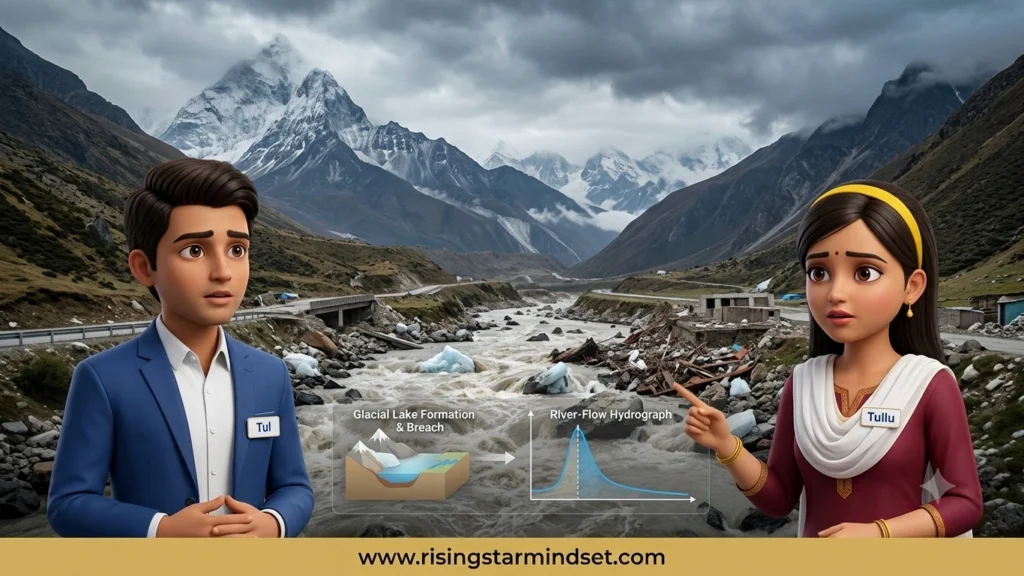
| Topic | English | हिंदी |
| Disaster | Nepal Flash Flood 2026 | नेपाल फ्लैश फ्लड 2026 |
| Major event | 26 August 2026 | 26 अगस्त 2026 |
| Region | Northern Nepal | उत्तरी नेपाल |
| Geographic region | Himalayas | हिमालय |
| Major trigger | Ice-rock/glacial collapse | बर्फ-चट्टान/हिमनदीय धंसाव |
| Major hazards | Flood, debris, landslides | बाढ़, मलबा, भूस्खलन |
| Major impact | Lives and infrastructure | जनजीवन और बुनियादी ढांचे पर असर |
| Major rescue challenge | Hydropower tunnels | जलविद्युत सुरंगें |
| Key concern | Himalayan climate and disaster risk | हिमालयी जलवायु और आपदा जोखिम |
What You’ll Learn in This Article
इस लेख में आप क्या सीखेंगे
- What Happened in Nepal?
नेपाल में क्या हुआ? - When Did the Disaster Occur?
यह आपदा कब हुई? - Where Did the Flood Happen?
बाढ़ कहां आई? - What Caused the Nepal Flash Flood?
नेपाल फ्लैश फ्लड का कारण क्या था?
What Is a Glacier Collapse?
Glacier Collapse क्या होता है?
- How Did Ice and Rock Trigger a Flood?
बर्फ और चट्टान से बाढ़ कैसे आई? - Why Was the Flood So Destructive?
बाढ़ इतनी विनाशकारी क्यों थी? - What Was the Human Impact?
इस आपदा का मानवीय प्रभाव क्या रहा? - How Were Hydropower Projects Affected?
जलविद्युत परियोजनाएं कैसे प्रभावित हुईं? - How Did Rescue and Relief Operations Continue?
बचाव और राहत अभियान कैसे चलाया गया? - How Is Climate Change Connected to Himalayan Risks?
जलवायु परिवर्तन का हिमालयी जोखिम से क्या संबंध है? - Why Are the Himalayas Vulnerable to Disasters?
हिमालय आपदाओं के प्रति संवेदनशील क्यों है? - What Is a GLOF?
GLOF क्या होता है?
Why Are Early Warning Systems Important?
Early Warning Systems क्यों महत्वपूर्ण हैं?
- What Can Nepal Do to Reduce Future Risks?
भविष्य के जोखिम को कम करने के लिए नेपाल क्या कर सकता है? - What Lessons Can We Learn From the Nepal Disaster?
नेपाल की इस आपदा से हमें क्या सीख मिलती है? - Nepal Flash Flood 2026: Important Facts
नेपाल फ्लैश फ्लड 2026: महत्वपूर्ण तथ्य - Important GK Questions
महत्वपूर्ण सामान्य ज्ञान प्रश्न - Multiple Choice Questions (MCQs)
बहुविकल्पीय प्रश्न - Fill in the Blanks
रिक्त स्थान भरिए - True or False
सही या गलत - Frequently Asked Questions (FAQs)
अक्सर पूछे जाने वाले प्रश्न - Why This Disaster Matters for India Too
यह आपदा भारत के लिए भी क्यों महत्वपूर्ण है? - What Can Students Learn From This Disaster?
छात्र इस आपदा से क्या सीख सकते हैं? - Key Terms to Remember
याद रखने योग्य महत्वपूर्ण शब्द - Final Takeaway
अंतिम सीख - PREVIOUS POST : Can AI Become a Better Teacher Than Humans?
1. What Happened in Nepal?
English Explanation
A devastating flash flood struck northern Nepal on 26 August 2026 near the country’s border with China.
The event was not simply a conventional river flood. Available scientific assessments linked the disaster to a major ice-rock/glacial collapse, which produced a powerful cascade of debris and water.
The material moved rapidly through the mountainous river system, producing severe flooding downstream.
हिंदी में समझिए ( Nepal Flash Flood 2026 )
26 अगस्त 2026 को चीन की सीमा के पास उत्तरी नेपाल में एक बेहद विनाशकारी फ्लैश फ्लड आया।
यह केवल सामान्य नदी की बाढ़ नहीं थी। उपलब्ध वैज्ञानिक आकलनों के अनुसार, इस घटना का संबंध एक बड़े बर्फ-चट्टान/हिमनदीय धंसाव से था।
इस घटना के बाद बड़ी मात्रा में बर्फ, चट्टान, मिट्टी और पानी तेजी से नीचे की ओर आया और नदी तंत्र में जाकर विनाशकारी बाढ़ का कारण बना।
2. When Did the Disaster Occur?
English Explanation
The major disaster occurred on 26 August 2026.
However, its consequences continued for several days. Rescue teams had to deal with blocked roads, damaged bridges, unstable slopes and flooded infrastructure.
हिंदी में समझिए ( Nepal Flash Flood 2026 )
मुख्य आपदा 26 अगस्त 2026 को हुई।
लेकिन इसके प्रभाव कई दिनों तक जारी रहे। बचाव दलों को टूटे हुए पुलों, बंद सड़कों, अस्थिर पहाड़ी ढलानों और क्षतिग्रस्त बुनियादी ढांचे जैसी समस्याओं का सामना करना पड़ा।
3. Where Did the Flood Happen?
English Explanation
The disaster affected northern Himalayan areas of Nepal, particularly areas around Rasuwa and Nuwakot and river systems connected with the Bhote Koshi and Trishuli.
The mountainous landscape made the situation more dangerous because narrow valleys can channel water and debris at very high speeds.
हिंदी में समझिए
इस आपदा से नेपाल के उत्तरी हिमालयी क्षेत्र प्रभावित हुए। रसुवा और नुवाकोट जैसे क्षेत्रों तथा भोटे कोशी और त्रिशूली से जुड़े नदी तंत्रों पर इसका गंभीर प्रभाव पड़ा।
पहाड़ी क्षेत्र होने के कारण स्थिति और खतरनाक हो गई। संकरी घाटियां पानी और मलबे को बहुत तेज गति से नीचे की ओर ले जा सकती हैं।
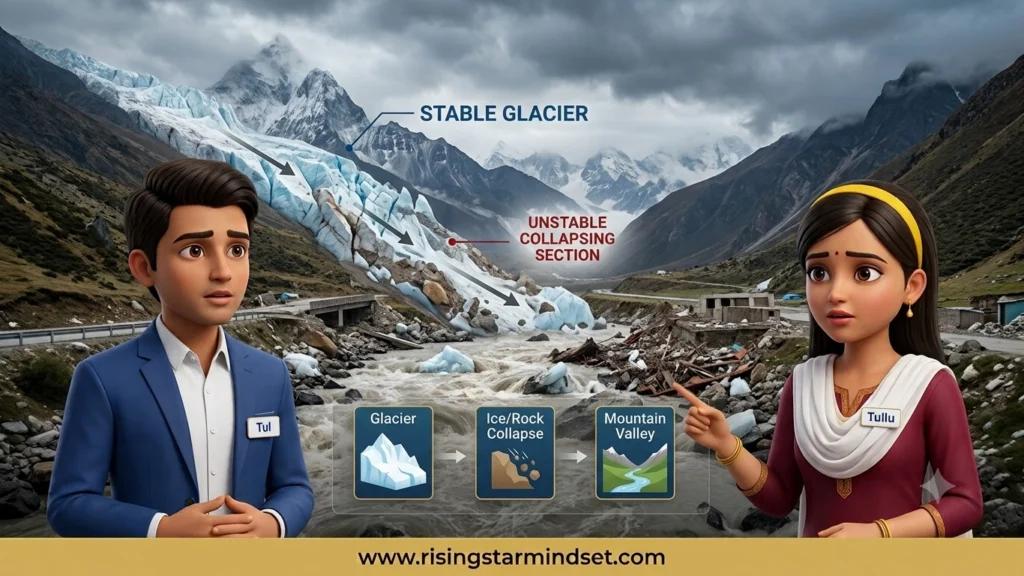
4. What Caused the Nepal Flash Flood? ( Nepal Flash Flood 2026 )
English Explanation
One of the most important questions is whether this was simply a rainfall-driven flood.
Current assessments point toward a large ice-rock/glacial collapse as a major trigger.
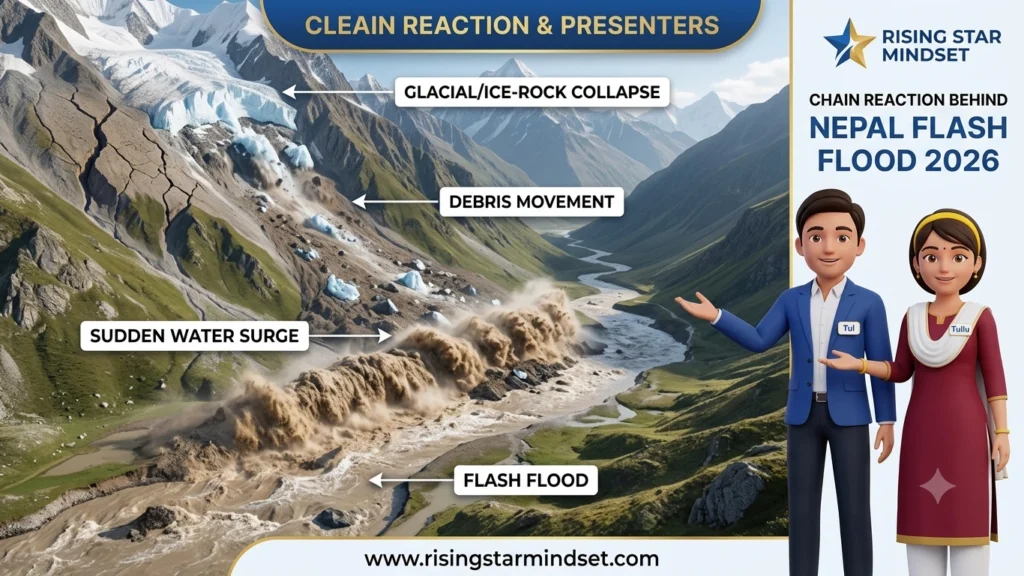
The event can be understood as a chain reaction:
Ice/Glacial Collapse
↓
Rock and Ice Avalanche
↓
Huge Debris Movement
↓
Sudden Water Surge
↓
Flash Flood
↓
Destruction Downstream
Scientific assessments reported that the event was associated with a major ice-rock avalanche rather than simply an earthquake or ordinary rainfall event.
हिंदी में समझिए ( Nepal Flash Flood 2026 )
सबसे महत्वपूर्ण सवाल है कि क्या यह सिर्फ बारिश के कारण आई बाढ़ थी?
वर्तमान आकलनों के अनुसार, इस आपदा में बर्फ और चट्टानों के बड़े पैमाने पर गिरने/हिमनदीय धंसाव की महत्वपूर्ण भूमिका थी।
इसे एक श्रृंखला की तरह समझ सकते हैं:
बर्फ/हिमनदी का धंसाव
↓
बर्फ और चट्टानों का तेज बहाव
↓
भारी मात्रा में मलबा
↓
अचानक पानी का तेज बहाव
↓
फ्लैश फ्लड
↓
नीचे के क्षेत्रों में भारी तबाही
5. What Is a Glacier Collapse?
English Explanation
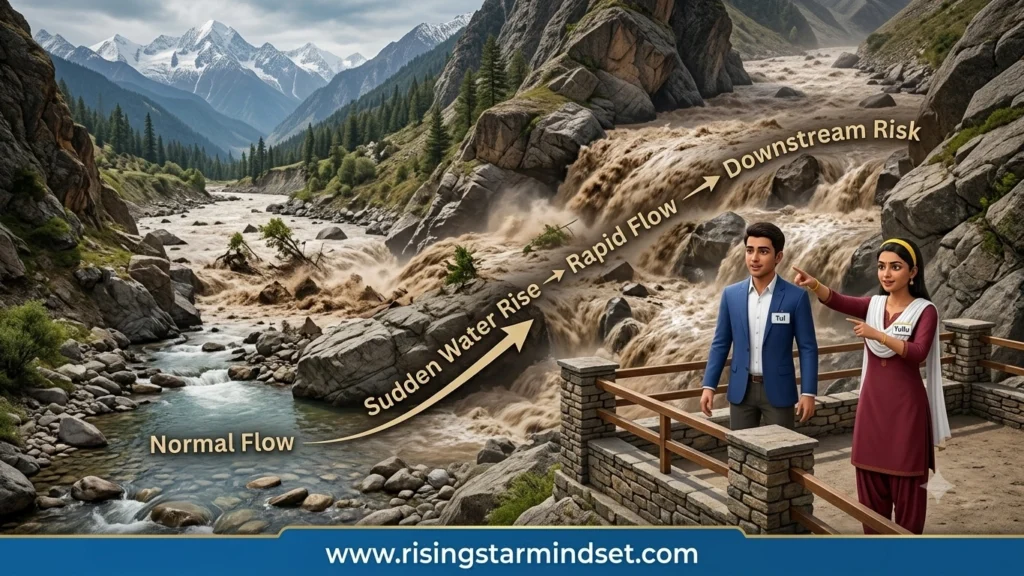
A glacier is a large body of ice formed from accumulated snow over many years.
Glaciers normally move very slowly. But unstable sections can suddenly break, collapse or slide down a steep mountain slope.
When ice and rocks move together at high speed, the event can become extremely destructive.
हिंदी में समझिए ( Nepal Flash Flood 2026 )
हिमनद यानी Glacier बर्फ का एक विशाल भंडार होता है, जो कई वर्षों तक जमा हुई बर्फ और हिम से बनता है।
सामान्य रूप से ग्लेशियर बहुत धीरे-धीरे आगे बढ़ते हैं। लेकिन यदि उनका कोई हिस्सा अस्थिर हो जाए तो वह अचानक टूटकर या धंसकर पहाड़ से नीचे गिर सकता है।
जब बर्फ और चट्टानें एक साथ बहुत तेजी से नीचे आती हैं, तो उनका प्रभाव बेहद विनाशकारी हो सकता है।
6. How Did Ice and Rock Trigger a Flood?
English Explanation
Imagine a huge mass of ice and rock suddenly entering a narrow mountain valley.
The impact can displace water, block a river, generate debris and push an enormous amount of material downstream.
In the Nepal event, reports indicated an extremely rapid rise in water levels in parts of the affected river system.
हिंदी में समझिए ( Nepal Flash Flood 2026 )
कल्पना कीजिए कि बर्फ और चट्टानों का एक बहुत बड़ा हिस्सा अचानक किसी संकरी पहाड़ी घाटी में गिर जाए।
इससे:
- पानी तेजी से विस्थापित हो सकता है।
- नदी का रास्ता प्रभावित हो सकता है।
- भारी मलबा बन सकता है।
- पानी और मलबा तेज गति से नीचे जा सकता है।
- अचानक बाढ़ की स्थिति बन सकती है।
यही कारण है कि ऐसी घटनाएं कुछ ही समय में बहुत बड़ी आपदा में बदल सकती हैं।
7. Why Was the Flood So Destructive?
1. Steep Mountain Slopes
English
Steep Himalayan slopes can accelerate water, rocks and debris.
हिंदी
हिमालय की खड़ी ढलानें पानी, चट्टानों और मलबे की गति को बहुत बढ़ा सकती हैं।
2. Narrow Valleys ( Nepal Flash Flood 2026 )
English
Narrow valleys can concentrate a huge volume of water and debris into a relatively small path.
हिंदी
संकरी घाटियां बड़ी मात्रा में पानी और मलबे को एक छोटे रास्ते में केंद्रित कर देती हैं।
3. Sudden Development
English
Flash floods can develop very quickly, leaving people with little time to evacuate.
हिंदी
फ्लैश फ्लड बहुत तेजी से विकसित हो सकती है, जिससे लोगों को सुरक्षित स्थान पर पहुंचने के लिए बहुत कम समय मिलता है।
4. Heavy Debris
English
Water mixed with rocks, mud, ice and other debris can be far more destructive than water alone.
हिंदी
जब पानी के साथ चट्टानें, मिट्टी, बर्फ और मलबा बहता है, तो उसकी विनाशकारी शक्ति केवल पानी की तुलना में कई गुना बढ़ सकती है।
8. Human Impact | मानवीय प्रभाव
English Explanation
The human cost has been devastating.
As of 31 August 2026, Nepal had reported 903 deaths and more than 4,200 missing people.
Thousands of people were affected directly or indirectly.
हिंदी में समझिए
इस आपदा का मानवीय नुकसान बेहद गंभीर रहा है।
31 अगस्त 2026 तक नेपाल में 903 मौतों और 4,200 से अधिक लोगों के लापता होने की सूचना थी।
हजारों लोग प्रत्यक्ष या अप्रत्यक्ष रूप से प्रभावित हुए।
यह आंकड़ा अंतिम नहीं माना जाना चाहिए क्योंकि बचाव और खोज अभियान जारी थे।
9. Impact on Hydropower Projects
English Explanation
Hydropower is extremely important for Nepal’s economy and energy system.
However, many hydropower projects are located close to mountain rivers.
The 2026 disaster severely affected hydropower infrastructure, and rescue teams faced the difficult task of reaching workers trapped or missing inside tunnels.
हिंदी में समझिए
नेपाल की अर्थव्यवस्था और ऊर्जा व्यवस्था में जलविद्युत का महत्वपूर्ण स्थान है।
लेकिन कई जलविद्युत परियोजनाएं पहाड़ी नदियों के पास स्थित हैं।
2026 की इस आपदा से जलविद्युत बुनियादी ढांचे को भी नुकसान पहुंचा और कई कर्मचारी सुरंगों में फंस गए या लापता हो गए।
इसलिए सुरंगों तक पहुंचना बचाव दलों के लिए सबसे बड़ी चुनौतियों में से एक बन गया।
10. Rescue and Relief Operations
English Explanation
Rescue operations involved security forces, emergency workers, local authorities and other agencies.
Teams had to work in extremely difficult conditions, including:
- Mud
- Rocks
- Blocked roads
- Damaged bridges
- Unstable slopes
- Flooded areas
- Blocked tunnels
हिंदी में समझिए ( Nepal Flash Flood 2026 )
बचाव अभियान में सुरक्षा बलों, आपातकालीन कर्मचारियों, स्थानीय प्रशासन और अन्य एजेंसियों ने भूमिका निभाई।
बचाव दलों को कई कठिन परिस्थितियों का सामना करना पड़ा:
- कीचड़
- चट्टानों का मलबा
- बंद सड़कें
- क्षतिग्रस्त पुल
- अस्थिर पहाड़ी ढलान
- बाढ़ प्रभावित क्षेत्र
- बंद सुरंगें
ऐसी परिस्थितियों में बचाव कार्य सामान्य आपदाओं की तुलना में कहीं अधिक कठिन होता है।
11. Climate Change and the Himalayas
English Explanation
The Nepal disaster has renewed attention on the relationship between climate change and Himalayan hazards.
It would be scientifically incorrect to say that climate change alone caused this particular event.
However, scientists have warned that rising temperatures are changing Himalayan glaciers, snow patterns, permafrost and mountain stability.
These changes can influence the risk of certain glacier-related hazards.
हिंदी में समझिए ( Nepal Flash Flood 2026 )
नेपाल की इस आपदा ने जलवायु परिवर्तन और हिमालयी आपदाओं के बीच संबंध पर फिर से ध्यान आकर्षित किया है।
यह कहना वैज्ञानिक रूप से सही नहीं होगा कि केवल Climate Change ही इस एक घटना का कारण था।
लेकिन वैज्ञानिक लंबे समय से चेतावनी देते रहे हैं कि बढ़ता तापमान हिमालय के:
- ग्लेशियर
- बर्फ
- पर्माफ्रॉस्ट
- पर्वतीय ढलानों
- जल प्रणालियों
को प्रभावित कर रहा है।
इन बदलावों से कुछ प्रकार के ग्लेशियर-संबंधी खतरों का जोखिम बढ़ सकता है।
12. Why Are the Himalayas Vulnerable?
English Explanation
The Himalayas are particularly vulnerable because several hazards can occur in the same region.
These include:
- Earthquakes
- Landslides
- Flash floods
- Avalanches
- Glacier instability
- Extreme rainfall
- Glacial lake hazards
When multiple hazards interact, they can create a cascading disaster.
हिंदी में समझिए ( Nepal Flash Flood 2026 )
हिमालयी क्षेत्र कई प्रकार की प्राकृतिक आपदाओं के प्रति संवेदनशील है।
यहां हो सकते हैं:
- भूकंप
- भूस्खलन
- फ्लैश फ्लड
- हिमस्खलन
- ग्लेशियर अस्थिरता
- अत्यधिक वर्षा
- ग्लेशियल झील से जुड़े खतरे
जब कई खतरे एक-दूसरे को प्रभावित करते हैं, तो इसे Cascading Disaster यानी क्रमिक/श्रृंखलाबद्ध आपदा कहा जा सकता है।
13. What Is a GLOF? ( Nepal Flash Flood 2026 )
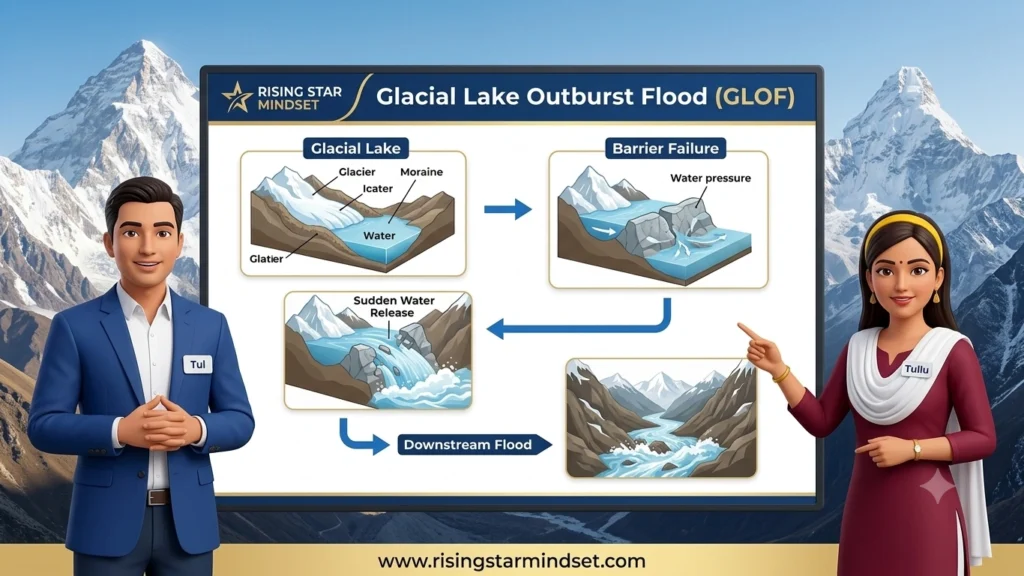
GLOF = Glacial Lake Outburst Flood
English Explanation
A Glacial Lake Outburst Flood occurs when water stored in a glacial lake suddenly escapes because its natural barrier fails or is breached.
The barrier may consist of:
- Ice
- Rock
- Sediment
- Natural debris
A GLOF can release a huge volume of water downstream.
हिंदी में समझिए ( Nepal Flash Flood 2026 )
GLOF का पूरा नाम Glacial Lake Outburst Flood है।
जब किसी ग्लेशियल झील में जमा पानी अचानक प्राकृतिक बांध या अवरोध टूटने के कारण बाहर निकल जाता है, तो उसे GLOF कहा जाता है।
यह प्राकृतिक अवरोध बर्फ, चट्टान, मिट्टी या मलबे से बना हो सकता है।
एक बार अवरोध टूटने पर बहुत बड़ी मात्रा में पानी तेजी से नीचे की ओर जा सकता है।
Important Note
Every flash flood is not a GLOF.
हर फ्लैश फ्लड को GLOF नहीं कहा जा सकता।
2026 Nepal event को समझने के लिए ice-rock/glacial collapse और उसके बाद बने debris/flood surge को अलग-अलग समझना जरूरी है।
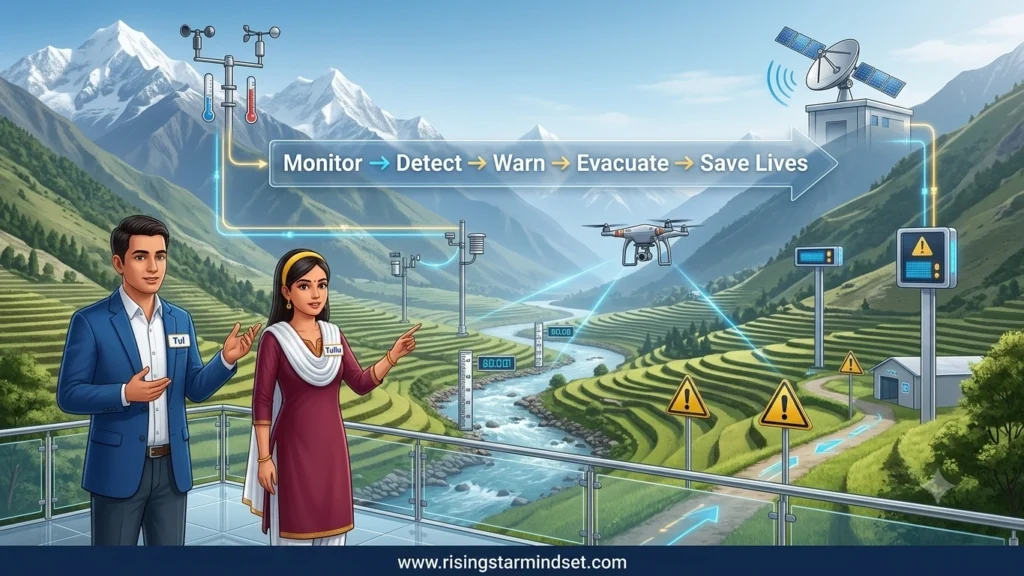
14. Early Warning Systems: Why Are They Important?
English Explanation
Early warning systems can save lives.
Scientists and authorities can monitor:
- River levels
- Rainfall
- Glacier movement
- Glacial lakes
- Landslide-prone slopes
- Weather conditions
Modern technology can combine satellites, sensors, drones, GPS and communication networks to detect dangerous changes.
हिंदी में समझिए ( Nepal Flash Flood 2026 )
Early Warning System यानी पूर्व चेतावनी प्रणाली लोगों की जान बचाने में महत्वपूर्ण भूमिका निभा सकती है।
इसमें निगरानी की जा सकती है:
- नदी के जलस्तर की
- वर्षा की
- ग्लेशियर की गतिविधि की
- ग्लेशियल झीलों की
- भूस्खलन संभावित क्षेत्रों की
- मौसम की स्थिति की
Satellite, sensors, drones, GPS और communication systems जैसी तकनीकें मिलकर जोखिम की पहचान में मदद कर सकती हैं।
लेकिन केवल warning जारी करना पर्याप्त नहीं है।
Warning लोगों तक समय पर पहुंचनी भी चाहिए और उन्हें evacuation plan भी पता होना चाहिए।
15. What Can Nepal Do to Reduce Future Risk?
English Explanation
Nepal can strengthen disaster preparedness through:
- Better glacier monitoring
- River-level monitoring
- Early-warning systems
- Safer infrastructure
- Hazard mapping
- Emergency evacuation plans
- Community education
- International cooperation
हिंदी में समझिए ( Nepal Flash Flood 2026 )
नेपाल भविष्य में ऐसी आपदाओं से होने वाले नुकसान को कम करने के लिए कई कदम उठा सकता है:
- ग्लेशियरों की बेहतर निगरानी
- नदियों के जलस्तर की निगरानी
- मजबूत Early Warning Systems
- सुरक्षित बुनियादी ढांचा
- Hazard Mapping
- Emergency Evacuation Plans
- लोगों में आपदा जागरूकता
- अंतरराष्ट्रीय सहयोग
16. Lessons From the Nepal Disaster
Lesson 1: Nature Can Change Quickly
English
Mountain environments can change rapidly and unexpectedly.
हिंदी
पर्वतीय पर्यावरण कभी-कभी बहुत तेजी से और अप्रत्याशित रूप से बदल सकता है।
Lesson 2: Early Warning Saves Lives
English
Even a few minutes of additional warning can be extremely valuable during a flash flood.
हिंदी
फ्लैश फ्लड जैसी आपदा में कुछ अतिरिक्त मिनटों की चेतावनी भी लोगों की जान बचाने में महत्वपूर्ण हो सकती है।
Lesson 3: Infrastructure Must Be Disaster-Resilient
English
Roads, bridges and hydropower projects must be designed with extreme natural hazards in mind.
हिंदी
सड़क, पुल और जलविद्युत परियोजनाओं को अत्यधिक प्राकृतिक खतरों को ध्यान में रखकर तैयार किया जाना चाहिए।
Lesson 4: Science and Technology Matter
English
Satellite monitoring, sensors, drones and data analysis can improve disaster preparedness.
हिंदी
Satellite monitoring, sensors, drones और data analysis जैसी तकनीकें आपदा से पहले तैयारी बेहतर कर सकती हैं।
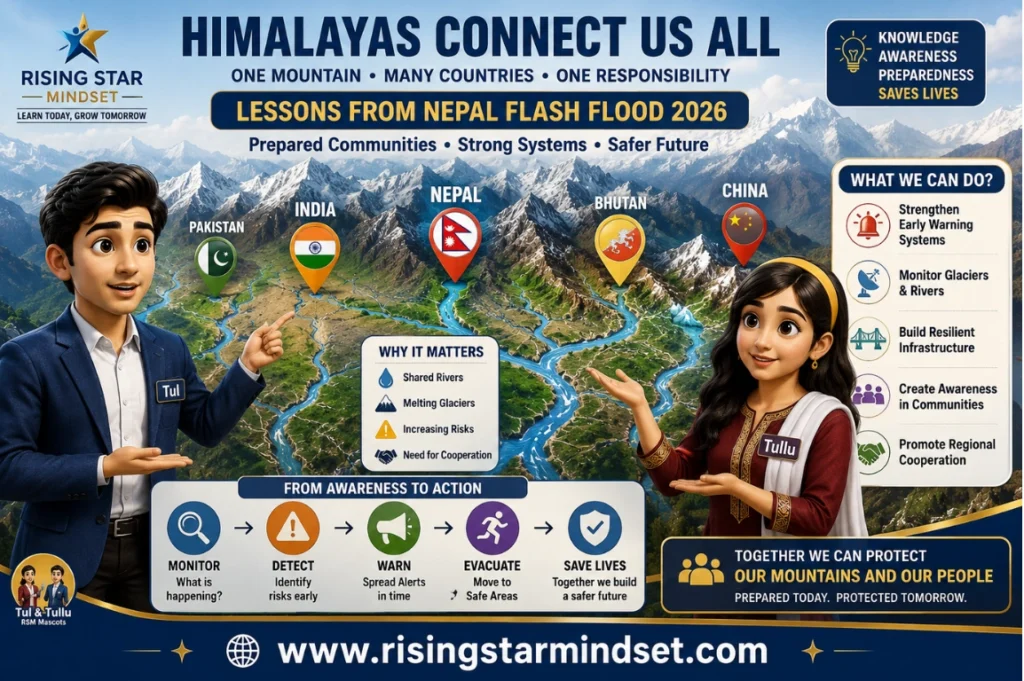
Lesson 5: Regional Cooperation Is Important
English
The Himalayan environment crosses national boundaries, making cooperation between neighbouring countries essential.
हिंदी
हिमालय किसी एक देश तक सीमित नहीं है। इसलिए हिमालयी क्षेत्र में स्थित पड़ोसी देशों के बीच सहयोग बहुत महत्वपूर्ण है।
17. Nepal Flash Flood 2026: Important Facts
| Question | Answer |
| Major disaster date | 26 August 2026 |
| Country | Nepal |
| Region | Himalayas |
| Major affected area | Northern Nepal |
| Major river systems | Lhende Khola, Bhote Koshi, Trishuli |
| Major trigger | Ice-rock/glacial collapse |
| Major hazards | Flash flood, debris, landslides |
| Reported deaths by 31 Aug | 903 |
| Reported missing | 4,200+ |
| Major rescue challenge | Hydropower tunnels |
| Important environmental issue | Himalayan climate and glacier risk |
| Important solution | Early warning and preparedness |
18. Nepal Flood 2026: Important GK Questions
Q1. When did the major Nepal Flash Flood 2026 occur?
Answer: 26 August 2026.
हिंदी: नेपाल की प्रमुख फ्लैश फ्लड 26 अगस्त 2026 को हुई।
Q2. Which mountain range is associated with the disaster region?
Answer: The Himalayas.
हिंदी: यह क्षेत्र हिमालय पर्वत श्रृंखला से संबंधित है।
Q3. What major event was associated with the flood?
Answer: A major ice-rock/glacial collapse.
हिंदी: एक बड़े बर्फ-चट्टान/हिमनदीय धंसाव की घटना।
Q4. What does GLOF stand for?
Answer: Glacial Lake Outburst Flood.
हिंदी: ग्लेशियल झील से अचानक निकलने वाली बाढ़।
Q5. Why are flash floods dangerous?
Answer: Because they can develop very rapidly and provide little evacuation time.
हिंदी: क्योंकि ये बहुत तेजी से विकसित हो सकती हैं और लोगों को सुरक्षित स्थान पर जाने के लिए बहुत कम समय मिलता है।
Q6. Why were hydropower tunnels important in the rescue operation?
Answer: Because workers were trapped or reported missing inside tunnels.
हिंदी: क्योंकि कई कर्मचारी सुरंगों के अंदर फंस गए या लापता बताए गए।
19. Multiple Choice Questions ( Nepal Flash Flood 2026 )
1. Nepal Flash Flood 2026 occurred mainly in which geographical region?
A. Sahara
B. Himalayas
C. Amazon
D. Alps
Correct Answer: B. Himalayas
हिंदी व्याख्या: नेपाल का यह क्षेत्र हिमालय में स्थित है।
2. Which event was strongly associated with the disaster?
A. Volcanic eruption
B. Ice-rock/glacial collapse
C. Tsunami
D. Sandstorm
Correct Answer: B. Ice-rock/glacial collapse
3. What does GLOF mean?
A. Global Lake Ocean Flood
B. Glacial Lake Outburst Flood
C. Glacier Level Overflow Force
D. Global Landslide Ocean Flow
Correct Answer: B. Glacial Lake Outburst Flood
4. Which infrastructure became a major rescue challenge?
A. Railway tunnels
B. Hydropower tunnels
C. Airport runways
D. Oil pipelines
Correct Answer: B. Hydropower tunnels
5. Which factor is associated with increasing Himalayan environmental risk?
A. Rising temperatures
B. Ocean tides only
C. Desert winds
D. Volcanic activity only
Correct Answer: A. Rising temperatures
20. Fill in the Blanks ( Nepal Flash Flood 2026 )
1.
The major Nepal flash flood occurred on ________.
Answer: 26 August 2026
2.
GLOF stands for ________.
Answer: Glacial Lake Outburst Flood
3.
Nepal is home to part of the ________ mountain range.
Answer: Himalayas
4.
A sudden flood that develops very quickly is called a ________ flood.
Answer: Flash
5.
Hydropower projects generate electricity using ________.
Answer: Water
21. True or False ( Nepal Flash Flood 2026 )
1. Every flash flood is a GLOF.
Answer: False
2. The Himalayas are vulnerable to landslides and floods.
Answer: True
3. Early warning systems can help save lives.
Answer: True
4. Climate change should automatically be considered the sole cause of every Himalayan disaster.
Answer: False
5. Hydropower infrastructure can be vulnerable to mountain floods.
Answer: True
22. Frequently Asked Questions ( Nepal Flash Flood 2026 )
What happened in Nepal in August 2026?
English
A catastrophic flash flood struck northern Nepal on 26 August 2026 following a major ice-rock/glacial collapse and associated debris and water surge.
हिंदी
26 अगस्त 2026 को उत्तरी नेपाल में बड़े बर्फ-चट्टान/हिमनदीय धंसाव के बाद भारी मलबे और पानी के तेज बहाव से विनाशकारी फ्लैश फ्लड आई।
How many people died in the Nepal flood?
English
As of 31 August 2026, Nepal had reported 903 deaths.
हिंदी
31 अगस्त 2026 तक नेपाल में 903 मौतों की सूचना दी गई थी।
The number may change as rescue and identification operations continue.
How many people were missing?
English
More than 4,200 people were reported missing as of 31 August 2026.
हिंदी
31 अगस्त 2026 तक 4,200 से अधिक लोग लापता बताए गए थे।
Was the disaster caused by climate change?
English
Climate change should not be described as the sole cause of this individual event. However, warming temperatures are changing Himalayan glaciers and mountain environments and may influence the risk of some glacier-related hazards.
हिंदी
इस एक घटना का अकेला कारण Climate Change बताना वैज्ञानिक रूप से सही नहीं होगा। लेकिन बढ़ता तापमान हिमालय के ग्लेशियरों और पर्वतीय वातावरण को बदल रहा है और कुछ ग्लेशियर-संबंधी खतरों के जोखिम को प्रभावित कर सकता है।
What is a flash flood?
English
A flash flood is a sudden flood that develops rapidly, often giving people very little time to evacuate.
हिंदी
फ्लैश फ्लड अचानक आने वाली ऐसी बाढ़ है जो बहुत तेजी से विकसित होती है और लोगों को सुरक्षित स्थान पर जाने के लिए बहुत कम समय देती है।
What is a glacier?
English
A glacier is a large, slowly moving mass of ice formed over many years from accumulated snow.
हिंदी
ग्लेशियर या हिमनद कई वर्षों तक जमा हुई बर्फ से बनने वाला बर्फ का विशाल और धीरे-धीरे गतिशील भंडार है।
What is GLOF?
English
GLOF means Glacial Lake Outburst Flood. It occurs when water stored in a glacial lake suddenly escapes after the natural barrier holding it back fails.
हिंदी
GLOF का अर्थ Glacial Lake Outburst Flood है। जब ग्लेशियल झील को रोकने वाला प्राकृतिक अवरोध टूट जाता है और पानी अचानक बाहर निकलता है, तो ऐसी बाढ़ को GLOF कहते हैं।
23. Why This Disaster Matters for India Too
English Explanation
The Himalayan region is shared by several countries, including Nepal, India, Bhutan and China.
Changes in Himalayan glaciers and rivers can have implications beyond national borders.
India’s Himalayan states also face risks from:
- Landslides
- Flash floods
- Glacial hazards
- Extreme rainfall
- River flooding
Therefore, Nepal’s disaster provides an important lesson for disaster preparedness across the wider Himalayan region.
हिंदी में समझिए
हिमालय केवल नेपाल तक सीमित नहीं है। भारत, नेपाल, भूटान और चीन सहित कई देशों का संबंध इस पर्वतीय क्षेत्र से है।
हिमालयी ग्लेशियरों और नदियों में होने वाले बदलाव का प्रभाव सीमाओं से आगे भी पड़ सकता है।
भारत के हिमालयी राज्यों में भी:
- भूस्खलन
- फ्लैश फ्लड
- ग्लेशियर संबंधी खतरे
- अत्यधिक वर्षा
- नदी बाढ़
जैसे जोखिम मौजूद हैं।
इसलिए नेपाल की यह आपदा पूरे हिमालयी क्षेत्र के लिए एक महत्वपूर्ण चेतावनी और सीख है।
24. What Can Students Learn From This Disaster?
English
This disaster is not only a news topic. It is also an important educational topic for students studying:
- Geography
- Environment
- Climate Change
- Disaster Management
- Current Affairs
- General Knowledge
- Competitive Exams
हिंदी
यह केवल एक News Topic नहीं है। यह छात्रों के लिए Geography, Environment, Climate Change, Disaster Management, Current Affairs और General Knowledge का महत्वपूर्ण विषय भी है।
BPSC, UPSC, SSC और अन्य competitive examinations में ऐसे current environmental events से प्रश्न बनाए जा सकते हैं।
25. Key Terms to Remember ( Nepal Flash Flood 2026 )
| English Term | Hindi Meaning |
| Flash Flood | अचानक आने वाली बाढ़ |
| Glacier | हिमनद / ग्लेशियर |
| Glacier Collapse | हिमनदीय धंसाव |
| Ice-Rock Avalanche | बर्फ-चट्टान का हिमस्खलन/तेज ढलान से गिरना |
| Landslide | भूस्खलन |
| Debris Flow | मलबे का तेज बहाव |
| GLOF | ग्लेशियल झील से अचानक आने वाली बाढ़ |
| Early Warning System | पूर्व चेतावनी प्रणाली |
| Disaster Management | आपदा प्रबंधन |
| Climate Change | जलवायु परिवर्तन |
| Hydropower | जलविद्युत |
| Evacuation | सुरक्षित स्थान पर निकासी |
| Resilience | आपदा के बाद संभलने की क्षमता |
26. Final Takeaway

English
The Nepal Flash Flood 2026 shows how a natural event in the high Himalayas can quickly develop into a major humanitarian and infrastructure disaster.
The event also demonstrates why scientists need to closely monitor glaciers, mountain slopes, rivers and changing climatic conditions.
Technology can help detect danger, but technology must be combined with public awareness, emergency planning and rapid evacuation.
The biggest lesson is simple:
We cannot prevent every natural hazard, but we can prepare better for it.
हिंदी ( Nepal Flash Flood 2026 )
Nepal Flash Flood 2026 यह दिखाती है कि ऊंचे हिमालयी क्षेत्र में शुरू हुई एक प्राकृतिक घटना कितनी तेजी से बड़ी मानवीय और बुनियादी ढांचे की आपदा में बदल सकती है।
यह घटना यह भी बताती है कि ग्लेशियरों, पर्वतीय ढलानों, नदियों और बदलती जलवायु परिस्थितियों की लगातार निगरानी क्यों जरूरी है।
तकनीक खतरे की पहचान करने में मदद कर सकती है, लेकिन तकनीक के साथ जन-जागरूकता, आपातकालीन योजना और तेजी से सुरक्षित स्थान पर पहुंचाने की व्यवस्था भी जरूरी है।
सबसे बड़ी सीख यही है:
We cannot prevent every natural hazard, but we can prepare better for it.
हम हर प्राकृतिक आपदा को रोक नहीं सकते, लेकिन बेहतर तैयारी करके उसके नुकसान को कम जरूर कर सकते हैं।
🌏 Rising Star Mindset Message
Learn from every event.
Understand nature.
Respect science.
Prepare for tomorrow.
हर घटना से सीखिए।
प्रकृति को समझिए।
विज्ञान का सम्मान कीजिए।
भविष्य के लिए तैयार रहिए।
Rising Star Mindset — Learn Today, Grow Tomorrow.
🌟 Keep Learning with Rising Star Mindset
🌐 Website: www.risingstarmindset.com