

India’s 3 New UNESCO Tentative List Sites 2026: Facts, History and Importance.

Have you ever imagined that India has an ancient town with temples and monasteries, an island landscape with mud volcanoes, and volcanic islands shaped by the movement of Earth’s tectonic plates? ( India’s 3 New UNESCO Tentative List Sites)
These are not three fictional places. They are real parts of India’s cultural and natural heritage.
In September 2026, three important Indian properties were submitted to UNESCO’s World Heritage Tentative List: the Sirpur Cultural and Archaeological Landscape, the Karst-mud-volcano Complex of Baratang, and the Andaman Subduction Volcanoes. UNESCO’s official records show the submission date as 28 September 2026. The additions were reported publicly in October 2026.
This development brings together two very different aspects of India: its ancient cultural history and its remarkable geological diversity.
But there is an important question: Does being added to UNESCO’s Tentative List mean that a place has already become a UNESCO World Heritage Site?
The answer is no. A Tentative List entry is an important step towards possible future nomination, not a final World Heritage designation.
In this detailed guide, we will explore all three sites, understand their historical and scientific importance, compare their main features, and learn useful facts in English and Hindi.
PREVIOUS POST : Chandrayaan-1: How India Helped Discover Water on the Moon
Quick Overview: India’s 3 New UNESCO Tentative List Sites
The following table summarises the three properties and their main significance.
| Site name | State or Union Territory | Heritage category | Main feature |
| Sirpur Cultural and Archaeological Landscape | Chhattisgarh | Cultural | Ancient temples, monasteries and urban remains |
| Karst-mud-volcano Complex of Baratang | Andaman and Nicobar Islands | Natural | Limestone caves and mud volcanoes |
| Andaman Subduction Volcanoes | Andaman and Nicobar Islands | Natural | Volcanic islands and tectonic processes |

Important fact: These three entries were submitted on 28 September 2026. Their inclusion on the Tentative List does not mean that they have already received final UNESCO World Heritage status.
1. Sirpur Cultural and Archaeological Landscape: A Window into Ancient India ( India’s 3 New UNESCO Tentative List Sites )

English explanation
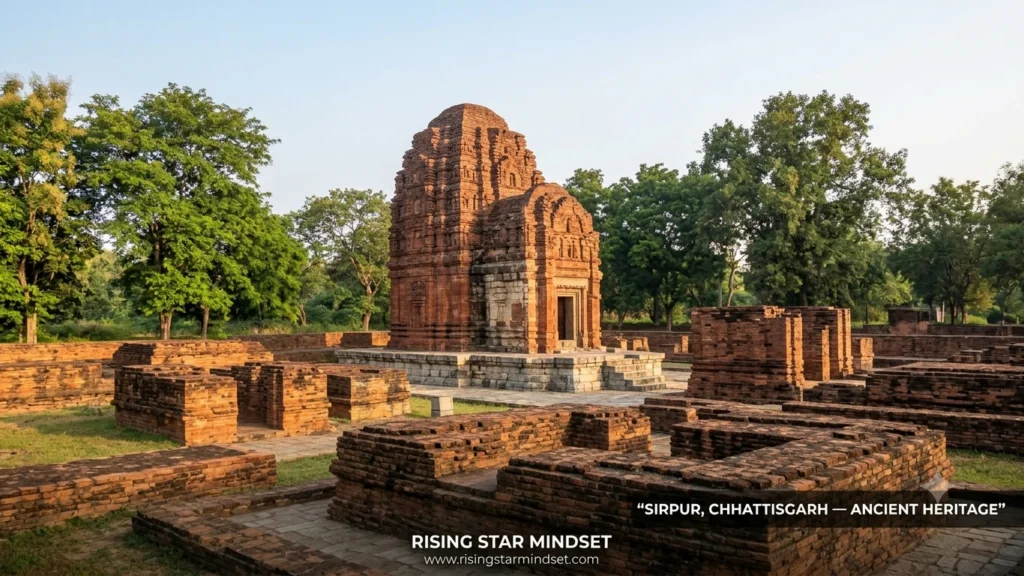
Sirpur is an important archaeological site located in Mahasamund district, Chhattisgarh, on the eastern bank of the Mahanadi River. Historically known as Shripur or Sripura, the settlement developed into a significant political, religious and commercial centre in central India.
The town flourished under successive dynasties, including the Sharabhapuriya and Panduvamshi rulers. Its location near the Mahanadi helped connect the settlement with regional trade and cultural networks.
What makes Sirpur particularly interesting is the range of archaeological remains found within its wider landscape. These include Hindu temples, Buddhist monasteries, Jain religious remains, residential structures, market-related remains and evidence of urban infrastructure.
The Lakshmana Temple is one of Sirpur’s best-known monuments. It is an important example of early medieval brick temple architecture. The archaeological landscape also includes Buddhist monasteries such as Anandaprabhu Kuti Vihara and Swastik Vihara.
The remains broadly date from the 5th to the 12th centuries CE. Together, they help researchers understand how religion, architecture, political power, trade and daily life were connected in an early medieval settlement.
हिंदी में समझें ( India’s 3 New UNESCO Tentative List Sites )
सिरपुर छत्तीसगढ़ के महासमुंद जिले में महानदी के पूर्वी किनारे पर स्थित एक महत्वपूर्ण पुरातात्विक स्थल है। प्राचीन समय में इसे श्रीपुर या श्रीपुरा के नाम से भी जाना जाता था।
यह क्षेत्र अलग-अलग राजवंशों के शासनकाल में एक महत्वपूर्ण राजनीतिक, धार्मिक और व्यापारिक केंद्र के रूप में विकसित हुआ। महानदी के पास होने के कारण इसका संबंध व्यापार और सांस्कृतिक गतिविधियों से भी था।
सिरपुर की सबसे बड़ी विशेषता यह है कि यहाँ हिंदू मंदिरों, बौद्ध विहारों, जैन धार्मिक अवशेषों, आवासीय संरचनाओं और प्राचीन नगरीय जीवन के प्रमाण मिलते हैं।
यहाँ का लक्ष्मण मंदिर ईंटों से बनी प्राचीन वास्तुकला का एक महत्वपूर्ण उदाहरण है। सिरपुर के अवशेष लगभग पाँचवीं से बारहवीं शताब्दी ईस्वी के बीच के हैं।
इसलिए सिरपुर केवल मंदिरों का समूह नहीं है। यह हमें बताता है कि प्राचीन भारत में धर्म, व्यापार, शासन, कला और सामाजिक जीवन किस प्रकार एक-दूसरे से जुड़े हुए थे।
Important facts about Sirpur
| Fact | Details |
| Location | Mahasamund district, Chhattisgarh |
| River | Mahanadi |
| Historical name | Shripur or Sripura |
| Broad archaeological period | 5th–12th centuries CE |
| Famous monument | Lakshmana Temple |
| Other remains | Buddhist viharas, Jain structures, market and residential remains |
| UNESCO category | Cultural |
| Tentative List submission | 28 September 2026 |
Why is Sirpur historically important?
Sirpur helps researchers understand three major aspects of ancient Indian civilisation.
First, architectural development: The Lakshmana Temple demonstrates the skill involved in early medieval brick construction and temple design.
Second, religious interaction: The archaeological record includes structures associated with Hindu, Buddhist and Jain traditions. These remains provide evidence of a diverse religious landscape.
Third, urban and commercial life: Market-related remains, residential structures and the riverine setting help explain how settlements functioned as centres of administration, trade and learning.
For students of history, Sirpur is an excellent example of how archaeology can reveal information that written records alone may not fully explain.
2. Karst-mud-volcano Complex of Baratang: A Rare Geological Landscape
English explanation
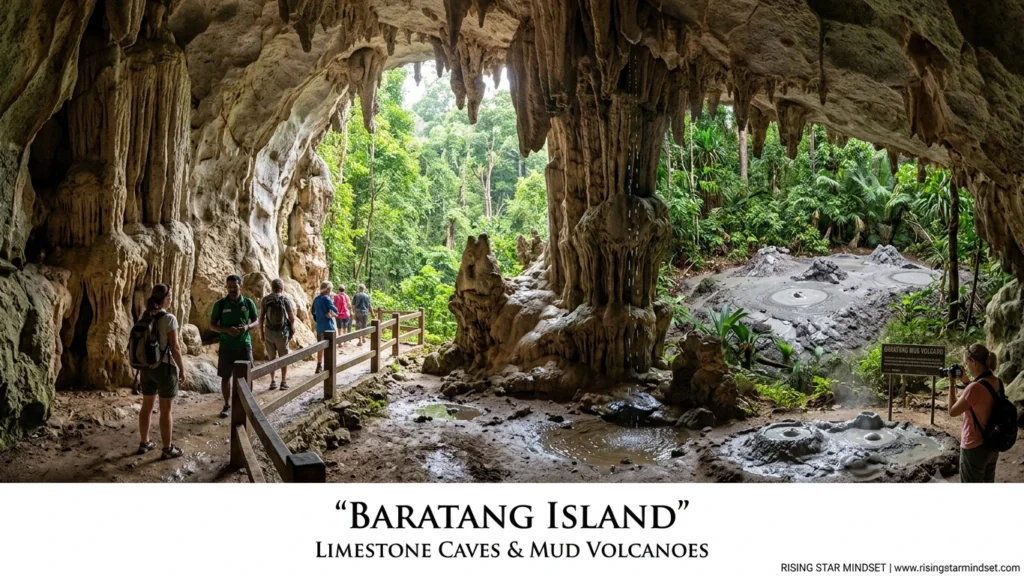
Baratang is an island in the Andaman and Nicobar Islands, known for its limestone caves, tropical surroundings and mud volcanoes.
The proposed heritage property is important because it brings together two distinct geological features: karst formations and mud-volcanic activity.
A karst landscape develops when water gradually dissolves soluble rocks, particularly limestone. Over long periods, this process can create caves, underground passages, chambers and other unusual landforms.
Mud volcanoes are different from conventional volcanoes. They release mixtures of mud, water and gases rather than the molten rock, or lava, associated with many familiar volcanic eruptions.
Their activity is connected with underground geological conditions. The resulting landscape can help scientists investigate the movement of fluids and gases beneath the Earth’s surface.
Baratang is therefore valuable not only for its visual appeal but also for the scientific questions its geological features raise.
हिंदी में समझें ( India’s 3 New UNESCO Tentative List Sites )
बाराटांग अंडमान और निकोबार द्वीपसमूह का एक द्वीप है। यह चूना-पत्थर की गुफाओं और कीचड़ के ज्वालामुखियों के लिए जाना जाता है।
यहाँ की भूवैज्ञानिक संरचनाएँ इसे विशेष बनाती हैं। चूना-पत्थर की गुफाएँ लंबे समय तक पानी के प्रभाव से चट्टानों के घुलने के कारण बनती हैं। समय के साथ इस प्रक्रिया से गुफाएँ, सुरंग जैसी संरचनाएँ और बड़े प्राकृतिक कक्ष बन सकते हैं।
कीचड़ के ज्वालामुखी सामान्य ज्वालामुखियों से अलग होते हैं। इनमें से कीचड़, पानी और गैसें बाहर निकल सकती हैं। इनमें सामान्य लावा-ज्वालामुखियों की तरह पिघली हुई चट्टान निकलना आवश्यक नहीं है।
बाराटांग का महत्व इसलिए है क्योंकि यहाँ प्राकृतिक संरचनाओं, भूविज्ञान और उष्णकटिबंधीय पर्यावरण का अनोखा मेल दिखाई देता है।
Important facts about Baratang
| Fact | Explanation |
| Location | Andaman and Nicobar Islands |
| Main geological features | Limestone caves and mud volcanoes |
| Karst formation | Develops through the dissolution of soluble rocks |
| Mud volcano material | Mud, water and gases may be released |
| Heritage category | Natural |
| UNESCO Tentative List submission | 28 September 2026 |
Karst landscape vs mud volcano: What is the difference?

| Feature | Karst landscape | Mud volcano |
| Main process | Dissolution of soluble rocks | Release of mud and underground fluids |
| Common materials involved | Limestone and water | Mud, water and gases |
| Typical visible feature | Caves and underground chambers | Mud vents or mounds |
| Scientific importance | Understanding rock dissolution and landform development | Understanding underground geological conditions |
Did you know? A limestone cave and a mud volcano may occur within the same broad region, but they form through different geological processes.
3. Andaman Subduction Volcanoes: Where Earth’s Geological Forces Become Visible

English explanation
The third property is the Andaman Subduction Volcanoes, associated with the geological processes that have shaped the Andaman island region.
The property includes the volcanic islands of Barren Island and Narcondam Island. These islands are significant for understanding the relationship between tectonic plate movement and volcanic activity.
A subduction zone forms when one tectonic plate moves beneath another. As the descending plate interacts with the surrounding mantle, conditions can develop that contribute to magma formation and volcanic activity.
Barren Island is especially notable because it hosts India’s only confirmed active volcano. Narcondam is also a volcanic island, but its geological history and present activity differ from those of Barren Island.
The wider Andaman region is influenced by complex tectonic processes. Studying these processes helps scientists understand how island arcs form and how Earth’s crust changes over geological time.
हिंदी में समझें ( India’s 3 New UNESCO Tentative List Sites )
अंडमान सबडक्शन ज्वालामुखी पृथ्वी की टेक्टोनिक प्लेटों की गति और ज्वालामुखीय गतिविधियों से जुड़े हैं। इस प्रस्तावित प्राकृतिक धरोहर में बैरन द्वीप और नारकोंडम द्वीप शामिल हैं।
टेक्टोनिक प्लेटें पृथ्वी के बाहरी कठोर भाग की विशाल चट्टानी प्लेटें हैं। जब एक प्लेट दूसरी प्लेट के नीचे जाने लगती है, तो इस प्रक्रिया को सबडक्शन कहा जाता है।
ऐसी परिस्थितियों में पृथ्वी के भीतर मैग्मा बनने और ज्वालामुखीय गतिविधि विकसित होने की प्रक्रिया को बढ़ावा मिल सकता है।
बैरन द्वीप भारत का एकमात्र पुष्ट सक्रिय ज्वालामुखी वाला स्थान है। नारकोंडम भी ज्वालामुखीय उत्पत्ति का द्वीप है, लेकिन दोनों की भूवैज्ञानिक विशेषताएँ और वर्तमान गतिविधियाँ एक जैसी नहीं हैं।
इन द्वीपों का अध्ययन वैज्ञानिकों को यह समझने में मदद करता है कि समुद्र में द्वीपों की श्रृंखलाएँ कैसे बनती हैं और पृथ्वी की सतह को आकार देने वाली शक्तियाँ किस प्रकार काम करती हैं।
Important facts about Andaman Subduction Volcanoes
| Fact | Details |
| Location | Andaman and Nicobar Islands |
| Important islands | Barren Island and Narcondam Island |
| Geological process | Subduction and volcanic activity |
| India’s confirmed active volcano | Barren Island |
| Heritage category | Natural |
| UNESCO Tentative List submission | 28 September 2026 |
What is a subduction zone? ( India’s 3 New UNESCO Tentative List Sites )
A subduction zone is a region where one tectonic plate moves beneath another plate. Such zones are associated with earthquakes, volcanic activity and the formation of distinctive geological landscapes.
Simple example: Imagine two large pieces of a moving puzzle. When one piece slides beneath the other, the forces and changes around their boundary can influence the Earth’s crust. Real tectonic processes are much more complex, but this comparison helps explain the basic idea.
4. UNESCO Tentative List vs World Heritage List: Know the Difference

One of the most important things to understand about this news is the difference between the Tentative List and the final World Heritage List.
English explanation ( India’s 3 New UNESCO Tentative List Sites )
UNESCO’s Tentative List is an inventory of properties that a country considers suitable for possible future nomination as World Heritage Sites.
In general, a property must be included on the relevant country’s Tentative List before it can be nominated for World Heritage inscription. It must then undergo the applicable nomination and evaluation process before the World Heritage Committee makes its decision.
Therefore, a Tentative List entry is an important preliminary step, but it is not a guarantee of future inscription.
हिंदी में समझें ( India’s 3 New UNESCO Tentative List Sites )
यूनेस्को की टेंटेटिव लिस्ट उन स्थानों की सूची है जिन्हें कोई देश भविष्य में विश्व धरोहर का दर्जा दिलाने के लिए संभावित उम्मीदवार मानता है।
किसी स्थल को अंतिम विश्व धरोहर सूची में शामिल करने से पहले नामांकन और मूल्यांकन जैसी प्रक्रियाओं से गुजरना पड़ता है। अंतिम निर्णय विश्व धरोहर समिति करती है।
इसलिए टेंटेटिव लिस्ट में शामिल होना महत्वपूर्ण है, लेकिन इसका अर्थ यह नहीं है कि उस स्थान को विश्व धरोहर का अंतिम दर्जा मिल चुका है।
Comparison table ( India’s 3 New UNESCO Tentative List Sites )

| Basis | Tentative List | World Heritage List |
| Meaning | Potential future nomination | Official inscription as a World Heritage Site |
| Stage | Preliminary stage | Final recognition stage |
| Does inclusion guarantee final status? | No | The site has been inscribed |
| Evaluation and nomination | Further steps may be required | Formal process has been completed |
| Why it matters | Signals a country’s intention to consider nomination | Recognises a property’s outstanding universal value |
Remember: The three properties discussed in this article are on India’s UNESCO Tentative List, not automatically confirmed World Heritage Sites.
5. Why Are These Three Entries Important for India?
The three properties represent different forms of heritage. Sirpur offers evidence of historical settlement, architecture and religious traditions, while the Andaman properties highlight geological features and natural processes.
Cultural heritage and natural heritage
| Aspect | Sirpur | Baratang | Andaman Subduction Volcanoes |
| Main subject | Human history and architecture | Geological formations | Tectonic and volcanic processes |
| What we can learn | Ancient urban life and religious traditions | How water and rocks shape landscapes | How plate movement influences volcanism |
| Educational value | History, archaeology and art | Earth science and geography | Geology and physical geography |
| Conservation concern | Protecting monuments and archaeological remains | Protecting fragile natural formations | Safeguarding natural environments and geological features |

English explanation ( India’s 3 New UNESCO Tentative List Sites )
These sites can help promote research, education and responsible tourism. They also show why heritage conservation needs different approaches.
Archaeological sites require careful protection of buildings, artefacts and excavated remains. Geological landscapes require attention to natural processes, fragile formations and surrounding ecosystems.
The inclusion of these properties on the Tentative List can also encourage public interest in lesser-known destinations. However, tourism should be planned responsibly so that increased attention does not damage the very heritage people want to experience.
हिंदी में समझें ( India’s 3 New UNESCO Tentative List Sites )
ये तीनों स्थल भारत की अलग-अलग प्रकार की विरासत को सामने लाते हैं।
सिरपुर हमें प्राचीन इतिहास, वास्तुकला और सामाजिक जीवन के बारे में जानकारी देता है। बाराटांग प्राकृतिक भूवैज्ञानिक संरचनाओं को समझने में मदद करता है। अंडमान के ज्वालामुखीय द्वीप पृथ्वी की आंतरिक शक्तियों और टेक्टोनिक प्लेटों की गतिविधियों का उदाहरण हैं।
इन स्थलों के संरक्षण के लिए अलग-अलग तरीकों की आवश्यकता है। ऐतिहासिक स्थलों पर पुरातात्विक अवशेषों को सुरक्षित रखना जरूरी है, जबकि प्राकृतिक स्थलों पर नाजुक भू-आकृतियों और पर्यावरण की रक्षा भी महत्वपूर्ण है।
जिम्मेदार पर्यटन स्थानीय समुदायों के लिए अवसर पैदा कर सकता है, लेकिन पर्यटन का विकास इस प्रकार होना चाहिए कि प्राकृतिक और ऐतिहासिक धरोहर को नुकसान न पहुँचे।
6. How Can Students Use This Information?
This topic is useful for students preparing for general knowledge examinations, geography, history and current-affairs discussions.
| Subject | What to remember |
| History | Sirpur and its archaeological remains |
| Geography | Mahanadi River and the location of Sirpur |
| Indian culture | Hindu, Buddhist and Jain remains at Sirpur |
| Earth science | Karst formations and mud volcanoes |
| Geology | Subduction zones and volcanic activity |
| Current affairs | Three Indian Tentative List submissions in September 2026 |
| General knowledge | Difference between a Tentative List and final World Heritage inscription |
Five facts to remember ( India’s 3 New UNESCO Tentative List Sites)
- Sirpur is located in Chhattisgarh.
- Sirpur lies on the eastern bank of the Mahanadi River.
- Baratang is known for limestone caves and mud volcanoes.
- Barren Island hosts India’s only confirmed active volcano.
- Inclusion on UNESCO’s Tentative List does not automatically grant World Heritage status.
These facts can help readers build a basic understanding of the subject without memorising an unnecessarily long list of dates and technical terms.
7. Test Your Knowledge: A Quick Quiz
Try answering these questions before checking the answer key.
Question 1: Which river is associated with Sirpur?
A. Godavari
B. Mahanadi
C. Narmada
D. Tapi
Question 2: What is a karst landscape commonly associated with?
A. Limestone dissolution and cave formation
B. Glacier movement only
C. Sand dune migration only
D. Coral bleaching only
Question 3: Which island has India’s only confirmed active volcano?
A. Narcondam Island
B. Barren Island
C. Majuli Island
D. Diu Island
Question 4: What does a subduction zone involve?
A. One tectonic plate moving beneath another
B. A river changing its direction
C. Wind depositing sand
D. A glacier melting
Question 5: Does Tentative List inclusion guarantee World Heritage status?
A. Yes, automatically
B. No, further nomination and evaluation are required
Answer key
| Question | Correct answer | Explanation |
| 1 | B — Mahanadi | Sirpur is located on the eastern bank of the Mahanadi River |
| 2 | A — Limestone dissolution | Water can dissolve soluble rock and help form caves |
| 3 | B — Barren Island | It hosts India’s only confirmed active volcano |
| 4 | A — One plate beneath another | This is the basic meaning of subduction |
| 5 | B — No | Tentative List inclusion is not final inscription |
8. Frequently Asked Questions (FAQs) ( India’s 3 New UNESCO Tentative List Sites )
Q1. Which three Indian sites were added to UNESCO’s Tentative List in September 2026?
The three entries were Sirpur Cultural and Archaeological Landscape in Chhattisgarh, Karst-mud-volcano Complex of Baratang in the Andaman and Nicobar Islands, and Andaman Subduction Volcanoes.
Q2. When were these three properties submitted?
UNESCO’s official Tentative List records show the submission date as 28 September 2026 for all three properties.
Q3. Is Sirpur already a UNESCO World Heritage Site?
The entry discussed here is on UNESCO’s Tentative List. This should not be confused with final inscription on the World Heritage List.
Q4. What is Sirpur famous for?
Sirpur is known for its archaeological landscape, including the Lakshmana Temple, Buddhist monasteries, other religious remains and evidence of historic urban and commercial activity.
Q5. Why are Baratang’s mud volcanoes unusual?
Unlike conventional lava-producing volcanoes, mud volcanoes can release mud, water and gases through geological processes.
Q6. What is special about Barren Island?
Barren Island hosts India’s only confirmed active volcano and is important for understanding the geological processes of the Andaman region.
Q7. Why does UNESCO maintain a Tentative List?
It records properties that countries consider suitable for possible future World Heritage nomination. It is part of the broader nomination process.
Q8. Can these three properties become World Heritage Sites in the future?
They may be considered for future nomination, but inclusion on the Tentative List does not guarantee that the World Heritage Committee will inscribe them.
Q9. Why should we protect cultural and natural heritage?
Heritage preserves evidence of the past, supports scientific research and education, and helps future generations understand cultural diversity and the natural environment.
Q10. Where can readers verify the information?
Readers can consult the UNESCO World Heritage Centre’s official Tentative List records linked in the sources section below.
Conclusion: India’s Heritage Tells More Than One Story
India’s three new UNESCO Tentative List entries highlight the country’s extraordinary diversity.
Sirpur preserves evidence of ancient architecture, trade, urban development and religious traditions. Baratang presents fascinating geological features shaped by natural processes. The Andaman Subduction Volcanoes provide a window into the forces that shape islands and the Earth’s crust.
Together, these properties show that heritage is not limited to monuments or famous buildings. It also includes archaeological landscapes, geological formations and the scientific stories that explain how our world developed.
Understanding these places is a way to connect history with geography and science. It also reminds us that conservation is a shared responsibility: governments, researchers, local communities and visitors all have a role in protecting important places.
Now it is your turn: Which of these three sites would you most like to learn more about—Sirpur, Baratang or the Andaman Subduction Volcanoes? Share your choice and tell us what makes it interesting to you.
Official Sources and Further Reading
- UNESCO World Heritage Centre — India’s Tentative List
- UNESCO — Sirpur Cultural and Archaeological Landscape
- UNESCO World Heritage Centre — World Heritage Convention: Tentative Lists
- India Today — Andaman volcanoes and Chhattisgarh’s Sirpur join India’s UNESCO Tentative List
Editorial note: The submission dates and property names are based on UNESCO’s published records. Tentative List inclusion is not the same as final World Heritage inscription.
🌐 Website: www.risingstarmindset.com