

How Nature Works in Harmony Class 8 Notes
(English + हिंदी Explanation)
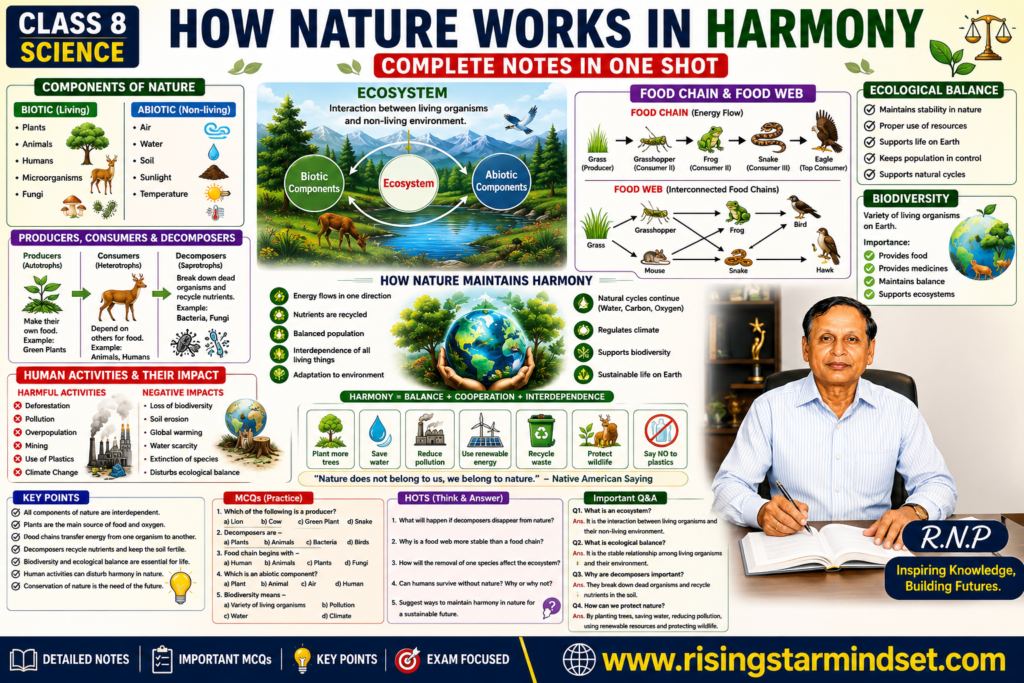
Nature is a perfectly balanced system where living organisms and non-living components work together. Every organism has a role in maintaining ecological balance. Plants, animals, microorganisms, air, water, and soil depend on one another. ( How Nature Works in Harmony Class 8 )
प्रकृति एक संतुलित प्रणाली (Balanced System) है, जहाँ सभी जीवधारी एवं निर्जीव तत्व मिलकर कार्य करते हैं। प्रत्येक जीव का अपना एक महत्वपूर्ण योगदान होता है जो पर्यावरणीय संतुलन बनाए रखता है।
Table of Contents
- Introduction
- Meaning of Harmony in Nature
- Components of Nature
- Ecosystem
- Food Chain
- Food Web
- Ecological Balance
- Role of Producers, Consumers & Decomposers
- Biodiversity
- Human Activities and Their Impact
- Conservation of Nature
- Abbreviations
- Key Points
- MCQs
- HOTS Questions
- Important Question Answers
- FAQs
- Conclusion
- PREVIOUS TOPIC : Keeping Time with the Sky Class 8 Important Notes Guide
Introduction (परिचय)
Nature functions like a well-organized machine where every living and non-living component supports one another.
प्रकृति एक सुव्यवस्थित प्रणाली है जहाँ सभी जीव एवं निर्जीव घटक एक-दूसरे पर निर्भर रहते हैं।
Meaning of Harmony in Nature
What is Harmony?
Harmony means balance, cooperation, and interdependence among all components of nature.
Hindi
प्रकृति में सामंजस्य (Harmony) का अर्थ है—
- संतुलन
- सहयोग
- पारस्परिक निर्भरता
Components of Nature
| Living Components (Biotic) | Non-Living Components (Abiotic) |
|---|---|
| Plants | Air |
| Animals | Water |
| Humans | Soil |
| Microorganisms | Sunlight |
| Fungi | Temperature |
Hindi
जैविक घटक (Biotic):
- पौधे
- जानवर
- मनुष्य
- सूक्ष्मजीव
अजैविक घटक (Abiotic):
- वायु
- जल
- मिट्टी
- सूर्य का प्रकाश
- तापमान
Ecosystem (पारितंत्र)
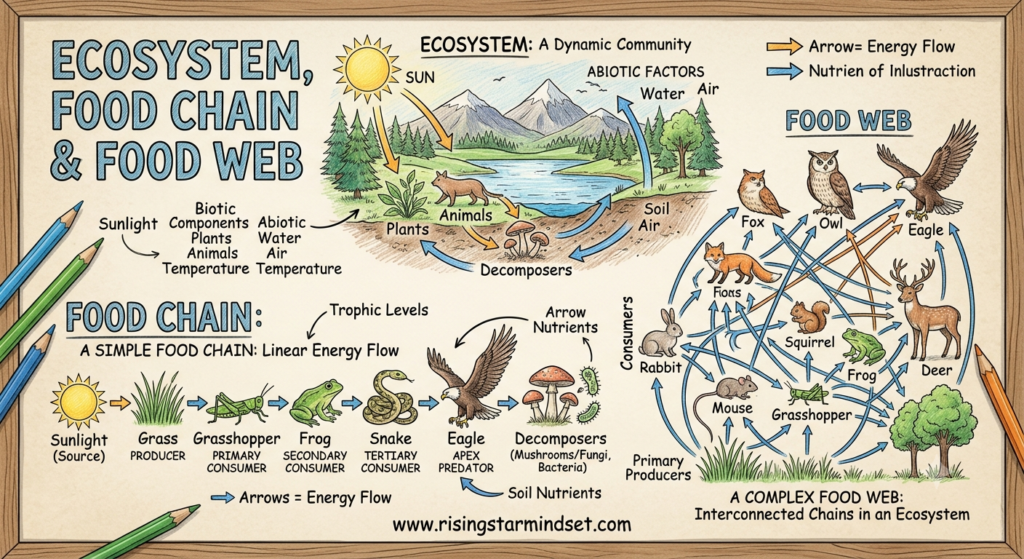
An ecosystem is a community of living organisms interacting with their environment.
Examples
- Forest
- Pond
- Desert
- Grassland
Hindi
पारितंत्र वह स्थान है जहाँ जीव और पर्यावरण मिलकर कार्य करते हैं।
Food Chain (खाद्य श्रृंखला)
A food chain shows how energy passes from one organism to another.
Example:
Grass → Grasshopper → Frog → Snake → Eagle
Hindi:
घास → टिड्डा → मेंढक → साँप → बाज
Food Web (खाद्य जाल)
Many food chains join together to form a food web.
Food web makes nature more stable.
Ecological Balance
Ecological balance means maintaining the proper relationship among living organisms and their environment.
Importance
- Stable climate
- Healthy biodiversity
- Sustainable life
- Natural cycles continue
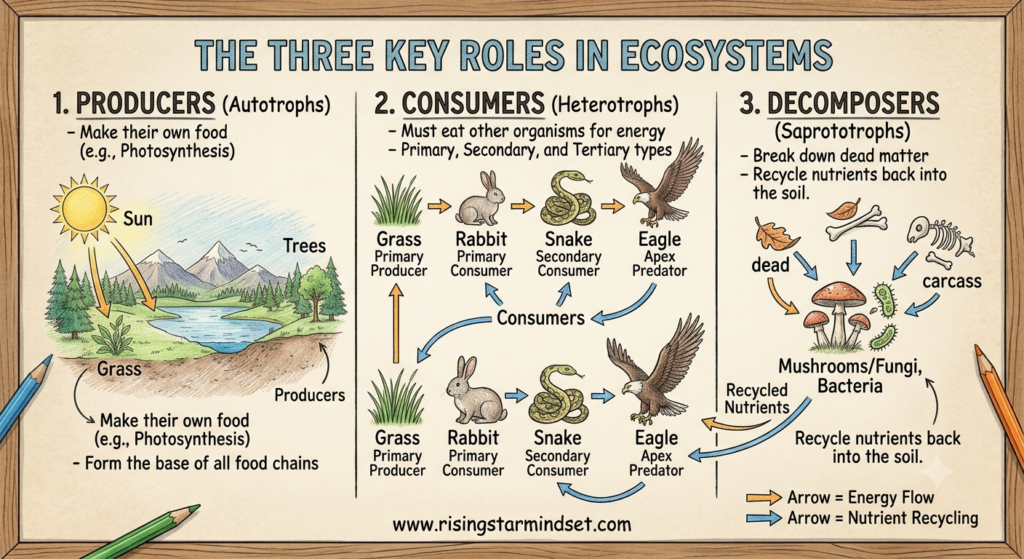
Producers, Consumers and Decomposers
| Type | Example | Work |
|---|---|---|
| Producers | Green plants | Make food |
| Consumers | Animals | Eat plants/animals |
| Decomposers | Bacteria, Fungi | Recycle nutrients |
Biodiversity
Biodiversity means the variety of living organisms found on Earth.
Importance:
- Food
- Medicine
- Ecological stability
- Climate regulation
Human Activities Affecting Nature
Negative impacts:
- Deforestation
- Pollution
- Plastic waste
- Mining
- Overpopulation
- Climate change
Hindi
- वनों की कटाई
- प्रदूषण
- प्लास्टिक
- खनन
- जनसंख्या वृद्धि
- जलवायु परिवर्तन
Conservation of Nature
Ways to conserve nature
- Plant more trees
- Save water
- Reduce pollution
- Use renewable energy
- Recycle waste
- Protect wildlife
Abbreviations
| Short Form | Full Form |
|---|---|
| WWF | World Wide Fund for Nature |
| UNEP | United Nations Environment Programme |
| NGO | Non-Governmental Organization |
| GPS | Global Positioning System |
| SDGs | Sustainable Development Goals |
Key Points (Exam Revision)
| Nature works through interdependence. |
| Plants produce food. |
| Animals depend on plants. |
| Decomposers recycle nutrients. |
| Food chain transfers energy. |
| Food web increases stability. |
| Biodiversity maintains balance. |
| Human activities disturb ecological balance. |
| Conservation is necessary. |
| Sustainable development protects future generations. |
MCQs (Most Important)
Q1. Which organism is called the producer?
A. Tiger
B. Cow
C. Green Plant
D. Snake
Answer: C
Q2. Decomposers are—
A. Lion
B. Frog
C. Fungi
D. Eagle
Answer: C
Q3. Food chain begins with—
A. Human
B. Plants
C. Tiger
D. Snake
Answer: B
Q4. Which is an abiotic component?
A. Plant
B. Animal
C. Air
D. Human
Answer: C
Q5. Biodiversity means—
A. Variety of living organisms
B. Pollution
C. Weather
D. Climate
Answer: A
Q6. Forests help in—
A. Rainfall
B. Oxygen production
C. Wildlife protection
D. All of these
Answer: D
Q7. Which activity harms nature?
A. Tree plantation
B. Recycling
C. Deforestation
D. Rainwater harvesting
Answer: C
Q8. Energy flows through—
A. Food Chain
B. Road
C. Air
D. Water only
Answer: A
Q9. Ecosystem includes—
A. Only animals
B. Only plants
C. Living and non-living components
D. Only microorganisms
Answer: C
Q10. Nature remains balanced because of—
A. Harmony
B. Pollution
C. Plastic
D. Mining
Answer: A
HOTS Questions
Q1.
Why are decomposers called nature’s recyclers?
Answer:
They convert dead organisms into nutrients that return to the soil.
Q2.
What would happen if all producers disappeared?
Answer:
Food chains would collapse and most living organisms would die.
Q3.
How does biodiversity help maintain harmony?
Answer:
Different organisms perform different ecological roles that maintain balance.
Q4.
Why should humans conserve forests?
Answer:
Forests regulate climate, support wildlife, prevent soil erosion, and produce oxygen.
Q5.
Can nature maintain harmony without decomposers? Explain.
Answer:
No. Nutrients would not be recycled, leading to the accumulation of dead matter and reduced soil fertility.
Important Question Answers
Q1. What is an ecosystem?
Answer:
An ecosystem is the interaction between living organisms and non-living surroundings.
Q2. Define food chain.
Answer:
A food chain shows the transfer of food and energy from one organism to another.
Q3. What is ecological balance?
Answer:
It is the stable relationship among living organisms and their environment.
Q4. Why is biodiversity important?
Answer:
It ensures ecological stability, food security, medicines, and environmental sustainability.
Q5. Mention three ways to protect nature.
Answer:
- Plant trees
- Reduce pollution
- Save water
Frequently Asked Questions (FAQs)
1. What is harmony in nature?
Harmony in nature means all living and non-living components work together in balance.
2. What is the importance of food chains?
Food chains transfer energy from producers to consumers and maintain ecosystem stability.
3. What are decomposers?
Decomposers like bacteria and fungi break down dead organisms and recycle nutrients.
4. Why is biodiversity important?
It supports ecological balance, food production, medicines, and climate regulation.
5. How do humans disturb nature?
Through pollution, deforestation, overuse of natural resources, and climate change.
Conclusion
Nature survives because every organism has a specific role. Plants produce food, animals consume it, and decomposers recycle nutrients. This interconnected system maintains ecological balance. Human responsibility is to protect biodiversity, reduce pollution, and use natural resources wisely so that harmony in nature continues for future generations.
निष्कर्ष (Hindi)
प्रकृति का प्रत्येक जीव और प्रत्येक तत्व एक-दूसरे से जुड़ा हुआ है। यदि किसी एक भाग को नुकसान पहुँचता है तो पूरा पारितंत्र प्रभावित होता है। इसलिए हमें पेड़ लगाना, जल बचाना, प्रदूषण कम करना और जैव विविधता की रक्षा करना चाहिए ताकि प्रकृति का संतुलन बना रहे।
Keep Learning, Keep Growing! 🚀
P Kumar | Rising Star Mindset
www.risingstarmindset.com
Together We Will Make The Difference