
Complete Study Material | Basic to Advanced Level | English & Hindi Easy Explanation
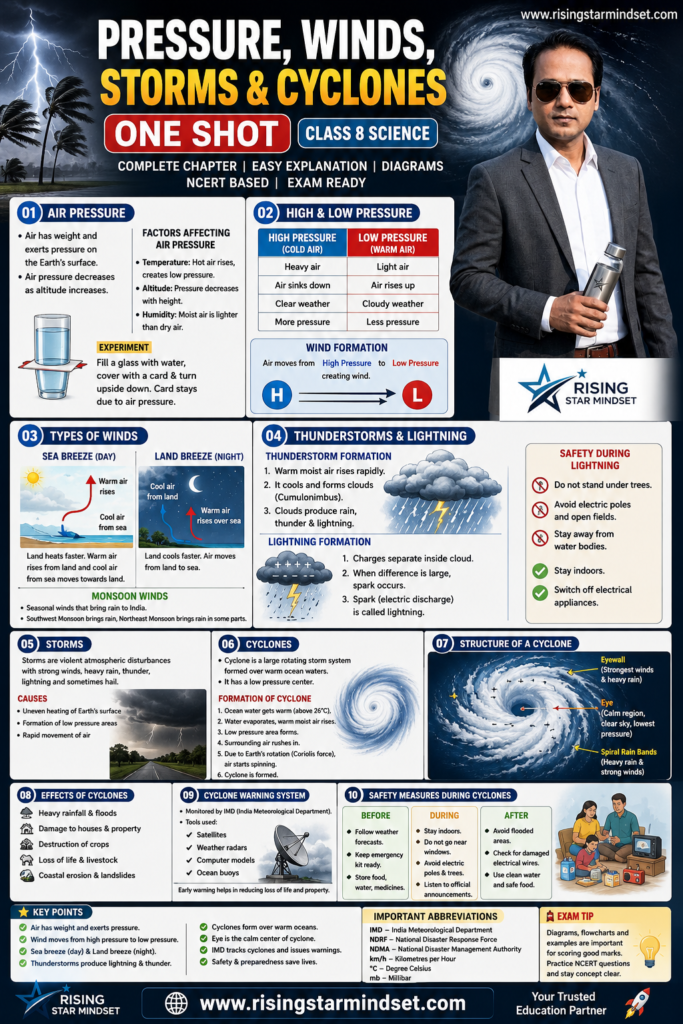
Table of Contents
- Introduction
- Atmosphere and Air
- What is Air Pressure?
- How Air Pressure is Created
- Factors Affecting Air Pressure
- High Pressure and Low Pressure Areas
- Formation of Wind
- Sea Breeze and Land Breeze
- Monsoon Winds
- Thunderstorms
- Lightning and Its Formation
- Storms and Their Causes
- Cyclones
- Structure of a Cyclone
- Formation of Cyclones Step-by-Step
- Cyclone Warning System
- Famous Cyclones in India
- Safety Measures During Cyclones
- Disaster Management
- Interesting Facts
- Abbreviations
- Key Points
- NCERT Important Questions
- One Shot Revision
- Conclusion
Introduction ( Easy Explanation )
Weather changes around us every day. Sometimes the sky is clear, while at other times strong winds, rain, and storms occur. These weather changes are mainly caused by differences in air pressure and temperature.( Easy Explanation )
This chapter helps us understand:
Why winds blow
How storms develop
Cyclones formation
Disaster Management How to stay safe during natural disasters
परिचय ( Easy Explanation )
हम प्रतिदिन मौसम में बदलाव देखते हैं। कभी मौसम साफ रहता है तो कभी तेज हवाएँ, बारिश और तूफान आते हैं। इन सभी घटनाओं का मुख्य कारण वायु दाब (Air Pressure) और तापमान में अंतर होता है।
यह अध्याय हमें समझाता है—
हवाएँ क्यों चलती हैं?
तूफान कैसे बनते हैं?
चक्रवात कैसे विकसित होते हैं?
प्राकृतिक आपदाओं से कैसे बचा जाए?
Atmosphere and Air ( Easy Explanation )
English
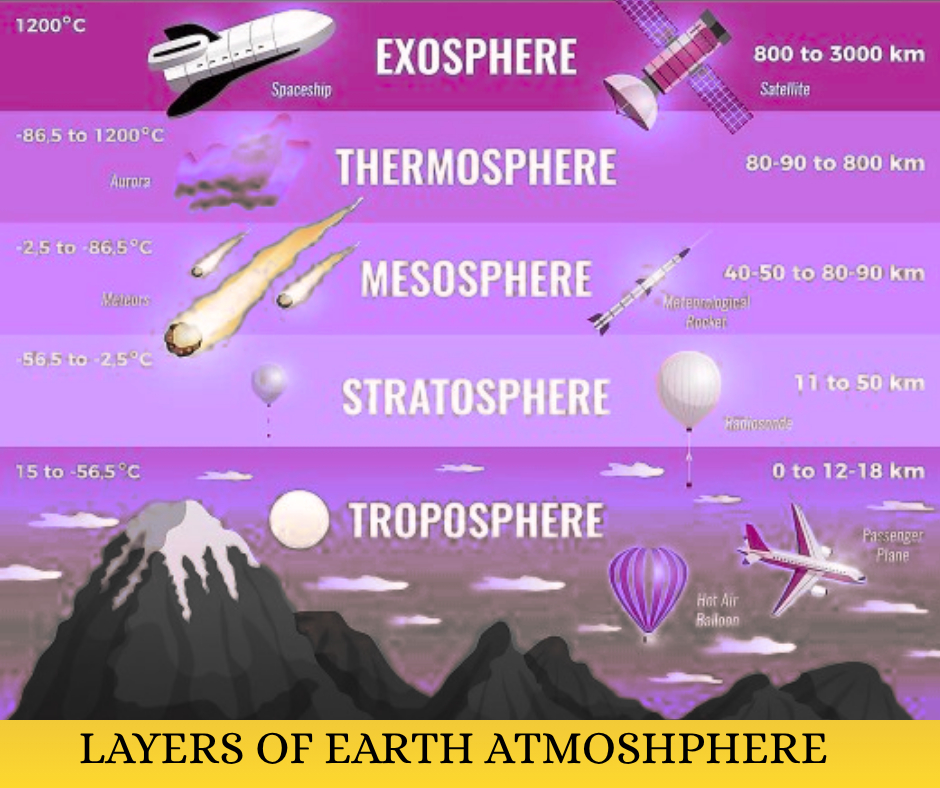
The Earth is surrounded by a blanket of air called the atmosphere.
The atmosphere contains:
- Nitrogen (78%)
- Oxygen (21%)
- Carbon Dioxide
- Water Vapour
- Dust Particles
Without the atmosphere, life on Earth would not be possible.
हिंदी
पृथ्वी के चारों ओर गैसों की जो परत है उसे वायुमंडल (Atmosphere) कहते हैं।
इसमें मुख्यतः—
- नाइट्रोजन – 78%
- ऑक्सीजन – 21%
- कार्बन डाइऑक्साइड
- जलवाष्प
- धूल कण
शामिल होते हैं।
What is Air Pressure? ( Easy Explanation )
Definition
Air pressure is the force exerted by the weight of air on any surface.
English
Although air is invisible, it has mass and weight.
Therefore, it exerts pressure on everything.
Hindi
हवा दिखाई नहीं देती, लेकिन उसका भार होता है।
इसी भार के कारण हवा दबाव डालती है जिसे वायु दाब कहते हैं।
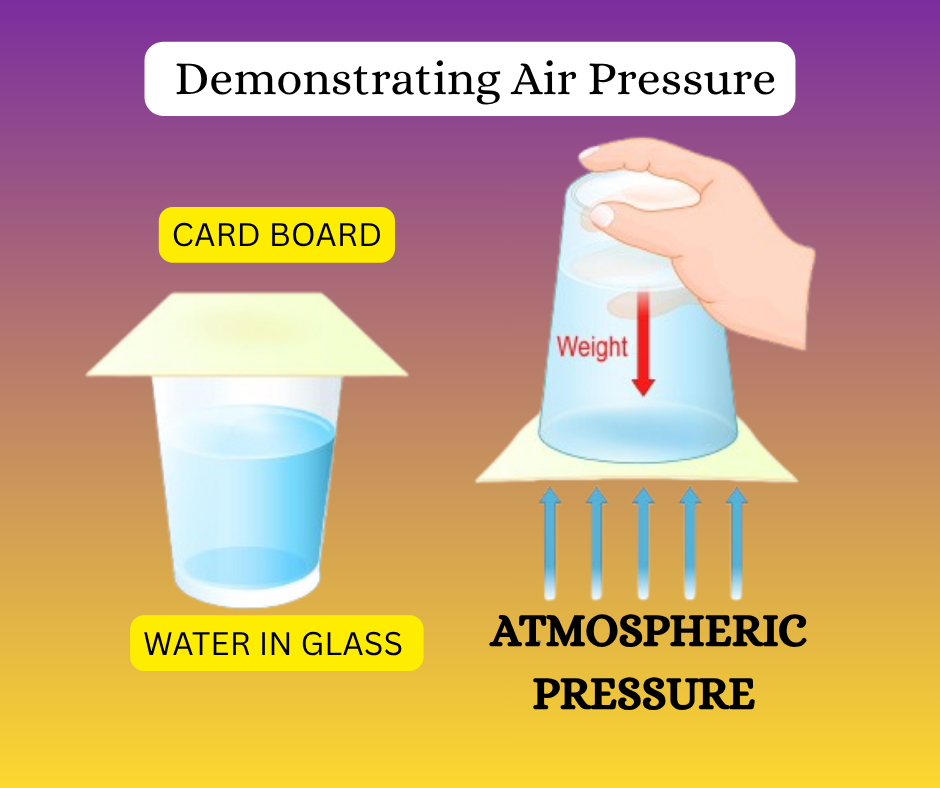
Activity: Demonstrating Air Pressure ( Easy Explanation )
Experiment
- Fill a glass with water.
- Cover it with a card.
- Turn the glass upside down.
Observation
The card does not fall because air pressure pushes it upward.
Factors Affecting Air Pressure ( Easy Explanation )
1. Temperature
English
Hot air expands and becomes lighter.
It rises upward and creates low pressure.
हिंदी
गर्म हवा फैलती है और हल्की हो जाती है।
इस कारण वह ऊपर उठती है और निम्न दाब क्षेत्र बनाती है।
2. Altitude
Higher altitude = Lower pressure
Example:
Air pressure at Mount Everest is much lower than at sea level.
3. Humidity
Moist air is lighter than dry air.
Therefore, humid areas often experience lower pressure.
High Pressure and Low Pressure Areas
| High Pressure | Low Pressure |
|---|---|
| Cold air | Warm air |
| Heavy air | Light air |
| Air sinks | Air rises |
| Clear weather | Cloudy weather |
Formation of Wind ( Easy Explanation )
Wind is moving air.
Air always moves from:
High Pressure ➜ Low Pressure
The greater the pressure difference, the stronger the wind.

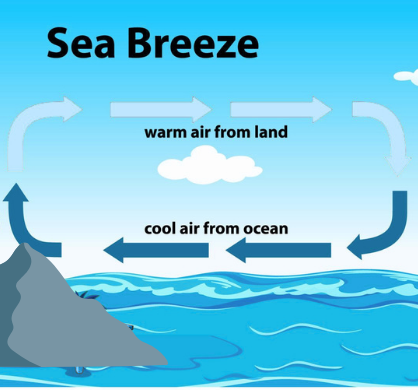
Sea Breeze
Day Time
During daytime:
- Land heats quickly.
- Air above land becomes hot.
- Hot air rises.
- Cool sea air moves toward land.
This is called Sea Breeze.
Hindi
दिन में भूमि जल्दी गर्म होती है।
गर्म हवा ऊपर उठती है और समुद्र से ठंडी हवा भूमि की ओर आती है।
इसे समुद्री समीर (Sea Breeze) कहते हैं।
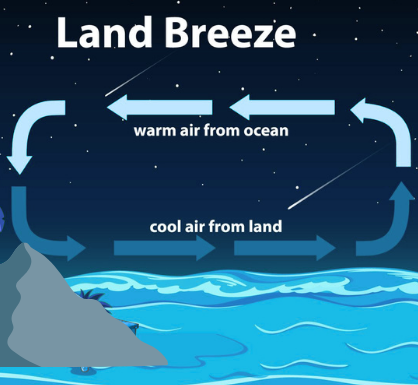
Land Breeze
Night Time
At night:
- Land cools faster.
- Sea remains warmer.
- Air moves from land to sea.
This is called Land Breeze.
Hindi
रात में भूमि जल्दी ठंडी हो जाती है।
इस कारण हवा भूमि से समुद्र की ओर बहती है।
इसे स्थल समीर (Land Breeze) कहते हैं।
Monsoon Winds
English
Monsoon winds are seasonal winds.
They bring rainfall to India.
The Indian economy and agriculture depend heavily on monsoon rains.
हिंदी
मानसूनी हवाएँ मौसमी हवाएँ होती हैं।
भारत की कृषि और अर्थव्यवस्था इन पर बहुत निर्भर करती है।
Thunderstorms
A thunderstorm is accompanied by:
- Thunder
- Lightning
- Heavy rain
- Strong winds
Formation
Warm moist air rises rapidly.
It cools and forms clouds.
These clouds produce rain, lightning, and thunder.
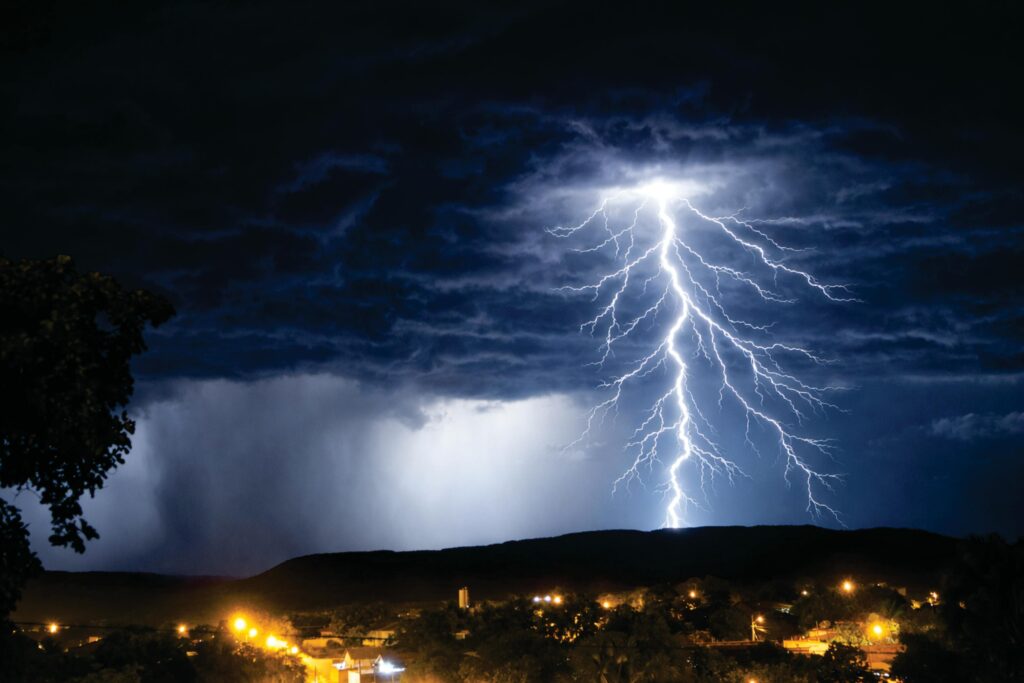
Lightning
Lightning is a sudden electric discharge in the atmosphere.
How It Forms
- Clouds accumulate electrical charges.
- Positive and negative charges separate.
- When charges become very large, a spark occurs.
- This spark is lightning.
Safety During Lightning
- Do not stand under trees.
- Avoid electric poles.
- Stay away from water bodies.
- Stay indoors.
- Switch off electrical appliances
Storms
A storm is a violent atmospheric disturbance.
It may include:
- Strong winds
- Rain
- Thunder
- Lightning
- Dust
Cyclones ( Easy Explanation )
Definition
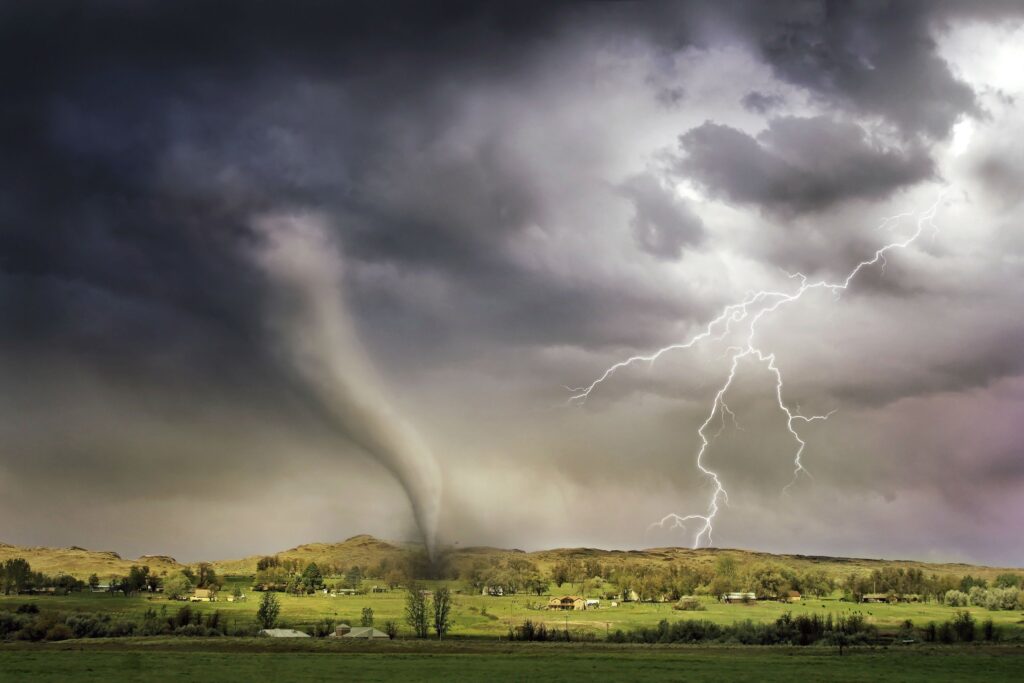
A cyclone is a rapidly rotating storm system formed around a low-pressure center.
Structure of a Cyclone
Eye of the Cyclone
The center of a cyclone is called the Eye.
Characteristics:
- Calm region
- Clear sky
- Lowest pressure
- Surrounded by strongest winds
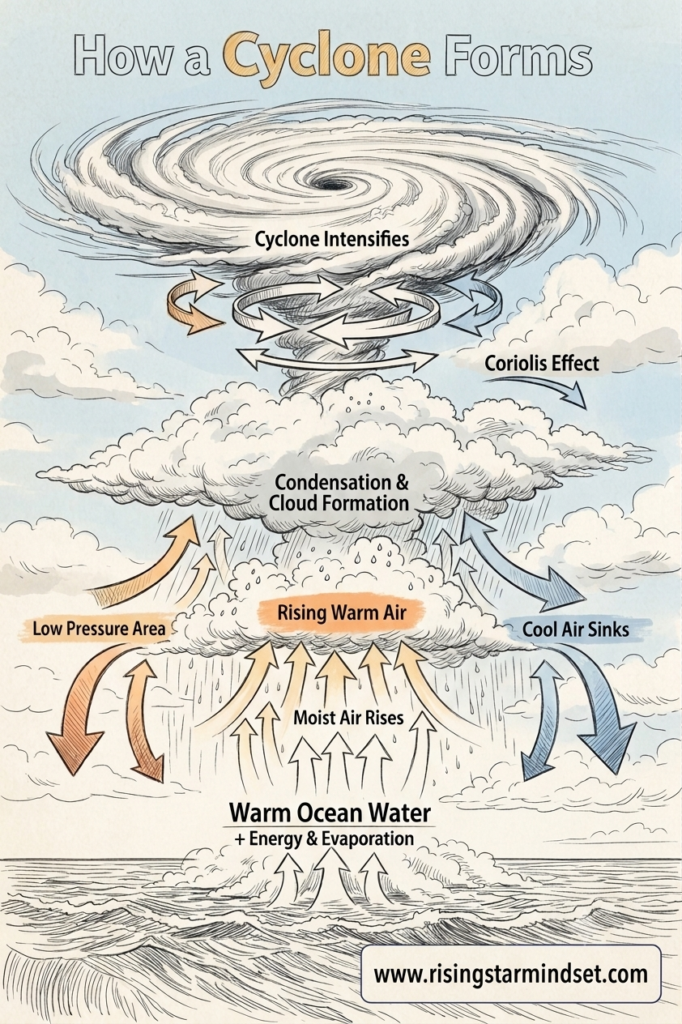
Formation of Cyclones (Step-by-Step)
Step 1
Ocean water becomes very warm.
(Temperature above 26°C)
Step 2
Water evaporates rapidly.
Step 3
Warm moist air rises.
Step 4
Low-pressure area develops.
Step 5
More air rushes toward this region.
Step 6
Due to Earth’s rotation, air begins to spin.
Step 7
A Cyclone is formed.
Why Cyclones Occur Mostly Over Oceans?
Because oceans provide:
Heat
Moisture
Water Vapour
These are essential for cyclone development.
Effects of Cyclones
Human Impact
- Loss of life
- Injuries
- Homelessness
Economic Impact
- Crop destruction
- Property damage
- Transport disruption
Environmental Impact
- Floods
- Coastal erosion
- Damage to forests
Cyclone Warning System
In India, the India Meteorological Department (IMD) monitors cyclones.
Modern technologies used:
- Satellites
- Weather Radars
- Computer Models
- Ocean Buoys
Famous Cyclones in India
| Cyclone | Year |
|---|---|
| Odisha Super Cyclone | 1999 |
| Fani | 2019 |
| Amphan | 2020 |
| Yaas | 2021 |
| Biparjoy | 2023 |
Disaster Management
Disaster management includes:
Before Disaster
- Forecasting
- Warning systems
- Emergency planning
During Disaster
- Rescue operations
- Medical support
- Evacuation
After Disaster
- Rehabilitation
- Reconstruction
- Relief distribution
Interesting Facts
🌍 Air pressure at sea level is approximately 1013 millibars.
🌪 Cyclones rotate anti-clockwise in the Northern Hemisphere.
🌊 Warm oceans are the birthplace of cyclones.
⚡ A lightning bolt can heat the air up to 30,000°C.
Abbreviations
| Abbreviation | Full Form |
|---|---|
| IMD | India Meteorological Department |
| NDRF | National Disaster Response Force |
| NDMA | National Disaster Management Authority |
| km/h | Kilometres per Hour |
| °C | Degree Celsius |
| mb | Millibar |
Key Points
- Air has weight and exerts pressure.
- Wind moves from high-pressure to low-pressure regions.
- Temperature greatly affects air pressure.
- Sea breeze occurs during the day.
- Land breeze occurs during the night.
- Thunderstorms result from rapidly rising warm air.
- Lightning is an electrical discharge.
- Cyclones form over warm oceans.
- The eye is the calm center of a cyclone.
- Early warning systems save lives.
NCERT Important Questions
Very Short Answer
- What is air pressure?
- Define wind.
- What is a cyclone?
- What is the eye of a cyclone?
Short Answer
- Explain sea breeze.
- Differentiate between high and low pressure.
- How does lightning occur?
Long Answer
- Explain cyclone formation with a diagram.
- Describe safety measures during cyclones.
- Discuss the role of IMD in cyclone forecasting.
One Shot Revision
| Air has weight and creates pressure. |
| Winds blow from high pressure to low pressure. |
| Warm air rises and creates low pressure. |
| Sea breeze occurs during the day. |
| Land breeze occurs at night. |
| Thunderstorms produce lightning and thunder. |
| Cyclones form over warm ocean water. |
| The eye is the calm center of a cyclone. |
| IMD tracks cyclones in India. |
| Disaster preparedness reduces damage and saves lives. |
Conclusion
Pressure, Winds, Storms and Cyclones is one of the most practical chapters in Class 8 Science because it explains the science behind weather and natural disasters. Understanding air pressure, wind movement, thunderstorms, and cyclones helps students not only score well in exams but also become aware of safety measures during extreme weather events.
निष्कर्ष
यह अध्याय हमें मौसम विज्ञान की मूलभूत अवधारणाएँ सिखाता है। वायु दाब, हवाएँ, तूफान और चक्रवातों की समझ हमें प्राकृतिक आपदाओं से बचाव तथा वैज्ञानिक सोच विकसित करने में मदद करती है।
Website Reference:
Rising Star Mindset
Suggested Internal Link Anchor:
“After learning about Pressure, Winds, Storms and Cyclones, also read Health: The Ultimate Treasure for Class 8 on Rising Star Mindset.”
1 thought on “Easy Explanation Of Pressure Winds Storms and Cyclones”