स्वास्थ्य: सबसे बड़ा खजाना Class 8 ( Health: The Ultimate Treasure )
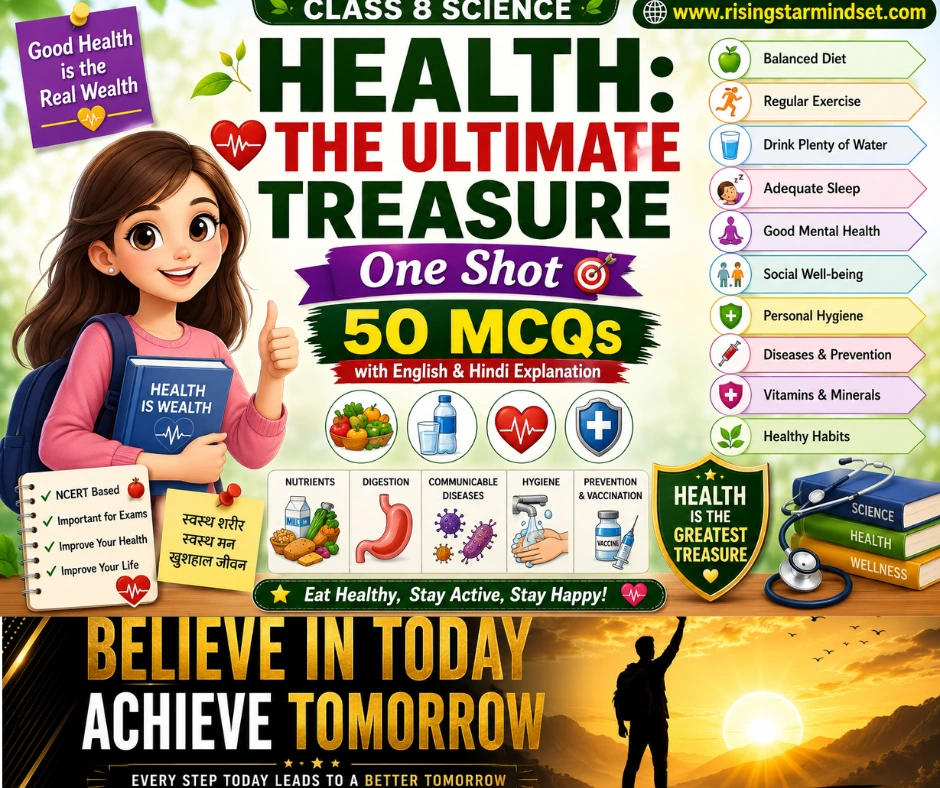
Health is the greatest wealth of human life. In this chapter, students learn about healthy habits, diseases, immunity, hygiene, and the importance of a balanced lifestyle.
स्वास्थ्य मानव जीवन की सबसे बड़ी संपत्ति है। इस अध्याय में विद्यार्थी स्वास्थ्य, रोग, प्रतिरक्षा, स्वच्छता और संतुलित जीवनशैली के महत्व के बारे में सीखते हैं।
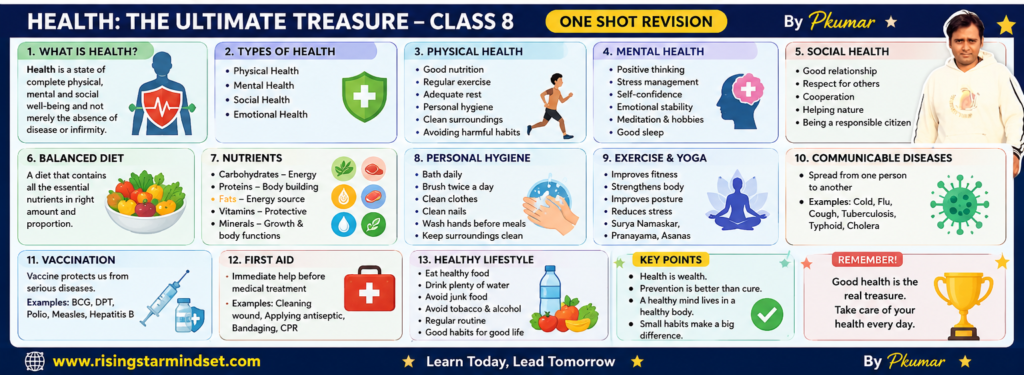
Table of Contents | विषय सूची
- Introduction to Health | स्वास्थ्य का परिचय
- Meaning of Health | स्वास्थ्य का अर्थ
- Dimensions of Health | स्वास्थ्य के आयाम
- Healthy Lifestyle Habits | स्वस्थ जीवनशैली की आदतें
- Importance of Clean Environment | स्वच्छ वातावरण का महत्व
- Symptoms and Signs of Disease | रोग के लक्षण और संकेत
- Types of Diseases | रोगों के प्रकार
- Communicable Diseases | संक्रामक रोग
- Non-Communicable Diseases | असंक्रामक रोग
- Immunity and Vaccination | प्रतिरक्षा और टीकाकरण
- Antibiotics and Resistance | एंटीबायोटिक और प्रतिरोध
- Important Abbreviations | महत्वपूर्ण संक्षिप्त रूप
- Key Points | मुख्य बिंदु
- Conclusion | निष्कर्ष
- Related Post : How to Handle Stress: Quote of the Day & Tips
1. Introduction to Health | स्वास्थ्य का परिचय ( Health: The Ultimate Treasure )
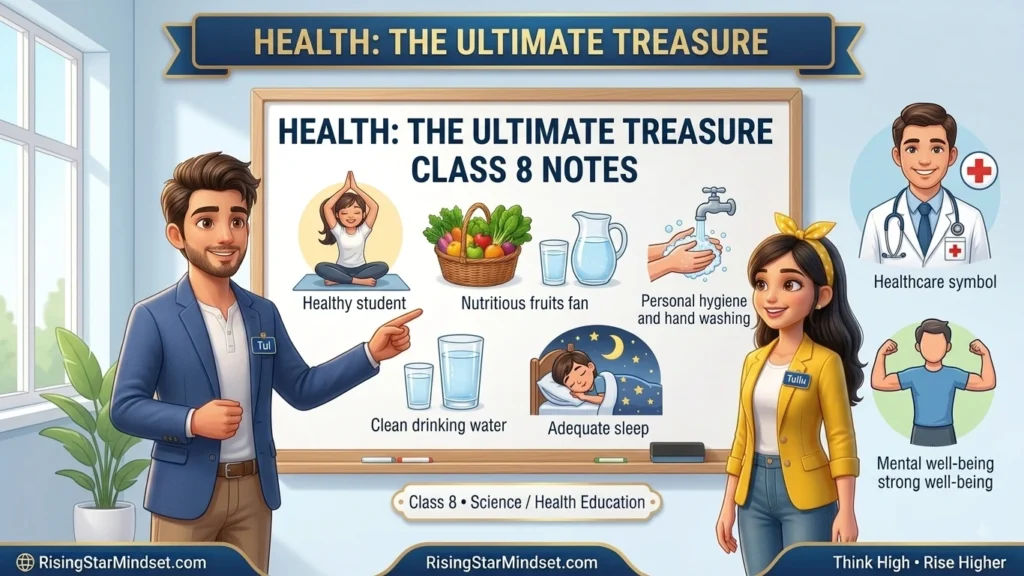
Good health helps us live a happy and active life. A healthy person can study well, work properly, and enjoy life.
अच्छा स्वास्थ्य हमें खुशहाल और सक्रिय जीवन जीने में मदद करता है। स्वस्थ व्यक्ति अच्छी पढ़ाई कर सकता है, सही तरीके से काम कर सकता है और जीवन का आनंद ले सकता है।
According to WHO, health includes physical, mental, and social well-being.
WHO के अनुसार स्वास्थ्य केवल बीमारी का अभाव नहीं बल्कि शारीरिक, मानसिक और सामाजिक कल्याण की स्थिति है।
2. Meaning of Health | स्वास्थ्य का अर्थ ( Health: The Ultimate Treasure )
Definition of Health | स्वास्थ्य की परिभाषा
“Health is a state of complete physical, mental and social well-being.”
“स्वास्थ्य पूर्ण शारीरिक, मानसिक और सामाजिक कल्याण की अवस्था है।”
A Healthy Person | स्वस्थ व्यक्ति
- Physically fit | शारीरिक रूप से स्वस्थ
- Mentally stable | मानसिक रूप से संतुलित
- Socially active | सामाजिक रूप से सक्रिय
3. Dimensions of Health | स्वास्थ्य के आयाम ( Health: The Ultimate Treasure )
| English | हिंदी |
|---|---|
| Physical Health | शारीरिक स्वास्थ्य |
| Mental Health | मानसिक स्वास्थ्य |
| Social Health | सामाजिक स्वास्थ्य |
Physical Health | शारीरिक स्वास्थ्य
- Balanced diet
- Regular exercise
- Proper sleep
Mental Health | मानसिक स्वास्थ्य
- Positive thinking
- Stress control
- Emotional balance
Social Health | सामाजिक स्वास्थ्य
- Good behavior
- Healthy relationships
- Social cooperation
4. Healthy Lifestyle Habits | स्वस्थ जीवनशैली की आदतें
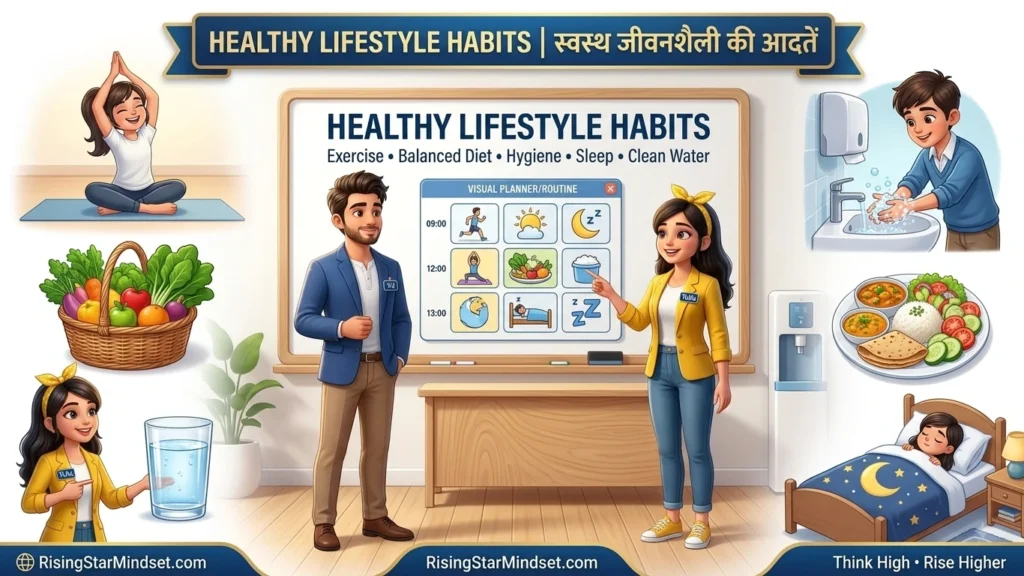
Healthy Habits | अच्छी आदतें
- Eat nutritious food | पौष्टिक भोजन करें
- Drink clean water | स्वच्छ पानी पिएँ
- Exercise daily | प्रतिदिन व्यायाम करें
- Maintain hygiene | स्वच्छता बनाए रखें
- Sleep properly | पर्याप्त नींद लें
- Avoid junk food | जंक फूड से बचें
Healthy habits keep our body strong and disease-free.
अच्छी आदतें हमारे शरीर को मजबूत और रोगमुक्त बनाती हैं।
5. Importance of Clean Environment | स्वच्छ वातावरण का महत्व
A clean environment protects us from diseases.
स्वच्छ वातावरण हमें बीमारियों से बचाता है।
Benefits | लाभ ( Health: The Ultimate Treasure )
- Reduces pollution | प्रदूषण कम करता है
- Prevents infections | संक्रमण रोकता है
- Keeps air and water clean | हवा और पानी को स्वच्छ रखता है
Dirty surroundings spread diseases like malaria and dengue.
गंदगी मलेरिया और डेंगू जैसी बीमारियाँ फैलाती है।
6. Symptoms and Signs of Disease | रोग के लक्षण और संकेत
| Symptoms | Signs |
|---|---|
| Felt by patient | Seen by others |
| रोगी द्वारा महसूस किया जाता है | दूसरों द्वारा देखा जाता है |
Examples | उदाहरण ( Health: The Ultimate Treasure )
- Headache | सिरदर्द
- Weakness | कमजोरी
- Fever | बुखार
- Swelling | सूजन
7. Types of Diseases | रोगों के प्रकार ( Health: The Ultimate Treasure )
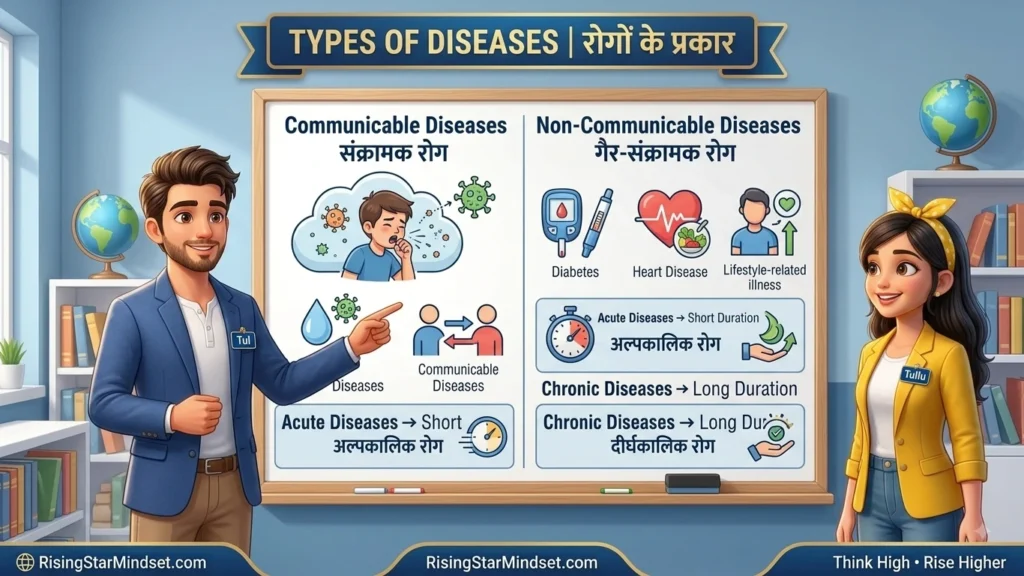
| Communicable Diseases | Non-Communicable Diseases |
|---|---|
| Spread from person to person | Do not spread |
| एक व्यक्ति से दूसरे में फैलते हैं | नहीं फैलते |
Examples | उदाहरण ( Health: The Ultimate Treasure )
Communicable Diseases | संक्रामक रोग
- Malaria
- Dengue
- Typhoid
Non-Communicable Diseases | असंक्रामक रोग
- Diabetes
- Cancer
- Asthma
8. Communicable Diseases | संक्रामक रोग ( Health: The Ultimate Treasure )
These diseases are caused by pathogens.
ये रोग रोगजनकों द्वारा फैलते हैं।
Pathogens | रोगजनक
- Bacteria | बैक्टीरिया
- Virus | वायरस
- Fungi | फफूंद
- Protozoa | प्रोटोजोआ
Modes of Spread | फैलने के तरीके
- Air | वायु
- Water | पानी
- Food | भोजन
- Mosquitoes | मच्छर
9. Non-Communicable Diseases | असंक्रामक रोग
These diseases do not spread from one person to another.
ये रोग एक व्यक्ति से दूसरे व्यक्ति में नहीं फैलते।
Causes | कारण
- Unhealthy food | अस्वस्थ भोजन
- Lack of exercise | व्यायाम की कमी
- Pollution | प्रदूषण
- Bad habits | बुरी आदतें
10. Immunity and Vaccination | प्रतिरक्षा और टीकाकरण
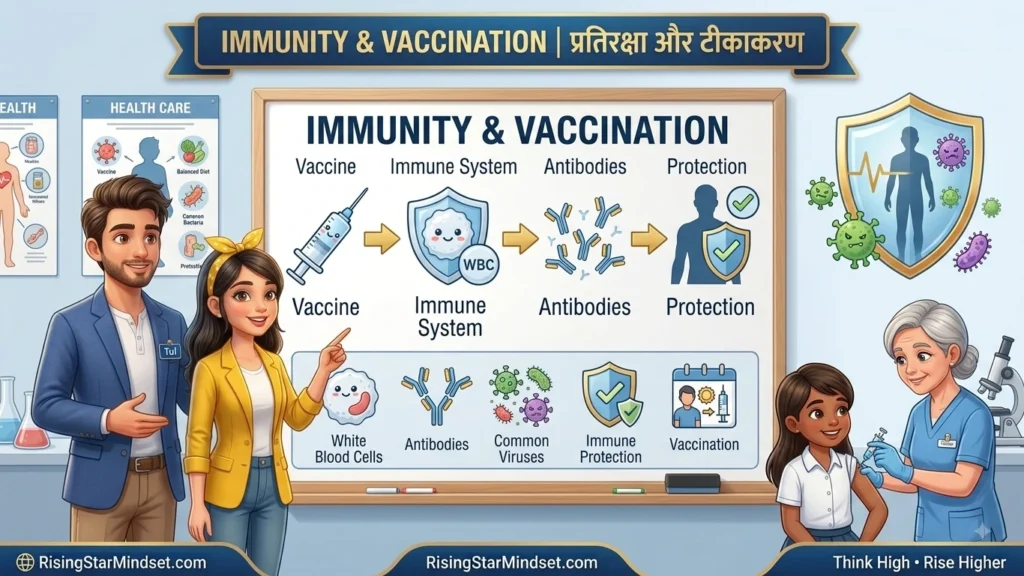
Immunity | प्रतिरक्षा
The body’s ability to fight diseases is called immunity.
शरीर की रोगों से लड़ने की क्षमता को प्रतिरक्षा कहते हैं।
Vaccination | टीकाकरण
Vaccines protect us from dangerous diseases.
टीके हमें खतरनाक बीमारियों से बचाते हैं।
Examples | उदाहरण
- Polio Vaccine
- Hepatitis Vaccine
- Measles Vaccine
11. Antibiotics and Resistance | एंटीबायोटिक और प्रतिरोध
Antibiotics | एंटीबायोटिक
Medicines used to kill bacteria are called antibiotics.
बैक्टीरिया को मारने वाली दवाओं को एंटीबायोटिक कहते हैं।
Antibiotic Resistance | एंटीबायोटिक प्रतिरोध
Overuse of antibiotics makes bacteria resistant.
एंटीबायोटिक का अधिक उपयोग बैक्टीरिया को प्रतिरोधी बना देता है।
12. Important Abbreviations | ( Health: The Ultimate Treasure )
| Abbreviation | Full Form |
|---|---|
| WHO | World Health Organization |
| NCD | Non-Communicable Disease |
| HIV | Human Immunodeficiency Virus |
| COVID | Coronavirus Disease |
| AQI | Air Quality Index |
13. Key Points | मुख्य बिंदु ( Health: The Ultimate Treasure )
- Health includes physical, mental, and social well-being.
स्वास्थ्य में शारीरिक, मानसिक और सामाजिक कल्याण शामिल है। - Cleanliness prevents diseases.
स्वच्छता बीमारियों से बचाती है। - Vaccination protects from infections.
टीकाकरण संक्रमण से बचाता है। - Healthy food and exercise are essential.
स्वस्थ भोजन और व्यायाम आवश्यक हैं। - Communicable diseases spread through pathogens.
संक्रामक रोग रोगजनकों से फैलते हैं।
50 MCQs with Answers & English + Hindi Explanation ( Health: The Ultimate Treasure )
1. What is the meaning of good health? / अच्छे स्वास्थ्य का क्या अर्थ है?
A. Only being free from disease
B. Physical, mental, and social well-being ✅
C. Eating only fruits
D. Sleeping all day
Answer: B
English Explanation: Good health means a person is physically fit, mentally happy, and socially active.
हिंदी व्याख्या: अच्छा स्वास्थ्य केवल बीमारी न होना नहीं है, बल्कि शारीरिक, मानसिक और सामाजिक रूप से स्वस्थ होना है।
2. Which nutrient gives us energy? / कौन-सा पोषक तत्व ऊर्जा देता है?
A. Vitamins
B. Carbohydrates ✅
C. Minerals
D. Water
Answer: B
English: Carbohydrates are the body’s main source of energy.
हिंदी: कार्बोहाइड्रेट शरीर को ऊर्जा प्रदान करने का मुख्य स्रोत हैं।
3. Which nutrient helps in body building? / शरीर निर्माण में कौन-सा पोषक तत्व सहायक है?
A. Fat
B. Protein ✅
C. Vitamin
D. Water
Answer: B
English: Proteins help in growth and repair of body tissues.
हिंदी: प्रोटीन शरीर की वृद्धि और ऊतकों की मरम्मत में सहायक होता है।
4. Which vitamin helps improve eyesight? / कौन-सा विटामिन दृष्टि के लिए आवश्यक है?
A. Vitamin C
B. Vitamin A ✅
C. Vitamin D
D. Vitamin K
Answer: B
English: Vitamin A keeps our eyes healthy.
हिंदी: विटामिन A आँखों के स्वास्थ्य के लिए आवश्यक है।
5. Which mineral strengthens bones? / हड्डियों को मजबूत बनाने वाला खनिज कौन-सा है?
A. Iron
B. Calcium ✅
C. Iodine
D. Sodium
Answer: B
English: Calcium makes bones and teeth strong.
हिंदी: कैल्शियम हड्डियों और दाँतों को मजबूत बनाता है।
6. Which vitamin is produced in sunlight?
A. Vitamin A
B. Vitamin C
C. Vitamin D ✅
D. Vitamin B
Answer: C
English: Sunlight helps our body produce Vitamin D.
हिंदी: सूर्य का प्रकाश शरीर में विटामिन D बनने में सहायता करता है।
7. Which food is called a balanced diet?
A. Only rice
B. Only vegetables
C. Food containing all nutrients in the right amount ✅
D. Only milk
Answer: C
English: A balanced diet contains carbohydrates, proteins, fats, vitamins, minerals, water, and roughage.
हिंदी: संतुलित आहार में सभी आवश्यक पोषक तत्व उचित मात्रा में होते हैं।
8. Which disease is caused by Vitamin C deficiency?
A. Rickets
B. Scurvy ✅
C. Beriberi
D. Night blindness
Answer: B
English: Vitamin C deficiency causes scurvy.
हिंदी: विटामिन C की कमी से स्कर्वी होता है।
9. Which disease is caused by Vitamin D deficiency?
A. Scurvy
B. Rickets ✅
C. Goitre
D. Anaemia
Answer: B
English: Vitamin D deficiency weakens bones.
हिंदी: विटामिन D की कमी से रिकेट्स होता है।
10. Which nutrient prevents anaemia?
A. Calcium
B. Iron ✅
C. Sodium
D. Potassium
Answer: B
English: Iron helps produce haemoglobin.
हिंदी: आयरन हीमोग्लोबिन बनाने में सहायता करता है।
11. Which habit keeps us healthy? / कौन-सी आदत हमें स्वस्थ रखती है?
A. Sleeping all day
B. Eating junk food
C. Regular exercise ✅
D. Watching TV all day
Answer: C
English Explanation: Regular exercise keeps our body fit and active.
हिंदी व्याख्या: नियमित व्यायाम शरीर को स्वस्थ और सक्रिय रखता है।
12. Which disease spreads through contaminated water? / दूषित पानी से कौन-सा रोग फैलता है?
A. Malaria
B. Cholera ✅
C. Tuberculosis
D. Dengue
Answer: B
English: Cholera spreads through contaminated food and water.
हिंदी: हैजा (Cholera) दूषित भोजन और पानी से फैलता है।
13. Which organ pumps blood throughout the body? / शरीर में रक्त पंप करने वाला अंग कौन-सा है?
A. Heart ✅
B. Liver
C. Kidney
D. Lungs
Answer: A
English: The heart pumps blood to all body parts.
हिंदी: हृदय पूरे शरीर में रक्त पंप करता है।
14. Which is the safest drinking water? / पीने के लिए सबसे सुरक्षित पानी कौन-सा है?
A. Pond water
B. River water
C. Rainwater
D. Boiled and filtered water ✅
Answer: D
English: Boiled and filtered water is safer for drinking.
हिंदी: उबला और फ़िल्टर किया हुआ पानी पीने के लिए सबसे सुरक्षित होता है।
15. Which disease spreads through mosquitoes? / मच्छरों से कौन-सा रोग फैलता है?
A. Typhoid
B. Cholera
C. Malaria ✅
D. Tuberculosis
Answer: C
English: Malaria spreads through the bite of infected mosquitoes.
हिंदी: मलेरिया संक्रमित मच्छरों के काटने से फैलता है।
16. Which habit should be avoided? / किस आदत से बचना चाहिए?
A. Walking
B. Smoking ✅
C. Drinking milk
D. Playing games
Answer: B
English: Smoking damages the lungs and causes many diseases.
हिंदी: धूम्रपान फेफड़ों को नुकसान पहुँचाता है और कई बीमारियों का कारण बनता है।
17. Which food is rich in protein? / कौन-सा भोजन प्रोटीन से भरपूर है?
A. Eggs ✅
B. Rice
C. Sugar
D. Butter
Answer: A
English: Eggs are an excellent source of protein.
हिंदी: अंडे प्रोटीन का अच्छा स्रोत हैं।
18. Which vitamin helps in blood clotting? / रक्त का थक्का जमाने में कौन-सा विटामिन सहायक है?
A. Vitamin A
B. Vitamin C
C. Vitamin D
D. Vitamin K ✅
Answer: D
English: Vitamin K helps blood clot after an injury.
हिंदी: विटामिन K रक्त का थक्का जमाने में मदद करता है।
19. Which food contains roughage? / रेशेयुक्त भोजन कौन-सा है?
A. Ice cream
B. Butter
C. Fruits and vegetables ✅
D. Oil
Answer: C
English: Fruits and vegetables contain roughage for healthy digestion.
हिंदी: फल और सब्जियाँ रेशा प्रदान करती हैं, जो पाचन में सहायक होता है।
20. Which disease is caused by iodine deficiency? / आयोडीन की कमी से कौन-सा रोग होता है?
A. Goitre ✅
B. Anaemia
C. Rickets
D. Scurvy
Answer: A
English: Iodine deficiency causes enlargement of the thyroid gland.
हिंदी: आयोडीन की कमी से घेंघा (Goitre) होता है।
21. Washing hands before eating prevents _____. / भोजन से पहले हाथ धोने से क्या रोका जा सकता है?
A. Fever
B. Diseases ✅
C. Headache
D. Cold
Answer: B
English: Handwashing removes harmful germs.
हिंदी: हाथ धोने से हानिकारक कीटाणु दूर होते हैं।
22. Which nutrient stores energy in the body? / शरीर में ऊर्जा संग्रहित करने वाला पोषक तत्व कौन-सा है?
A. Fat ✅
B. Protein
C. Vitamin
D. Water
Answer: A
English: Fat stores extra energy for future use.
हिंदी: वसा शरीर में अतिरिक्त ऊर्जा का भंडारण करती है।
23. Healthy teeth require _____. / स्वस्थ दाँतों के लिए क्या आवश्यक है?
A. Iron
B. Vitamin C
C. Calcium ✅
D. Iodine
Answer: C
English: Calcium keeps teeth strong.
हिंदी: कैल्शियम दाँतों को मजबूत बनाता है।
24. How many glasses of water should we drink daily? / प्रतिदिन लगभग कितने गिलास पानी पीना चाहिए?
A. 2–3
B. 6–8 ✅
C. 12–15
D. 1–2
Answer: B
English: Drinking enough water keeps the body hydrated.
हिंदी: पर्याप्त पानी पीने से शरीर में जल की कमी नहीं होती।
25. Which activity helps reduce stress? / तनाव कम करने में कौन-सी गतिविधि सहायक है?
A. Smoking
B. Overeating
C. Watching TV all day
D. Yoga ✅
Answer: D
English: Yoga improves physical and mental health.
हिंदी: योग शारीरिक और मानसिक स्वास्थ्य को बेहतर बनाता है।
26. Which disease spreads through air? / हवा के माध्यम से कौन-सा रोग फैलता है?
A. Tuberculosis ✅
B. Cholera
C. Dengue
D. Typhoid
Answer: A
English: Tuberculosis spreads through infected air droplets.
हिंदी: तपेदिक (TB) संक्रमित व्यक्ति की खाँसी या छींक से फैलता है।
27. Which vitamin helps heal wounds? / घाव भरने में कौन-सा विटामिन मदद करता है?
A. Vitamin A
B. Vitamin D
C. Vitamin C ✅
D. Vitamin K
Answer: C
English: Vitamin C helps repair body tissues.
हिंदी: विटामिन C घाव भरने और ऊतकों की मरम्मत में सहायक है।
28. Which food should be avoided for good health? / अच्छे स्वास्थ्य के लिए किस भोजन से बचना चाहिए?
A. Fruits
B. Vegetables
C. Milk
D. Junk food ✅
Answer: D
English: Junk food contains unhealthy fats and excess sugar.
हिंदी: जंक फूड स्वास्थ्य के लिए हानिकारक होता है।
29. Which nutrient helps in digestion? / पाचन में कौन-सा तत्व सहायता करता है?
A. Protein
B. Roughage ✅
C. Fat
D. Sugar
Answer: B
English: Roughage helps food move through the digestive system.
हिंदी: रेशा (Roughage) पाचन तंत्र को सुचारु रूप से कार्य करने में मदद करता है।
30. Which gas do humans inhale? / मनुष्य कौन-सी गैस साँस के साथ अंदर लेते हैं?
A. Oxygen ✅
B. Carbon dioxide
C. Nitrogen
D. Hydrogen
Answer: A
English: Oxygen is essential for respiration.
हिंदी: ऑक्सीजन श्वसन के लिए आवश्यक गैस है।
31–50 (Answers with Options) ( Health: The Ultimate Treasure )
31. Which disease spreads by coughing and sneezing?
A. Malaria
B. Cholera
C. Flu ✅
D. Typhoid
32. Which is the best way to prevent infectious diseases?
A. Sleeping more
B. Eating sweets
C. Avoiding exercise
D. Vaccination ✅
33. Which vitamin is known as the Sunshine Vitamin?
A. Vitamin A
B. Vitamin D ✅
C. Vitamin C
D. Vitamin K
34. Which food is the richest source of calcium?
A. Milk ✅
B. Rice
C. Bread
D. Apple
35. Which organ mainly helps in digestion?
A. Heart
B. Lungs
C. Stomach ✅
D. Brain
36. Iron deficiency causes which disease?
A. Anaemia ✅
B. Goitre
C. Rickets
D. Scurvy
37. Which nutrient repairs body tissues?
A. Carbohydrates
B. Protein ✅
C. Fat
D. Minerals
38. Which food gives instant energy?
A. Rice
B. Milk
C. Pulses
D. Glucose ✅
39. A healthy lifestyle includes _____.
A. Junk food
B. Smoking
C. Exercise and balanced diet ✅
D. Sleeping all day
40. Which disease spreads through contaminated food and water?
A. Malaria
B. Typhoid ✅
C. Asthma
D. Diabetes
41. Which habit improves mental health?
A. Meditation ✅
B. Smoking
C. Overeating
D. Watching TV all day
42. Which food is rich in Vitamin A?
A. Banana
B. Carrot ✅
C. Rice
D. Potato
43. Which disease is commonly caused by polluted water?
A. Asthma
B. Dengue
C. Dysentery ✅
D. Cancer
44. Which vitamin helps keep skin healthy?
A. Vitamin B
B. Vitamin C
C. Vitamin D
D. Vitamin E ✅
45. Which exercise strengthens muscles?
A. Running ✅
B. Sleeping
C. Watching TV
D. Reading
46. Which food is rich in iron?
A. Apple
B. Spinach ✅
C. Bread
D. Rice
47. ORS is mainly used to prevent _____.
A. Fever
B. Cold
C. Dehydration ✅
D. Cough
48. Which meal is considered the most important?
A. Breakfast ✅
B. Lunch
C. Dinner
D. Snacks
49. Which habit helps improve immunity?
A. Eating junk food
B. Healthy diet and regular exercise ✅
C. Sleeping late
D. Skipping meals
50. What is the greatest treasure in life?
A. Money
B. Gold
C. Good Health ✅
D. Fame
HOTS (Higher Order Thinking Skills) ( Health: The Ultimate Treasure )
Questions – Health: The Ultimate Treasure (Class 8)
1. Rahul eats nutritious food every day but does not exercise. Can he be called completely healthy? Give reasons.
Answer: No. Complete health includes physical fitness, mental well-being, and an active lifestyle. Exercise is essential for maintaining good health.
2. Two students have the same physical fitness level. One is always stressed and unhappy, while the other is cheerful and confident. Who is healthier and why?
Answer: The cheerful and confident student is healthier because mental health is an important part of overall health.
3. Why is prevention considered better than cure in maintaining health?
Answer: Prevention helps avoid diseases before they occur, reducing suffering, medical expenses, and loss of time.
4. A person regularly exercises but consumes junk food daily. What health problems may arise in the future?
Answer: Obesity, diabetes, heart diseases, high cholesterol, and nutritional deficiencies may develop.
5. How can poor personal hygiene affect an entire community?
Answer: It can lead to the spread of infectious diseases, affecting many people in the community.
6. During a disease outbreak, why is vaccination considered one of the most effective preventive measures?
Answer: Vaccination strengthens immunity and prevents the spread of diseases among large populations.
7. How does mental health influence physical health?
Answer: Poor mental health can cause stress, sleep problems, weak immunity, and various physical illnesses.
8. Suppose a school removes all sports and physical activities from its timetable. What could be the long-term effects on students?
Answer: Students may face obesity, reduced fitness, stress, poor concentration, and weaker social skills.
9. Why should balanced diet and exercise go hand in hand for a healthy lifestyle?
Answer: A balanced diet provides nutrients, while exercise helps utilize energy and maintain body fitness.
10. Can a person be physically healthy but socially unhealthy? Explain with an example.
Answer: Yes. A physically fit person who cannot cooperate, communicate, or maintain good relationships may be socially unhealthy.
11. How does cleanliness help in reducing communicable diseases?
Answer: Clean surroundings reduce germs, bacteria, and mosquitoes, thereby preventing infections and diseases.
12. Why are healthy habits developed during childhood important for the future?
Answer: Childhood habits often continue into adulthood and help maintain lifelong health and well-being.
13. If you were the Health Minister of your state, what three steps would you take to improve public health?
Answer:
- Increase vaccination coverage.
- Promote health awareness campaigns.
- Improve sanitation and clean drinking water facilities.
14. How can social media affect a person’s health positively and negatively?
Answer: Positively, it spreads health awareness. Negatively, excessive use can cause stress, anxiety, and reduced physical activity.
15. Why is health called the “Ultimate Treasure”?
Answer: Good health enables a person to study, work, earn, and enjoy life. Without health, wealth and success have little value.
Case Study-Based HOTS ( Health: The Ultimate Treasure )
Case Study 1
Riya sleeps only 5 hours daily, eats junk food, and spends most of her time on mobile phones. She often feels tired and stressed.
Questions:
- Which aspects of health are being affected?
- Suggest three changes to improve her health.
Answer:
- Physical and mental health.
- Proper sleep, balanced diet, and regular exercise.
Case Study 2 ( Health: The Ultimate Treasure )
A village has poor sanitation and stagnant water around houses. Many people are suffering from diseases.
Questions:
- What is the main cause of the problem?
- What measures should be taken?
Answer:
- Poor hygiene and sanitation.
- Clean surroundings, proper waste disposal, and awareness programs.
Competency-Based Question ( Health: The Ultimate Treasure )
“A healthy mind lives in a healthy body.” Explain this statement with suitable examples.
Answer: Physical health supports mental well-being, while a healthy mind improves concentration, decision-making, and emotional balance. For example, regular exercise reduces stress and improves mood.
These HOTS questions are Class 8 NCERT-aligned and suitable for school exams, Olympiads, scholarship exams, and competency-based assessments.
FAQs – Health: The Ultimate Treasure ( Health: The Ultimate Treasure )
1. What is health? | स्वास्थ्य क्या है?
English: Health is a state of complete physical, mental, and social well-being, not merely the absence of disease.
हिंदी: स्वास्थ्य केवल बीमारी का अभाव नहीं, बल्कि शारीरिक, मानसिक और सामाजिक रूप से स्वस्थ रहने की अवस्था है।
2. Why is good health important? | अच्छा स्वास्थ्य क्यों महत्वपूर्ण है?
English: Good health helps us study well, work efficiently, and enjoy life.
हिंदी: अच्छा स्वास्थ्य हमें अच्छी पढ़ाई, बेहतर कार्य और सुखद जीवन जीने में मदद करता है।
3. What is a balanced diet? | संतुलित आहार क्या है?
English: A balanced diet contains carbohydrates, proteins, fats, vitamins, minerals, water, and roughage in the right proportion.
हिंदी: संतुलित आहार वह है जिसमें कार्बोहाइड्रेट, प्रोटीन, वसा, विटामिन, खनिज, जल और रेशा उचित मात्रा में मौजूद हों।
4. Why should we exercise daily? | हमें प्रतिदिन व्यायाम क्यों करना चाहिए?
English: Daily exercise keeps the body fit, improves blood circulation, and strengthens muscles and bones.
हिंदी: नियमित व्यायाम शरीर को स्वस्थ, मजबूत और सक्रिय बनाए रखता है तथा रक्त संचार को बेहतर बनाता है।
5. How much water should we drink every day? | प्रतिदिन कितना पानी पीना चाहिए?
English: We should drink about 6–8 glasses of clean water every day to stay hydrated.
हिंदी: शरीर को स्वस्थ रखने के लिए प्रतिदिन लगभग 6–8 गिलास स्वच्छ पानी पीना चाहिए।
6. What are communicable diseases? | संक्रामक रोग क्या हैं?
English: Communicable diseases are diseases that spread from one person to another through air, water, food, or insects.
हिंदी: संक्रामक रोग वे हैं जो हवा, पानी, भोजन या कीटों के माध्यम से एक व्यक्ति से दूसरे व्यक्ति में फैलते हैं।
7. How can we prevent diseases? | हम बीमारियों से कैसे बच सकते हैं?
English: We can prevent diseases by maintaining personal hygiene, eating healthy food, drinking clean water, exercising regularly, and getting vaccinated.
हिंदी: व्यक्तिगत स्वच्छता, पौष्टिक भोजन, स्वच्छ पानी, नियमित व्यायाम और समय पर टीकाकरण से बीमारियों से बचा जा सकता है।
8. Why is personal hygiene important? | व्यक्तिगत स्वच्छता क्यों आवश्यक है?
English: Personal hygiene protects us from germs and reduces the risk of infections.
हिंदी: व्यक्तिगत स्वच्छता हमें रोगाणुओं से बचाती है और संक्रमण के खतरे को कम करती है।
9. Which foods should we avoid? | किन खाद्य पदार्थों से बचना चाहिए?
English: We should avoid junk food, oily food, stale food, and sugary drinks because they can harm our health.
हिंदी: जंक फूड, अधिक तैलीय भोजन, बासी भोजन और मीठे पेयों से बचना चाहिए क्योंकि ये स्वास्थ्य के लिए हानिकारक होते हैं।
10. Why is health called the ultimate treasure? | स्वास्थ्य को सबसे बड़ा धन क्यों कहा जाता है?
English: Health is called the ultimate treasure because without good health, we cannot enjoy life, learn effectively, or achieve success.
हिंदी: स्वास्थ्य को सबसे बड़ा धन इसलिए कहा जाता है क्योंकि अच्छे स्वास्थ्य के बिना जीवन का आनंद लेना, अच्छी शिक्षा प्राप्त करना और सफलता हासिल करना कठिन हो जाता है।
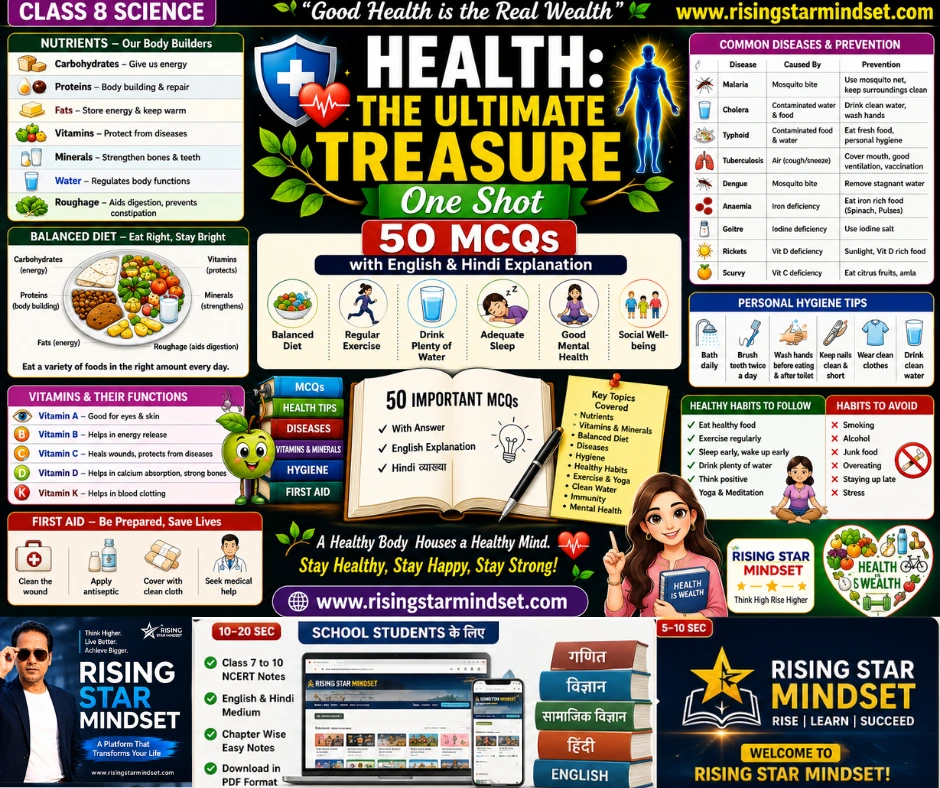
Conclusion | निष्कर्ष ( Health: The Ultimate Treasure )
Health is truly the ultimate treasure of life. By following healthy habits, maintaining cleanliness, eating nutritious food, and exercising regularly, we can live a happy and disease-free life.
स्वास्थ्य वास्तव में जीवन का सबसे बड़ा खजाना है। स्वस्थ आदतों को अपनाकर, स्वच्छता बनाए रखकर, पौष्टिक भोजन खाकर और नियमित व्यायाम करके हम स्वस्थ और खुशहाल जीवन जी सकते हैं।
For more NCERT notes, quizzes, study materials, and educational updates, regularly visit Rising Star Mindset and continue your learning journey every day.
Keep Learning, Keep Growing! 🚀
P Kumar | Rising Star Mindset
www.risingstarmindset.com
Together We Will Make The Difference
Good one
HI SIR CAN YOU COMPLETE MY COURSE
definitely