

Chhath Puja 2026: The Festival That Connects Hearts, Traditions and the World

Chhath Puja 2026 begins on 13 November, bringing with it an atmosphere that is difficult to describe in ordinary words. For millions of people, especially those connected with Bihar, Jharkhand, eastern Uttar Pradesh and the Mithila region of Nepal, Chhath is not simply a religious festival. It is an emotion, a family tradition and a beautiful connection with their cultural roots.
As the festival begins with Nahay Khay, homes are cleaned, traditional food is prepared, bamboo baskets are arranged and familiar folk songs begin to fill the air. Along riverbanks and ponds, preparations start for the most beautiful moments of the celebration: offering prayers to the setting and rising Sun.
But Chhath has a special emotional meaning for people who have moved away from their hometowns.
A person living in Delhi, Mumbai, Bengaluru, London, New York, Dubai or Sydney may be thousands of kilometres away from their birthplace. Yet, when Chhath songs begin playing, the aroma of thekua fills a home or someone mentions Sandhya Arghya, memories of childhood, family members and hometown ghats suddenly return.
For many people, Chhath Puja is not just celebrated at home. It is carried in the heart, wherever life takes them.
This article explores the history, traditional rituals, cultural heritage, folk songs, scientific connections with nature, emotional significance and international presence of Chhath Puja.
Table of Contents
- What Is Chhath Puja 2026 and Why Is It Special?
- Chhath Puja 2026: Complete Four-Day Calendar
- The History and Ancient Cultural Roots of Chhath
- Why Do Devotees Worship Both the Setting and Rising Sun?
- Four Days of Chhath Puja: Rituals and Their Meanings
- Thekua, Bamboo Baskets and Traditional Prasad
- Chhath Folk Songs: The Voice of Bihar’s Cultural Identity
- The Emotional Connection of Chhath for Indians Living Abroad
- How Chhath Puja Is Celebrated Around the World
- Chhath Puja and Its Connection with Nature
- What Other Countries Can Learn from Chhath’s Traditions
- How the Younger Generation Can Preserve This Heritage
- Important Facts About Chhath Puja 2026
- Frequently Asked Questions
- Conclusion: Wherever We Live, Our Roots Remain With Us
- PREVIOUS POST : World Diabetes Day 2026: Protect Your Family from Diabetes
1. What Is Chhath Puja 2026 and Why Is It Special?

Chhath Puja is an ancient Hindu festival dedicated primarily to Lord Surya, the Sun God, and Chhathi Maiya, who is traditionally worshipped as a divine mother associated with protection, well-being and blessings for the family.
The festival is especially popular in Bihar, Jharkhand, eastern Uttar Pradesh and parts of Nepal. It is also celebrated by communities living in other Indian states and abroad.
Unlike many festivals that involve elaborate temple ceremonies, Chhath is traditionally centred around natural water bodies such as rivers, ponds and lakes.
Devotees observe disciplined rituals, prepare traditional offerings and offer Arghya (a sacred water offering) to the setting Sun and the rising Sun.
What Makes Chhath Different?
- It honours the Sun, an essential source of energy and life.
- Both the setting and rising Sun are worshipped.
- It involves strict discipline, cleanliness and devotion.
- Traditional offerings are often prepared without onion and garlic, following customary practices.
- Bamboo baskets, seasonal fruits and traditional folk songs are important cultural elements.
- The festival brings families and entire communities together.
Hindi Explanation: ( Chhath Puja 2026 )
छठ पूजा बिहार, झारखंड और पूर्वी उत्तर प्रदेश की सबसे महत्वपूर्ण सांस्कृतिक और धार्मिक परंपराओं में से एक है।
इस पर्व में भगवान सूर्य और छठी मैया की पूजा की जाती है। सूर्य को जीवन, ऊर्जा और प्रकाश का स्रोत माना जाता है।
छठ की सबसे खास बात यह है कि इसमें डूबते और उगते दोनों सूर्य को अर्घ्य दिया जाता है। यह परंपरा हमें जीवन के हर चरण के प्रति सम्मान और कृतज्ञता का संदेश देती है।
2. Chhath Puja 2026: Complete Four-Day Calendar
Chhath Puja is observed over four days. Each day has a different ritual and cultural significance.
Chhath Puja 2026 Dates
| Day | Date | Ritual | Meaning |
| Day 1 | 13 November, Friday | Nahay Khay | Purification and preparation |
| Day 2 | 14 November, Saturday | Lohanda and Kharna | Fasting, devotion and preparation of prasad |
| Day 3 | 15 November, Sunday | Sandhya Arghya | Offering prayers to the setting Sun |
| Day 4 | 16 November, Monday | Usha Arghya and Parana | Offering prayers to the rising Sun and concluding the fast |
Day 1: Nahay Khay – A Beginning of Purity
These are the main observance dates for 2026. Local sunrise and sunset timings vary by location.

The first day begins with ritual bathing and cleaning the home and surroundings.
Devotees prepare traditional food according to the customary rules of their family and regional traditions.
Hindi: नहाय-खाय के दिन घर और आसपास की साफ-सफाई की जाती है। व्रती स्नान करके पवित्रता और नियम के साथ इस चार दिवसीय पर्व की शुरुआत करते हैं।
Day 2: Lohanda and Kharna – A Day of Discipline

Devotees observe a day-long fast and perform the Kharna ritual in the evening. Traditional offerings commonly include gur ki kheer, roti and fruits.
After the ritual, prasad is distributed among family members and others.
Hindi: खरना के दिन व्रती पूरे दिन उपवास रखते हैं। शाम को पूजा के बाद गुड़ की खीर, रोटी और प्रसाद ग्रहण किया जाता है। इसके बाद मुख्य छठ व्रत की शुरुआत होती है।
Day 3: Sandhya Arghya – Worship of the Setting Sun
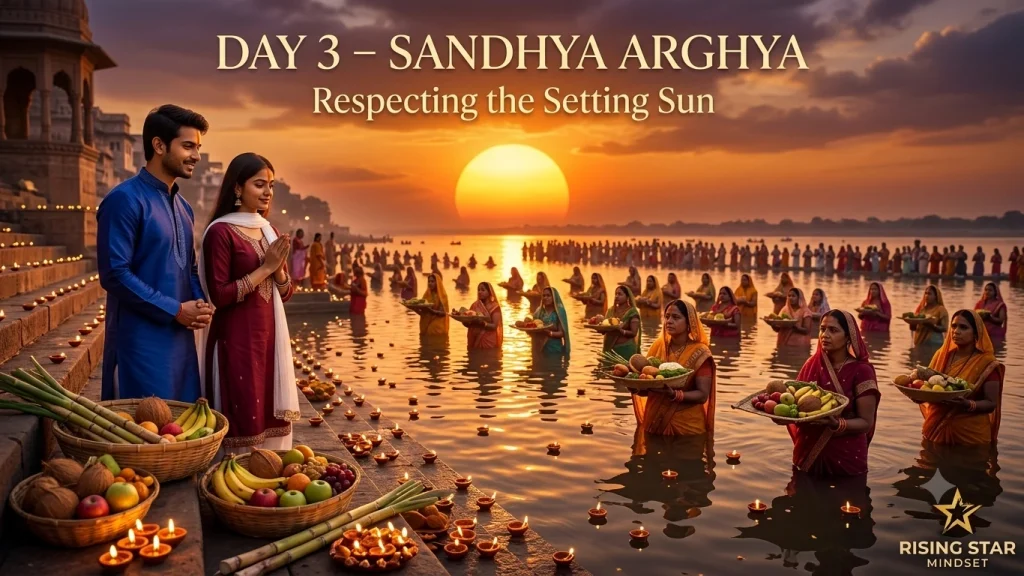
This is one of the most visually beautiful moments of Chhath.
As the evening approaches, devotees gather near rivers, ponds and other designated water bodies. They carry bamboo baskets filled with fruits, thekua and other traditional offerings.
Standing in the water, devotees offer Arghya to the setting Sun.
The sight of thousands of lamps, traditional songs and the golden reflection of the Sun on the water creates an unforgettable atmosphere.
Hindi: संध्या अर्घ्य के समय श्रद्धालु नदी, तालाब या निर्धारित जलाशय के किनारे एकत्रित होते हैं। वे डूबते सूर्य को अर्घ्य देते हैं। यह दृश्य आस्था, अनुशासन और सामूहिक एकता का अद्भुत प्रतीक है।
Day 4: Usha Arghya – Welcoming the Rising Sun

The final day begins before sunrise.
Devotees return to the water bodies and offer Arghya to the rising Sun. After completing the rituals, the fast is concluded through Parana according to family and regional customs.
This moment represents gratitude, hope, renewal and the beginning of a new day.
Hindi: उषा अर्घ्य के दिन सुबह सूर्योदय से पहले श्रद्धालु घाटों पर पहुंचते हैं। उगते सूर्य को अर्घ्य देने के बाद व्रत का पारण किया जाता है। इसके साथ ही छठ महापर्व का समापन होता है।
3. The History and Ancient Cultural Roots of Chhath Puja 2026
The exact historical beginning of Chhath Puja in its present form is not established by a single historical document. However, its cultural and religious roots are associated with the ancient Indian tradition of reverence for the Sun.
Sun Worship in Ancient India
The Sun has held an important place in Indian religious and philosophical traditions for thousands of years.
The Rigveda contains hymns dedicated to solar deities such as Surya and Savitr. The Sun is described as a source of light, energy, movement and life.
In Indian traditions, Surya is also associated with health, vitality and the regular rhythm of nature.
Chhath Puja reflects this longstanding cultural reverence through its distinctive rituals.
Chhath in Religious and Traditional Stories ( Chhath Puja 2026 )
Several popular stories are associated with Chhath Puja. These stories are part of religious belief and oral traditions rather than universally verified historical accounts.
1. Draupadi and the Pandavas
Some traditional accounts connect Sun worship and Chhath-related practices with Draupadi and the Pandavas. These stories describe devotion and prayers during difficult times.
2. Karna and Lord Surya
Karna, one of the central figures in the Mahabharata, is traditionally described as the son of Surya. His association with the Sun has become an important part of popular explanations of solar worship.
3. Chhathi Maiya
Chhathi Maiya is revered in popular traditions as a divine mother who protects children and blesses families with well-being and happiness.
Historical and Cultural Perspective
| Cultural Element | Traditional Connection |
| Sun worship | Ancient Indian Vedic traditions |
| Surya Shashthi | Worship associated with the sixth lunar day |
| Chhathi Maiya | Motherly protection and family well-being |
| Water bodies | Purification and connection with nature |
| Seasonal offerings | Respect for agricultural cycles and local produce |
| Folk songs | Oral transmission of regional culture |
Hindi Explanation: ( Chhath Puja 2026 )
छठ पूजा की वर्तमान परंपरा की शुरुआत किस एक निश्चित वर्ष में हुई, इसका स्पष्ट ऐतिहासिक प्रमाण उपलब्ध नहीं है। हालांकि, सूर्य की उपासना भारतीय सभ्यता की प्राचीन धार्मिक परंपराओं में शामिल रही है।
ऋग्वेद में सूर्य और सविता जैसे सौर देवताओं की स्तुति मिलती है। महाभारत, कर्ण और द्रौपदी से जुड़ी कई लोकप्रिय कथाएं भी सूर्य उपासना की सांस्कृतिक समझ का हिस्सा हैं।
इसलिए छठ को केवल एक त्योहार नहीं, बल्कि प्रकृति, लोकपरंपरा और प्राचीन भारतीय आस्था से जुड़ी विरासत के रूप में भी देखा जा सकता है।
4. Why Do Devotees Worship Both the Setting and Rising Sun? ( Chhath Puja 2026 )
One of the most distinctive features of Chhath Puja is the offering of Arghya to both the setting Sun and the rising Sun.
In many traditions, sunrise symbolises a new beginning. Chhath also gives special importance to the setting Sun.
This has a beautiful symbolic interpretation.
The setting Sun reminds us to respect every stage of life, including the moments when strength, recognition or success may seem to be declining.
The rising Sun represents hope, renewal, energy and new opportunities.
The Deeper Message
| Ritual | Symbolic Meaning |
| Sandhya Arghya | Gratitude and respect for the setting Sun |
| Usha Arghya | Hope and welcome for a new beginning |
| Standing in water | Humility and connection with nature |
| Fasting | Discipline and devotion |
| Sharing prasad | Community and togetherness |
Hindi Explanation: ( Chhath Puja 2026 )
छठ में डूबते सूर्य को अर्घ्य देना एक बहुत सुंदर सांस्कृतिक संदेश देता है।
हम केवल सफलता, शक्ति और उजाले का सम्मान नहीं करते, बल्कि जीवन के उन चरणों का भी सम्मान करते हैं जब परिस्थितियां बदल रही होती हैं।
उगता सूर्य नई उम्मीद का प्रतीक है, जबकि डूबता सूर्य हमें कृतज्ञता और विनम्रता की याद दिलाता है।
यही छठ का एक गहरा जीवन दर्शन है।
5. Thekua, Bamboo Baskets and Traditional Prasad

Chhath Puja is also a celebration of traditional food, local craftsmanship and agricultural heritage.
Its offerings are not merely food items. Many carry generations of cultural memories.
Important Traditional Items
| Item | Cultural Significance |
| Thekua | A traditional sweet closely associated with Chhath |
| Bamboo Soop | A traditional basket used for arranging offerings |
| Daura | A bamboo basket used to carry puja materials |
| Sugarcane | A traditional agricultural offering |
| Coconut | An important fruit used in offerings |
| Banana | A common seasonal offering |
| Seasonal Fruits | Represent gratitude for nature’s produce |
| Earthen Diyas | Symbolise light and devotion |
| Rice and Jaggery | Used in traditional food preparations |
Thekua: A Taste of Home
For many families, thekua is one of the most recognisable foods associated with Chhath.
Prepared traditionally using wheat flour, jaggery or sugar and ghee, it carries a distinctive taste and texture.
For Indians living abroad, thekua can bring back memories of their childhood, grandparents, mothers and preparations at home.
Sometimes, the smell of a traditional sweet can make a person feel closer to home than a thousand photographs.
Hindi Explanation: ( Chhath Puja 2026 )
ठेकुआ छठ का एक प्रसिद्ध पारंपरिक प्रसाद है। इसे सामान्यतः गेहूं के आटे, गुड़ या चीनी और घी से बनाया जाता है।
बांस का सूप और दउरा भी इस पर्व की खास पहचान हैं। इनका उपयोग केवल पूजा में ही नहीं, बल्कि स्थानीय कारीगरों की पारंपरिक कला और आजीविका से भी जुड़ा हुआ है।
6. Chhath Folk Songs: The Voice of Bihar’s Cultural Identity ( Chhath Puja 2026 )
If there is one thing that makes Chhath Puja unforgettable beyond its rituals, it is its folk music.
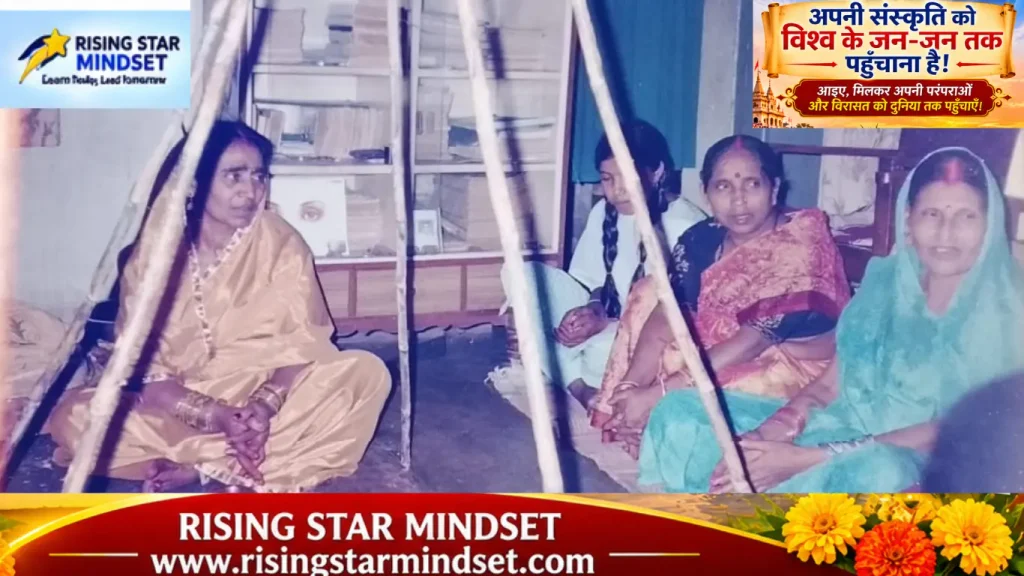
Traditional Chhath songs are deeply connected with family relationships, motherhood, devotion, nature and the emotional life of ordinary people.
They are often sung in Bhojpuri, Maithili, Magahi and other regional languages.
The songs are passed from one generation to another, preserving cultural expressions that might otherwise disappear.
Why Are Chhath Songs So Emotional?
A Chhath song may remind someone of:
- A mother preparing for the festival.
- A grandmother singing traditional devotional songs.
- Sisters and brothers arranging puja materials.
- The journey from home to the village ghat.
- The sound of folk music during the evening Arghya.
- Childhood memories of standing beside the family at sunrise.
For people who have moved abroad, these songs often become an emotional bridge between their present life and their childhood.
Hindi Explanation: ( Chhath Puja 2026 )
छठ के लोकगीत इस पर्व की आत्मा माने जाते हैं। इन गीतों में मां की ममता, परिवार का प्रेम, सूर्य उपासना, प्रकृति और बिहार की लोकसंस्कृति की झलक मिलती है।
इन गीतों को सुनते ही कई लोगों को अपने गांव, घर, बचपन और परिवार की याद आने लगती है।
7. The Emotional Connection of Chhath for Indians Living Abroad ( Chhath Puja 2026 )
Imagine a family celebrating Chhath in London.
Outside, the weather is cold. The streets look different from those of their hometown. There is no familiar village ghat nearby.
But inside their home, preparations are underway.
A mother carefully arranges fruits in a traditional basket. A family member plays an old Chhath song on a mobile phone. Thekua is prepared in the kitchen. Children ask questions about why their grandparents observe the festival.
For a few hours, the distance between London and Bihar feels much smaller.
This is what Chhath means to many Indians living away from home.
The Festival That Travels With People
Chhath has a special emotional place among people who have moved for:
- Higher education.
- Employment and business.
- Family responsibilities.
- International careers.
- Long-term settlement abroad.
Many families try to return to their hometowns for the festival. Others organise community celebrations wherever they live.
What People Miss Most ( Chhath Puja 2026 )
| Memory | Emotional Meaning |
| Village or neighbourhood ghat | Childhood and belonging |
| Mother’s preparations | Love and family traditions |
| Thekua and seasonal fruits | Taste of home |
| Traditional folk songs | Cultural identity |
| Family gatherings | Togetherness |
| Sandhya Arghya | A moment of shared devotion |
| Usha Arghya | Hope and new beginnings |
Hindi Explanation:
जो लोग बिहार, झारखंड या पूर्वांचल से दूर दूसरे शहरों और देशों में रहते हैं, उनके लिए छठ केवल पूजा नहीं, बल्कि अपने घर और मिट्टी से जुड़ने का अवसर है।
कई लोग नौकरी या पढ़ाई के कारण अपने गांव नहीं पहुंच पाते। फिर भी वे अपने घर में ठेकुआ बनाते हैं, छठ के गीत सुनते हैं और परिवार के साथ परंपराओं को निभाने का प्रयास करते हैं।
कभी-कभी हजारों किलोमीटर की दूरी भी एक लोकगीत, एक प्रसाद और मां की याद के सामने छोटी पड़ जाती है।
8. How Chhath Puja Is Celebrated Around the World

Chhath is no longer limited to the geographical boundaries of Bihar.
As people from Bihar, Jharkhand, Uttar Pradesh and Nepal have moved across India and around the world, they have carried their traditions with them.
Community groups and cultural organisations help arrange celebrations in different cities.
Chhath Beyond Bihar ( Chhath Puja 2026 )
| Place | How Communities May Celebrate |
| Delhi and NCR | Community ghats, riverside and pond-side celebrations |
| Mumbai | Organised celebrations near designated water bodies |
| Bengaluru | Community-led gatherings and temporary arrangements |
| Kolkata | Local community celebrations |
| Dubai | Cultural and religious gatherings organised by Indian communities |
| London | Community celebrations and family-based observances |
| New York and New Jersey | Indian community gatherings and local celebrations |
| Mauritius | Chhath traditions within the wider Indian-origin cultural community |
| Nepal | Celebrations in regions with strong cultural connections to Bihar |
The availability of facilities and arrangements varies by city and year. Devotees should check local permissions, safety guidelines and official community announcements before attending.
Chhath as a Cultural Ambassador of India
For people from other countries, Chhath offers an opportunity to learn about a different aspect of Indian culture.
They can discover:
- The importance of the Sun in traditional Indian culture.
- The role of rivers and water bodies in religious practices.
- The beauty of Bhojpuri and Maithili folk music.
- Traditional food and bamboo craftsmanship.
- The importance of family and community relationships.
- The idea of expressing gratitude towards nature.
Chhath is therefore not just a regional celebration; it is also a living example of India’s cultural diversity.
9. Chhath Puja 2026 and Its Connection With Nature

One of the most interesting aspects of Chhath is its strong connection with the natural world.
The festival places the Sun, water, seasonal fruits, agricultural produce and clean surroundings at the centre of its observances.
These elements can also inspire conversations about environmental awareness.
Nature and Chhath: A Meaningful Connection
| Natural Element | Importance |
| Sun | Essential source of energy and life |
| Rivers and ponds | Natural water resources and traditional places of worship |
| Fruits | Seasonal agricultural produce |
| Bamboo | Renewable material used in traditional baskets |
| Sugarcane | Agricultural product used in offerings |
| Earthen lamps | Traditional lighting |
| Clean surroundings | Respect for public and natural spaces |
A Modern Environmental Responsibility ( Chhath Puja 2026 )
The festival’s traditional connection with nature also reminds us to protect the environment.
Some practical steps include:
- Avoid throwing plastic into rivers and ponds.
- Use reusable baskets and natural materials where practical.
- Keep offerings and waste properly managed.
- Avoid damaging water bodies during celebrations.
- Participate in ghat-cleaning activities.
- Respect local environmental and safety regulations.
Hindi Explanation: ( Chhath Puja 2026 )
छठ हमें प्रकृति के प्रति कृतज्ञता का संदेश देता है। सूर्य, जल, फल, बांस और कृषि से जुड़ी वस्तुएं इस पर्व का महत्वपूर्ण हिस्सा हैं।
लेकिन प्रकृति के प्रति सच्चा सम्मान तभी होगा जब हम पूजा के बाद नदियों और तालाबों को स्वच्छ भी रखें।
10. What Other Countries Can Learn from Chhath’s Traditions
For international readers, Chhath Puja offers several interesting cultural lessons.
It shows how a community can preserve its traditions while adapting to modern lifestyles.
Five Cultural Lessons ( Chhath Puja 2026 )
1. Respect for Nature
Chhath brings people together around natural elements and reminds them of the importance of the Sun and water.
2. Gratitude
The offerings to the setting and rising Sun represent gratitude for the forces that sustain life.
3. Community Participation
Families, neighbours, volunteers and local communities often work together to organise the celebration.
4. Cultural Preservation
Folk songs, food traditions and traditional crafts help younger generations understand their heritage.
5. Respect for Different Traditions
Every culture has its own way of expressing gratitude, faith and togetherness. Learning about these differences encourages mutual respect.
A Note for International Readers
You do not need to follow a particular religion to appreciate the cultural significance of a festival.
You can learn about Chhath through its music, food, traditions, family stories and connection with nature.
Understanding another culture is one of the simplest ways to build respect between communities.
11. How the Younger Generation Can Preserve This Heritage ( Chhath Puja 2026 )
Cultural traditions survive when younger generations understand their meaning and participate in them.
Today’s children may grow up in different cities or countries, but they can still remain connected to their family’s traditions.
Practical Ways to Preserve Chhath Culture
| Activity | How It Helps |
| Teach children traditional Chhath songs. | Preserves folk music. |
| Explain the four-day rituals. | Builds cultural understanding. |
| Prepare thekua together. | Keeps traditional food practices alive. |
| Share family photographs and stories. | Connects generations. |
| Record grandparents’ memories. | Preserves oral history. |
| Organise cultural programmes. | Builds community connections. |
| Teach regional languages. | Protects linguistic heritage. |
| Share festival stories online. | Introduces the tradition to wider audiences. |
Parents and grandparents can explain not only what is done during Chhath but also why these practices matter to the family.
This helps children understand that culture is not simply something inherited. It is something that must be understood, respected and passed forward.
12. Important Facts About Chhath Puja 2026
| Question | Answer |
| When does Chhath Puja begin in 2026? | 13 November 2026 |
| When does the festival conclude? | 16 November 2026 |
| What is the first day’s ritual? | Nahay Khay |
| What happens on the second day? | Lohanda and Kharna |
| When is Sandhya Arghya? | 15 November 2026 |
| When is Usha Arghya? | 16 November 2026 |
| Which deity is primarily worshipped? | Lord Surya |
| Who is Chhathi Maiya? | A revered divine mother in Chhath traditions |
| Which regions are especially associated with Chhath? | Bihar, Jharkhand, eastern Uttar Pradesh and parts of Nepal |
| What is a traditional Chhath sweet? | Thekua |
| What is a bamboo Soop? | A traditional basket used for offerings |
| Which two solar phases receive Arghya? | Sunset and sunrise |
| Which languages are associated with Chhath folk songs? | Bhojpuri, Maithili, Magahi and other regional languages |

13. Frequently Asked Questions (FAQs) ( Chhath Puja 2026)
1. What is Chhath Puja?
Chhath Puja is a traditional Hindu festival dedicated primarily to Lord Surya and Chhathi Maiya. It involves four days of rituals, fasting, traditional offerings and prayers to the setting and rising Sun.
2. When is Chhath Puja 2026?
Chhath Puja 2026 is observed from 13 November to 16 November. Nahay Khay is on 13 November, Kharna on 14 November, Sandhya Arghya on 15 November and Usha Arghya on 16 November.
3. Why is Chhath Puja mainly associated with Bihar?
Chhath has deep cultural and historical roots in Bihar and neighbouring regions. Its folk songs, rituals, food and community traditions have been passed down through generations.
4. Why do devotees worship the setting Sun?
Offering Arghya to the setting Sun is an important part of Chhath. It represents gratitude and respect for the Sun even as it sets, before devotees welcome the rising Sun the next morning.
5. What is the importance of thekua in Chhath Puja?
Thekua is a traditional sweet prepared for Chhath offerings. It is also an important part of the festival’s regional food culture.
6. What is Sandhya Arghya?
Sandhya Arghya is the evening offering made to the setting Sun on the third day of Chhath Puja.
7. What is Usha Arghya?
Usha Arghya is the morning offering made to the rising Sun on the fourth and final day of Chhath Puja.
8. Can Indians living abroad celebrate Chhath Puja?
Yes. Indian communities living abroad may organise celebrations at permitted water bodies or follow family traditions at home, depending on local facilities and regulations.
9. Is Chhath Puja only celebrated by women?
No. Although women are traditionally prominent among those observing the fast, men also observe Chhath and participate in its rituals.
10. What can international visitors learn from Chhath Puja 2026 ?
International visitors can learn about Indian Sun worship traditions, regional folk music, family relationships, traditional food, community participation and respect for nature.
Conclusion: Wherever We Live, Our Roots Remain With Us
As Chhath Puja 2026 begins, thousands of families are preparing for four days of devotion, discipline, music and togetherness.
Some will celebrate beside the Ganga in Bihar. Others will gather near local ponds, rivers and community ghats in different Indian cities. Many will celebrate far away from their birthplace, carrying their traditions into homes across the world.
For someone living abroad, a Chhath song may bring back the memory of a mother standing at the ghat. A piece of thekua may remind them of childhood. The sight of a setting Sun may take them back to a village where generations of their family celebrated the same festival.
That is the beauty of cultural heritage: distance can change where we live, but it does not have to change where our hearts belong.
And for those discovering Chhath for the first time, this festival offers a beautiful introduction to Bihar’s cultural richness and the wider diversity of India.
Chhath Puja teaches us to respect nature, appreciate life’s blessings, value family and remain connected to our roots.
This year, wherever you are in the world, may the rising Sun bring hope, peace and happiness into every home.
A Festival of Faith. A Tradition of Generations. An Emotion Without Borders.
A Message to Everyone ( Chhath Puja 2026 )
If you have ever celebrated Chhath Puja, share one memory that makes this festival special for you.
And if you are discovering Chhath for the first time, tell us: Which tradition, ritual or cultural detail would you most like to learn about?
Happy Chhath Puja 2026!
May Chhathi Maiya and Lord Surya bless everyone with happiness, good health and prosperity.
RISING STAR MINDSET – Celebrating Culture, Knowledge and Human Values.
Website: www.risingstarmindset.com