
World Diabetes Day 2026: Early Signs, Hidden Risks & How Early Action Can Save Lives

World Diabetes Day 2026 will be observed on November 14 across the world to raise awareness about diabetes, its warning signs, prevention and proper management. This year’s global campaign focuses on an important message: Early Action on Diabetes.
What if a person is living with diabetes without even knowing it? What if some common health changes are being ignored because they appear harmless?
Diabetes is not simply a condition related to eating too much sugar. It is a long-term health condition that affects how the body regulates blood glucose (blood sugar). Without timely diagnosis and proper care, it can gradually affect the heart, kidneys, eyes, nerves and other parts of the body.
The good news is that awareness, timely testing, healthy habits and appropriate medical care can make a meaningful difference.
विश्व मधुमेह दिवस हमें याद दिलाता है कि Diabetes की पहचान केवल बीमारी होने के बाद नहीं, बल्कि समय रहते भी जरूरी है। कई बार शरीर में होने वाले छोटे–छोटे बदलावों को हम सामान्य थकान या रोजमर्रा की परेशानी समझकर नजरअंदाज कर देते हैं। इसलिए सही जानकारी और समय पर जांच बेहद महत्वपूर्ण है।
This article explains the meaning of World Diabetes Day 2026, its official theme, common symptoms, risk factors, prevention strategies and practical steps everyone should understand.
Quick Overview: World Diabetes Day 2026
| Important Information | Details |
| Observance | World Diabetes Day |
| Date | 14 November 2026 |
| Day | Saturday |
| 2026–27 Theme | Early Action on Diabetes |
| Main Campaign Message | #ActEarlyOnDiabetes |
| Founded By | International Diabetes Federation and WHO |
| First Observed | 1991 |
| Official UN Day | Since 2006 |
| Main Objective | Early diagnosis, prevention and better diabetes care |
| Symbol | Blue Circle |
Explore This Article ( World Diabetes Day 2026 )
- What Is World Diabetes Day?
- Why Is World Diabetes Day Celebrated on November 14?
- What Is the Theme of World Diabetes Day 2026?
- Understanding Diabetes: What Happens Inside the Body?
- Important Types of Diabetes
- Early Warning Signs You Should Never Ignore
- Diabetes Risk Factors: Who Is More Vulnerable?
- Diabetes Statistics: Understanding the Global Challenge
- Type 1 vs Type 2 Diabetes
- How Can You Reduce the Risk of Type 2 Diabetes?
- Everyday Food and Lifestyle Habits
- Common Diabetes Myths and Facts
- Why Early Diagnosis Matters
- How Families and Communities Can Help
- Important Questions and Answers
- Key Takeaways
- Frequently Asked Questions
- Previous post : World Pneumonia Day 2026: Symptoms, Risks & How to Stay Safe
1. What Is World Diabetes Day 2026 ?

World Diabetes Day is an international awareness campaign dedicated to improving understanding of diabetes and encouraging better prevention, diagnosis and care.
It was established in 1991 by the International Diabetes Federation (IDF) and the World Health Organization (WHO), in response to growing concerns about the increasing impact of diabetes worldwide.
In 2006, the United Nations officially recognised World Diabetes Day.
The campaign brings together healthcare professionals, governments, educational institutions, communities, families and individuals to spread reliable information about diabetes.
हिंदी में समझें:
विश्व मधुमेह दिवस का उद्देश्य लोगों को Diabetes के बारे में जागरूक करना है। यह दिन हमें बताता है कि मधुमेह की सही जानकारी, समय पर जांच और उचित इलाज से इसके गंभीर प्रभावों को कम करने में मदद मिल सकती है।
It is not just a medical awareness day. It is also a reminder that everyone deserves access to reliable health information and quality healthcare.
2. Why Is World Diabetes Day Celebrated on November 14?
November 14 was selected to honour Sir Frederick Banting, whose birthday falls on this date.
Frederick Banting, together with Charles Best and other researchers, played a major role in the discovery of insulin in 1921. Their work transformed diabetes treatment and helped save countless lives.
Before insulin became available, people with type 1 diabetes had extremely limited treatment options.
The discovery of insulin marked a major turning point in medical history.
हिंदी में: ( World Diabetes Day 2026 )
14 नवंबर को Sir Frederick Banting के जन्मदिन के अवसर पर World Diabetes Day मनाया जाता है। इंसुलिन की खोज ने मधुमेह के इलाज की दिशा बदल दी और लाखों लोगों के जीवन को बेहतर बनाने में महत्वपूर्ण भूमिका निभाई।
3. What Is the Theme of World Diabetes Day 2026?
Early Action on Diabetes
The official World Diabetes Day 2026–27 campaign theme is Early Action on Diabetes.
The campaign highlights three important priorities:
- Recognising the early signs of diabetes.
- Improving access to timely diagnosis and appropriate healthcare.
- Reducing the risk of developing type 2 diabetes.
The message is simple: Do not wait for serious complications before taking action.
According to the International Diabetes Federation, early action can improve access to care, reduce preventable complications and support better health outcomes.
इस थीम का हिंदी में अर्थ: ( World Diabetes Day 2026 )
इस वर्ष का संदेश है कि Diabetes के शुरुआती लक्षणों को पहचानें, समय पर जांच कराएं और बीमारी के जोखिम को कम करने के लिए सही कदम उठाएं।
A healthy future begins with informed decisions today.
4. Understanding Diabetes: What Happens Inside the Body? ( World Diabetes Day 2026 )
Diabetes is a chronic condition that occurs when the body cannot produce enough insulin or cannot use insulin effectively.
Insulin is a hormone produced by the pancreas. It helps glucose move from the bloodstream into the body’s cells, where it is used for energy.
When insulin production or action is insufficient, glucose can build up in the blood.
How Does the Process Work? ( World Diabetes Day 2026 )
| Stage | What Happens |
| 1. Food Intake | Food is broken down into nutrients, including glucose. |
| 2. Bloodstream | Glucose enters the bloodstream. |
| 3. Insulin Release | The pancreas releases insulin. |
| 4. Glucose Regulation | Insulin helps cells take up glucose. |
| 5. Energy Production | Cells use glucose for energy. |
| 6. Diabetes | Blood glucose may remain too high when insulin production or action is impaired. |
हिंदी में समझें: ( World Diabetes Day 2026 )
जब हम भोजन करते हैं, तो शरीर भोजन से ग्लूकोज प्राप्त करता है। इंसुलिन इस ग्लूकोज को शरीर की कोशिकाओं तक पहुंचाने में मदद करता है।
यदि इंसुलिन पर्याप्त मात्रा में नहीं बनता या शरीर उसका सही उपयोग नहीं कर पाता, तो रक्त में शुगर का स्तर बढ़ सकता है। इसी स्थिति को Diabetes कहा जाता है।
5. Important Types of Diabetes

Diabetes can develop in different forms. Understanding these types is important because their causes and treatments are not the same.
A. Type 1 Diabetes
Type 1 diabetes is an autoimmune condition in which the immune system attacks the insulin-producing cells of the pancreas.
People with type 1 diabetes need insulin treatment.
It can develop during childhood, adolescence or adulthood.
B. Type 2 Diabetes
Type 2 diabetes occurs when the body becomes resistant to insulin or does not produce enough insulin to maintain normal blood glucose levels.
It is the most common form of diabetes.
Risk reduction may be possible through healthy eating, regular physical activity, weight management where appropriate and medical guidance.
C. Gestational Diabetes
Gestational diabetes develops during pregnancy when blood glucose levels become higher than normal.
It requires medical monitoring because it can affect both the mother and baby.
Comparison Table ( World Diabetes Day 2026 )
| Type | Main Cause | Important Information |
| Type 1 | Autoimmune destruction of insulin-producing cells | Requires insulin |
| Type 2 | Insulin resistance and inadequate insulin production | Lifestyle and medical care are important |
| Gestational | Pregnancy-related changes affecting glucose regulation | Requires pregnancy-specific monitoring |
Important: Type 1 diabetes cannot be prevented through lifestyle changes. Type 2 diabetes risk can often be reduced, although not every case is preventable.
6. Early Warning Signs You Should Never Ignore

One of the biggest challenges with diabetes is that some people may not notice its symptoms.
Type 2 diabetes can develop gradually, and some individuals may have few or no obvious symptoms.
According to WHO, common symptoms include:
| Warning Sign | What You May Notice | हिंदी में |
| Excessive thirst | Feeling thirsty frequently | बार-बार प्यास लगना |
| Frequent urination | Visiting the toilet more often | बार-बार पेशाब आना |
| Unusual tiredness | Feeling exhausted without a clear reason | बिना कारण थकान |
| Blurred vision | Difficulty seeing clearly | धुंधला दिखाई देना |
| Unexplained weight loss | Losing weight without trying | बिना प्रयास वजन घटना |
| Increased hunger | Feeling hungry more often | बार-बार भूख लगना |
| Slow wound healing | Cuts and wounds taking longer to heal | घाव देर से भरना |
Not everyone experiences all these symptoms.
When Should You Seek Medical Advice? ( World Diabetes Day 2026 )
You should consult a qualified healthcare professional if you notice persistent symptoms such as excessive thirst, frequent urination, unexplained weight loss or unusual tiredness.
Do not wait for multiple symptoms to appear.
A healthcare professional can recommend appropriate blood glucose testing and further evaluation.
Remember: Symptoms alone cannot confirm diabetes. Proper medical testing is necessary.
7. Diabetes Risk Factors: Who Is More Vulnerable?
Several factors can increase the risk of developing type 2 diabetes.
| Risk Factor | How It Can Affect Health |
| Family history | Diabetes in close relatives can increase risk. |
| Physical inactivity | Low activity can contribute to insulin resistance. |
| Excess body weight | Particularly excess abdominal fat can increase risk. |
| Unhealthy eating habits | Frequent consumption of energy-dense, low-nutrient foods can contribute to risk. |
| Increasing age | Risk generally increases with age. |
| Previous gestational diabetes | Can increase future type 2 diabetes risk. |
| High blood pressure | Often occurs alongside other metabolic risk factors. |
| Prediabetes | Blood glucose levels are higher than normal but not yet in the diabetes range. |
Having one or more risk factors does not mean that someone definitely has diabetes.
However, knowing your risk can help you discuss appropriate screening with a healthcare professional.
हिंदी में समझें: ( World Diabetes Day 2026 )
यदि आपके परिवार में Diabetes का इतिहास है, आपकी शारीरिक गतिविधि कम है या आपको पहले Prediabetes बताया गया है, तो आपको अपने स्वास्थ्य के प्रति अधिक जागरूक रहना चाहिए।
जोखिम होने का मतलब बीमारी होना नहीं है। सही समय पर जांच ही इसकी स्थिति स्पष्ट कर सकती है।
8. Diabetes Statistics: Understanding the Global Challenge

Diabetes is a major public health challenge affecting people across different age groups and countries.
The International Diabetes Federation’s 11th edition Diabetes Atlas reports the following global figures for 2024:
| Global Indicator | Estimated Number |
| Adults aged 20–79 living with diabetes | 589 million |
| Adults at high risk of developing type 2 diabetes | 635 million |
| Adults with diabetes who are unaware of their condition | More than 4 in 10 |
| Projected adults living with diabetes by 2050 | 853 million |
Source: International Diabetes Federation, Diabetes Atlas and World Diabetes Day 2026 campaign.
These figures demonstrate why early detection and accessible healthcare are so important.
What Do These Numbers Mean?
589 million: A huge number of adults are already living with diabetes.
635 million: A significant population is at high risk of developing type 2 diabetes.
More than 4 in 10 undiagnosed: Many people may not know that they have diabetes.
853 million by 2050: The projected global burden highlights the need for stronger prevention and healthcare systems.
The figures are global estimates, not the number of people affected in India alone.
9. Type 1 vs Type 2 Diabetes: What Is the Difference?
Many people use the word diabetes without understanding that different forms of the condition have different causes.
Here is a simple comparison:
| Feature | Type 1 | Type 2 |
| Main problem | Autoimmune destruction of beta cells | Insulin resistance and inadequate insulin |
| Typical onset | Often younger age, but can occur at any age | More common in adults, but also occurs in younger people |
| Insulin | Essential treatment | May or may not be required |
| Prevention | No established lifestyle prevention | Risk can often be reduced |
| Management | Insulin and glucose monitoring | Lifestyle changes, medication and monitoring as advised |
Understanding these differences helps prevent misinformation.
10. How Can You Reduce the Risk of Type 2 Diabetes?
There is no single habit that guarantees protection against diabetes. However, several healthy lifestyle practices can help reduce the risk of type 2 diabetes.
1. Choose Balanced Meals
Include vegetables, pulses, whole grains and suitable protein sources in your meals.
Avoid making sugary drinks and highly processed foods a regular part of your diet.
2. Stay Physically Active
Walking, cycling, swimming and other enjoyable physical activities can support better metabolic health.
For many adults, WHO recommends at least 150–300 minutes of moderate-intensity aerobic activity per week, or an equivalent amount of vigorous activity.
3. Maintain a Healthy Weight
For people with excess weight, appropriate weight management can reduce the risk of developing type 2 diabetes.
4. Avoid Tobacco
Tobacco use is associated with several health risks, including an increased risk of type 2 diabetes.
5. Get Regular Health Check-ups
If you have risk factors, ask your healthcare professional whether you need blood glucose screening.
6. Prioritise Sleep
Maintain a regular sleep routine and aim for sufficient sleep. Poor sleep habits may negatively affect metabolic health.

हिंदी में: ( World Diabetes Day 2026 )
Diabetes के जोखिम को कम करने के लिए महंगे उत्पादों या कठिन दिनचर्या की जरूरत नहीं होती। संतुलित भोजन, नियमित पैदल चलना, पर्याप्त नींद और समय पर स्वास्थ्य जांच जैसे छोटे कदम महत्वपूर्ण हो सकते हैं।
11. Everyday Food and Lifestyle Habits
Healthy eating does not mean giving up every food you enjoy. It means making balanced choices consistently.
A Simple Healthy Eating Guide ( World Diabetes Day 2026 )
| Food Group | Examples | Why It Matters |
| Vegetables | Spinach, cauliflower, beans, carrots | Fibre, vitamins and minerals |
| Whole grains | Oats, whole wheat, millets | Fibre and sustained energy |
| Protein | Dal, beans, eggs, fish, tofu | Supports body functions and muscle health |
| Fruits | Guava, apple, orange, papaya | Fibre and essential nutrients |
| Healthy fats | Nuts, seeds, suitable vegetable oils | Supports overall nutrition |
| Water | Clean drinking water | Helps maintain hydration |
A Sample Balanced Indian Meal ( World Diabetes Day 2026 )
| Meal | Example |
| Breakfast | Vegetable poha with curd |
| Mid-morning | One suitable seasonal fruit |
| Lunch | Roti, dal, mixed vegetables and salad |
| Evening | Unsweetened beverage and a handful of nuts |
| Dinner | Roti, vegetables and a suitable protein source |
This is a general educational example, not a personalised diabetes diet plan. People with diabetes, kidney disease or other medical conditions may need individual dietary advice.
Important: People taking insulin or certain glucose-lowering medicines should discuss exercise and meal timing with their healthcare professional to avoid low blood sugar.
12. Common Diabetes Myths and Facts

Misinformation can delay diagnosis and create unnecessary fear.
Let’s understand some common myths.
| Myth | Fact |
| Diabetes happens only because of eating sugar. | Diabetes has multiple causes, including genetic, metabolic and environmental factors. |
| Only overweight people get diabetes. | People with any body weight can develop diabetes. |
| Diabetes always causes obvious symptoms. | Type 2 diabetes can remain unnoticed for years. |
| People with diabetes cannot eat fruit. | Suitable whole fruits can be part of a balanced diet. |
| Type 2 diabetes is always mild. | Poorly managed diabetes can cause serious complications. |
| Insulin means treatment has failed. | Insulin is an important and sometimes essential treatment. |
| Herbal remedies can replace diabetes medicines. | No unproven remedy should replace prescribed treatment. |
Why Is Health Awareness Important? ( World Diabetes Day 2026 )
Wrong information may cause people to delay medical testing or stop prescribed medication.
Always rely on qualified healthcare professionals and trusted medical organisations for diabetes-related decisions.
13. Why Early Diagnosis Matters
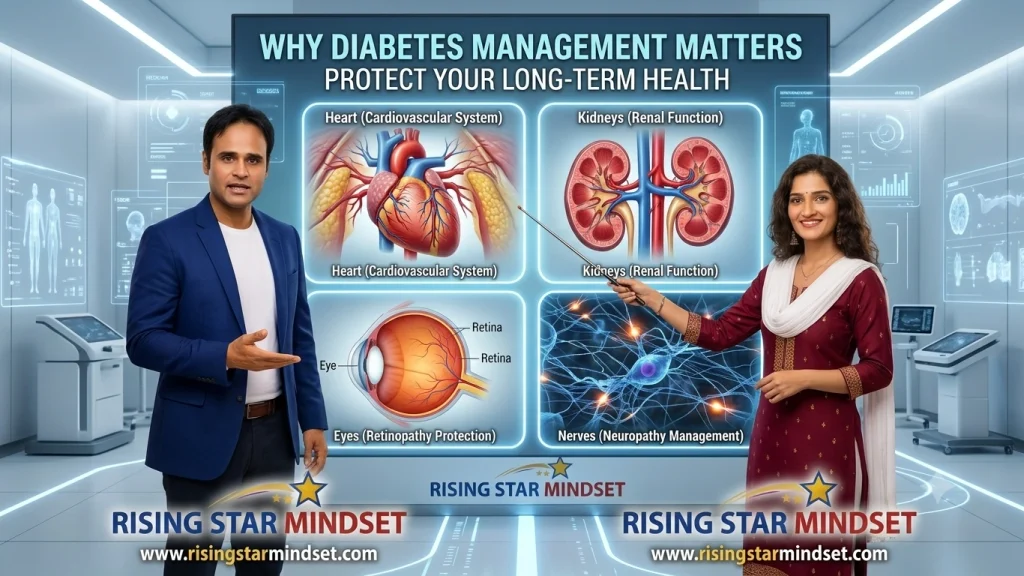
Early diagnosis is one of the most important messages of World Diabetes Day 2026.
When diabetes is identified early, people can receive appropriate medical care, understand their condition and take steps to reduce the risk of complications.
Possible Complications of Poorly Managed Diabetes
- Heart and blood vessel disease
- Kidney damage
- Vision problems and diabetic eye disease
- Nerve damage
- Foot ulcers and infections
These complications do not occur in everyone. Proper management and regular medical follow-up can reduce the risk.
Common Tests Used to Diagnose Diabetes
| Test | What It Measures |
| Fasting Plasma Glucose (FPG) | Blood glucose after fasting |
| HbA1c | Average blood glucose over approximately 2–3 months |
| Oral Glucose Tolerance Test (OGTT) | How the body processes glucose after a glucose drink |
| Random Plasma Glucose | Blood glucose measured at any time |
A healthcare professional decides which test is appropriate.
An HbA1c result of 6.5% or higher, or fasting plasma glucose of 126 mg/dL or higher, can indicate diabetes when confirmed according to clinical guidelines.
A single result may need confirmation depending on the person’s symptoms and clinical situation.
14. How Families and Communities Can Help
Diabetes awareness should not remain limited to hospitals and health professionals.
Families, schools, workplaces and local communities can play an important role.

At Home: ( World Diabetes Day 2026 )
- Encourage balanced meals for the whole family.
- Make walking and physical activity a shared habit.
- Support family members who are managing diabetes.
- Avoid blaming or embarrassing someone because of their condition.
In Schools: ( World Diabetes Day 2026 )
- Organise health awareness activities.
- Teach students about nutrition and physical activity.
- Encourage healthy food choices.
- Help children understand that diabetes is a medical condition, not something to be ashamed of.
In Workplaces: ( World Diabetes Day 2026 )
- Encourage regular health check-ups.
- Provide opportunities for physical activity.
- Support employees who need diabetes-related medical care.
- Promote a healthy and inclusive work environment.
समाज की भूमिका: ( World Diabetes Day 2026 )
Diabetes से प्रभावित व्यक्ति को आलोचना नहीं, बल्कि सहयोग और समझ की जरूरत होती है। परिवार और समाज का सकारात्मक व्यवहार बीमारी को बेहतर तरीके से संभालने में मदद कर सकता है।
15. Important Questions and Answers
Q1. When is World Diabetes Day 2026 celebrated?
World Diabetes Day 2026 will be observed on Saturday, November 14.
Q2. What is the theme of World Diabetes Day 2026?
The official 2026–27 theme is “Early Action on Diabetes”.
Q3. Who established World Diabetes Day?
The International Diabetes Federation (IDF) and the World Health Organization (WHO) established the campaign in 1991.
Q4. Why is November 14 important?
It is the birthday of Sir Frederick Banting, who played a major role in the discovery of insulin.
Q5. What are the early signs of diabetes?
Common signs include increased thirst, frequent urination, tiredness, blurred vision and unexplained weight loss.
Q6. Can type 2 diabetes be prevented?
The risk can often be reduced through healthy lifestyle choices, appropriate weight management and early medical support. However, prevention cannot be guaranteed.
Q7. Can a person have diabetes without symptoms?
Yes. Type 2 diabetes can develop gradually and may not cause noticeable symptoms in its early stages.
Q8. What is the difference between type 1 and type 2 diabetes?
Type 1 is an autoimmune condition involving the destruction of insulin-producing cells. Type 2 involves insulin resistance and inadequate insulin production.
Q9. Which test helps detect diabetes?
Common tests include fasting plasma glucose, HbA1c and the oral glucose tolerance test.
Q10. What is the symbol of World Diabetes Day?
The blue circle is the internationally recognised symbol of diabetes awareness.
16. Key Takeaways: What Should We Remember?
World Diabetes Day 2026 gives us an opportunity to rethink how we approach diabetes awareness.
Here are the most important lessons:
- Diabetes can affect people across different age groups.
- Type 2 diabetes may develop without obvious symptoms.
- Early testing can help identify the condition.
- Healthy eating and physical activity can reduce type 2 diabetes risk.
- People with diabetes need appropriate medical care and support.
- Insulin is essential for people with type 1 diabetes.
- Myths and misinformation can create unnecessary health risks.
- Early action can help prevent or delay serious complications.
One Important Message: ( World Diabetes Day 2026 )

Do not wait for your body to send serious warning signals. Understand your health risks, recognise possible symptoms and seek medical advice when needed.
17. Frequently Asked Questions About World Diabetes Day 2026
Is World Diabetes Day an official United Nations observance?
Yes. World Diabetes Day became an official United Nations Day in 2006.
Is World Diabetes Day celebrated worldwide?
Yes. It is marked through awareness campaigns, educational activities, health events and community programmes in many countries.
What does the blue circle represent?
The blue circle represents global unity in the fight against diabetes.
Is diabetes a lifelong condition?
Diabetes is generally a chronic condition requiring ongoing management. The treatment and care needs vary depending on the type of diabetes and the individual.
Can walking help people with diabetes?
Regular physical activity, including walking, can support blood glucose management. However, exercise plans should be appropriate to the individual’s health and treatment.
Why is early detection important?
Early detection helps people receive timely care and reduces the chance of preventable complications.
Final Thoughts: Early Awareness Can Change Lives

World Diabetes Day 2026 is more than a date on the calendar. It is a reminder that health awareness should become a part of everyday life.
A person may ignore excessive thirst, frequent urination or unusual tiredness without realising that these could be warning signs of diabetes.
A simple conversation, a timely medical check-up and access to reliable information can make a meaningful difference.
This November 14, let us share knowledge, encourage early diagnosis and support everyone living with diabetes.
Know the signs. Act early. Support better health.
Health Disclaimer: This article is intended for general educational and awareness purposes only. It does not replace professional medical advice, diagnosis or treatment. Consult a qualified healthcare professional for personal medical concerns.
References and Further Reading ( World Diabetes Day 2026 )
- International Diabetes Federation (IDF): https://idf.org/
- Official World Diabetes Day Campaign: https://worlddiabetesday.org/
- WHO Diabetes Information: https://www.who.int/news-room/fact-sheets/detail/diabetes
RISING STAR MINDSET – Learn Today, Live Better Tomorrow.
Website: www.risingstarmindset.com