International Literacy Day 2026: Complete History, Theme, Events, Importance & Global Significance
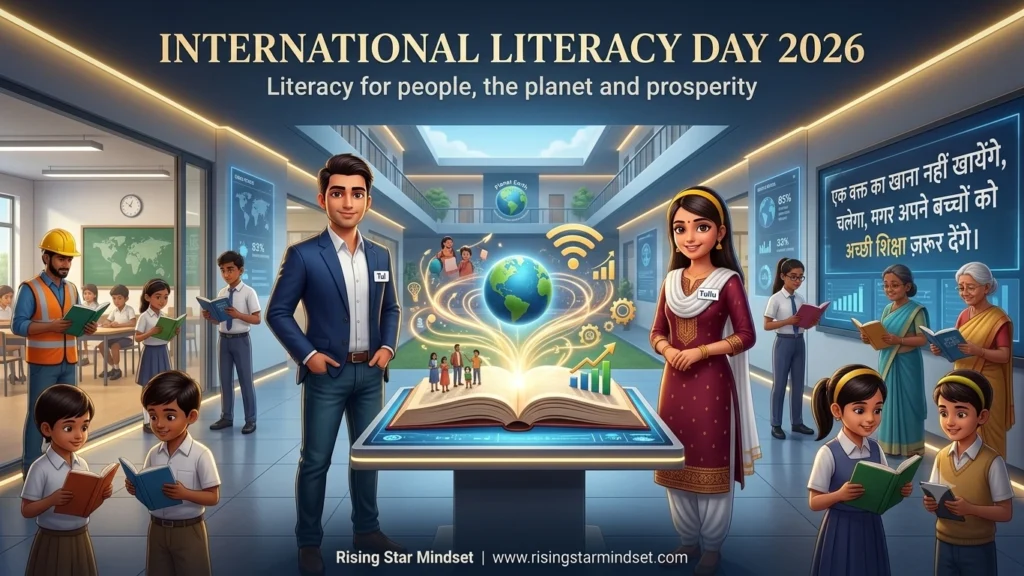
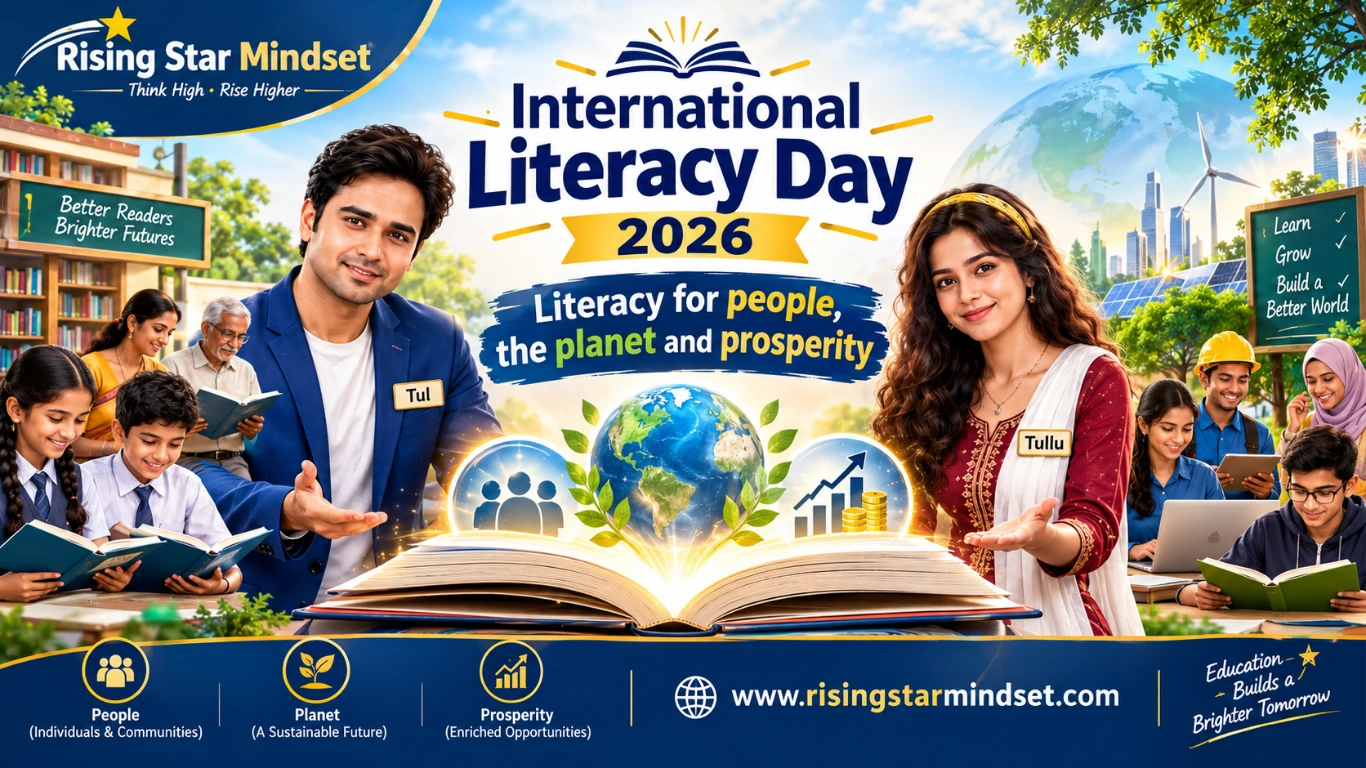
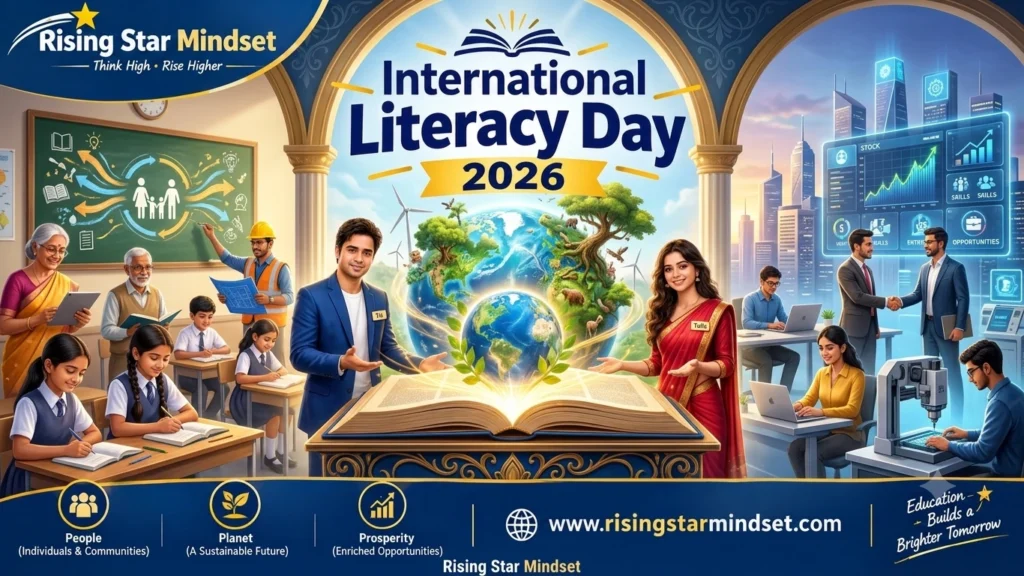
International Literacy Day 2026 is observed every year on 8 September to remind the world that literacy is not simply the ability to read and write—it is a fundamental human right and a foundation for education, equality, opportunity, peace and sustainable development.
In 2026, International Literacy Day becomes especially significant because it marks the 60th anniversary of the observance. UNESCO proclaimed International Literacy Day in 1966, and the first celebrations took place in 1967. The 2026 global celebration will take place in Chiapas, Mexico, on 8–9 September 2026, in collaboration with the Government of Mexico.
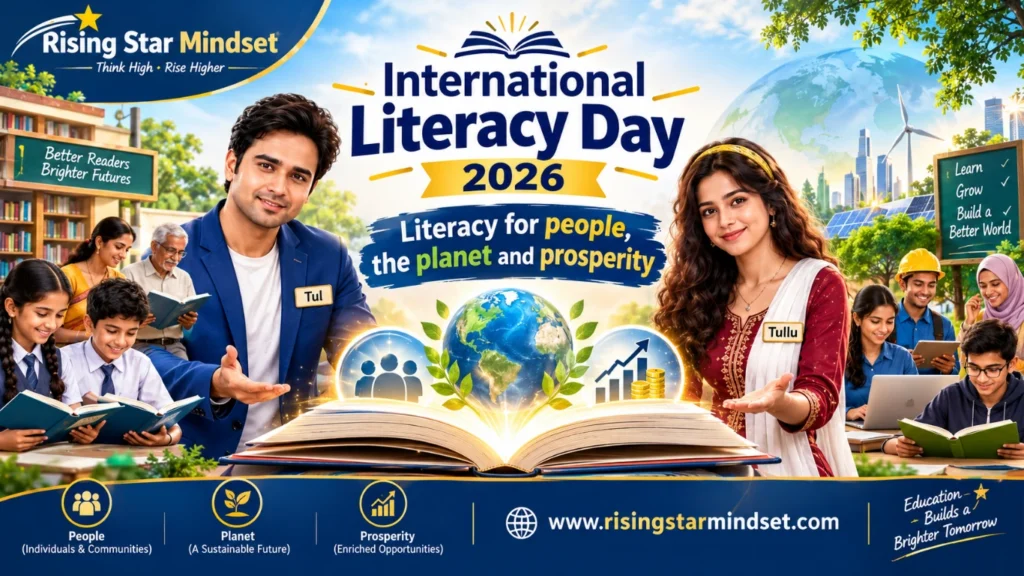
The official International Literacy Day 2026 theme is:
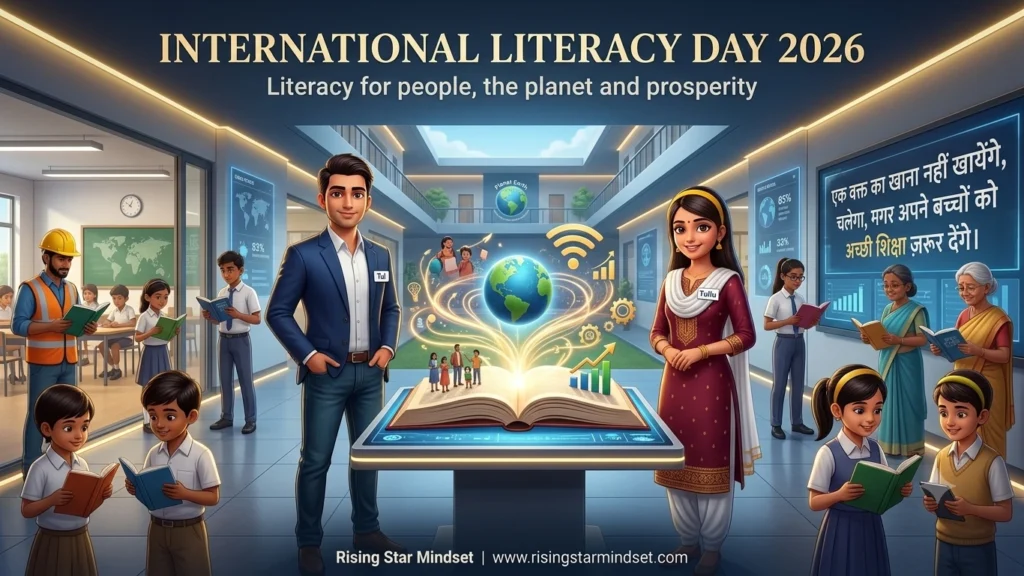
“Literacy for people, the planet and prosperity.”
The theme connects literacy with inclusion, sustainable development, environmental responsibility, livelihoods and economic opportunity.
Table of Contents
- What Is International Literacy Day?
- International Literacy Day 2026
- 2026 Theme Explained
- Full History of International Literacy Day
- Why Was 8 September Chosen?
- International Literacy Day Timeline
- The 60th Anniversary in 2026
- Global Event Roadmap for 2026
- UNESCO International Literacy Prizes
- What Does Literacy Really Mean?
- Importance of Literacy
- Literacy and Human Rights
- Literacy and Poverty
- Literacy and Employment
- Literacy and Women’s Empowerment
- Literacy and Digital Transformation
- Literacy and Peace
- Literacy and Sustainable Development
- Global Literacy Situation
- International Literacy Day and SDG 4
- International Literacy Day in India
- How Schools Can Celebrate Literacy Day
- How Students Can Participate
- Community-Level Activities
- 10 Powerful Literacy Day Messages
- Key Facts at a Glance
- Important Abbreviations
- FAQs
- Conclusion
- Related Post : International Youth Day 2026: What You Need to Know
1. What Is International Literacy Day?
English Explanation
International Literacy Day is a global observance dedicated to raising awareness about the importance of literacy and lifelong learning.
It is observed annually on 8 September.
UNESCO describes literacy as a fundamental human right. Literacy helps people access knowledge, exercise other rights, participate in society and develop the skills needed for personal, social and economic life.
हिंदी में समझिए ( International Literacy Day 2026 )
अंतरराष्ट्रीय साक्षरता दिवस (International Literacy Day) हर वर्ष 8 सितंबर को मनाया जाता है।
इस दिन का उद्देश्य लोगों को यह समझाना है कि पढ़ना और लिखना केवल एक शैक्षणिक कौशल नहीं है, बल्कि यह मानव अधिकार, आत्मनिर्भरता, रोजगार, समानता, सामाजिक भागीदारी और बेहतर जीवन का आधार है।
2. International Literacy Day 2026
International Literacy Day 2026 is particularly important because it marks the 60th anniversary of the observance.
Important Information
| Topic | Information |
| Day | International Literacy Day |
| Date | 8 September |
| Year | 2026 |
| Anniversary | 60th Anniversary |
| Proclaimed by | UNESCO |
| Proclaimed | 1966 |
| First celebrated | 1967 |
| 2026 Theme | Literacy for people, the planet and prosperity |
| Global celebration | 8–9 September 2026 |
| Host location | Chiapas, Mexico |
| Partner | Government of Mexico |
| Major feature | UNESCO International Literacy Prizes |
UNESCO states that the 2026 celebration will look at progress made over six decades while examining persistent and emerging literacy challenges and shaping future literacy agendas.
3. International Literacy Day 2026 Theme
“Literacy for people, the planet and prosperity”
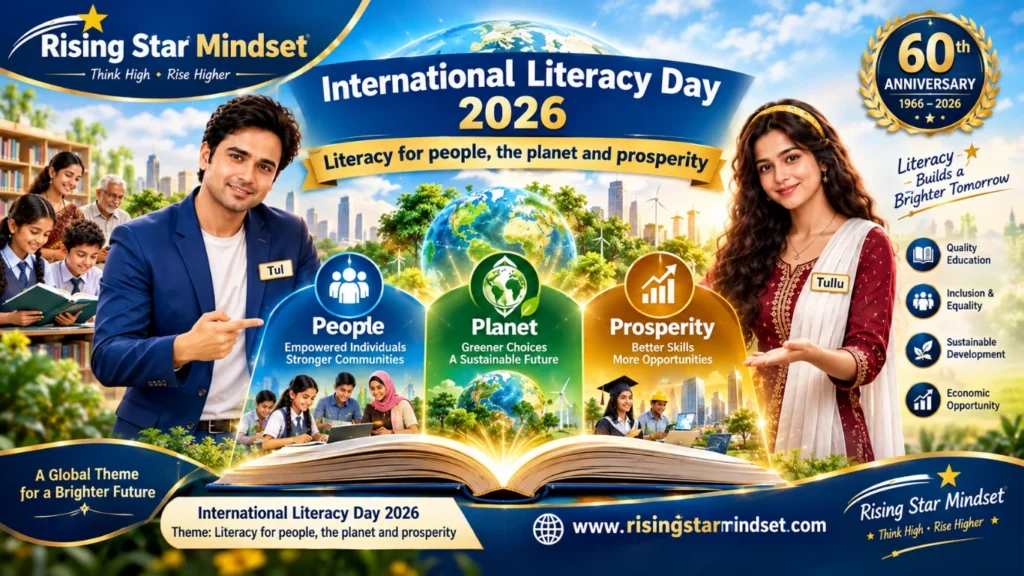
The 2026 theme highlights three interconnected dimensions:
1. People
Literacy empowers individuals.
A literate person is better positioned to:
- access information,
- continue learning,
- understand rights,
- communicate effectively,
- find employment,
- make informed decisions,
- participate in society.
2. Planet
Literacy can help people understand environmental information and participate in sustainable practices.
Environmental literacy can help communities understand:
- climate change,
- conservation,
- sustainable consumption,
- natural-resource management,
- disaster preparedness.
3. Prosperity
Literacy contributes to economic opportunity.
People with stronger literacy skills can have greater access to:
- education,
- vocational training,
- employment,
- entrepreneurship,
- financial information,
- digital opportunities.
हिंदी में Theme का अर्थ
“Literacy for people, the planet and prosperity” का अर्थ है:
“लोगों, पृथ्वी और समृद्धि के लिए साक्षरता।”
इसका संदेश है कि साक्षरता केवल व्यक्ति को पढ़ना-लिखना सिखाने तक सीमित नहीं है। यह व्यक्ति के विकास, पर्यावरण की सुरक्षा और आर्थिक अवसरों से भी जुड़ी हुई है।
4. Full History of International Literacy Day
International Literacy Day has its roots in the global movement to recognize literacy as an essential part of human development.
1966 – UNESCO Proclaims International Literacy Day
In 1966, UNESCO proclaimed International Literacy Day during its 14th General Conference.
The objective was to draw global attention to the importance of literacy for individuals, communities and societies.
1967 – First International Literacy Day Celebrations
The first International Literacy Day celebrations took place in 1967.
Since then, 8 September has been observed internationally as a day to promote literacy and highlight the challenges faced by people who lack basic literacy skills.
1990 – International Literacy Year
The United Nations later proclaimed 1990 as the International Literacy Year, further strengthening international attention to literacy and education.
2003–2012 – United Nations Literacy Decade
The United Nations proclaimed 2003–2012 as the United Nations Literacy Decade, with UNESCO playing a coordinating role.
This period emphasized literacy as an essential component of development and education.
2015 – Sustainable Development Goals
The adoption of the Sustainable Development Goals (SDGs) gave literacy a renewed place in the global education agenda.
SDG 4 calls for inclusive and equitable quality education and lifelong learning opportunities for all.
2020s – Literacy in a Digital World
The meaning of literacy has continued to expand.
Modern literacy increasingly involves the ability to:
- understand information,
- evaluate information,
- communicate digitally,
- identify unreliable information,
- use technology responsibly,
- participate safely in digital environments.
UNESCO’s 2025 International Literacy Day focus, “Promoting literacy in the digital era,” emphasized this changing understanding of literacy.
2026 – 60 Years of International Literacy Day
In 2026, the observance reaches its 60th anniversary.
UNESCO is using the occasion to reflect on six decades of progress and identify remaining and emerging challenges.
5. Why Was 8 September Chosen?
UNESCO established 8 September as International Literacy Day.
The date has been used for annual international celebrations since 1967.
The purpose is not merely to celebrate literacy but to maintain international attention on literacy gaps and encourage governments, educators, organizations and communities to take action.
6. International Literacy Day Timeline ( International Literacy Day 2026 )
| Year | Major Development |
| 1966 | UNESCO proclaimed International Literacy Day |
| 1967 | First International Literacy Day celebrations |
| 1990 | International Literacy Year |
| 2003–2012 | UN Literacy Decade |
| 2015 | SDGs strengthened the global education agenda |
| 2023 | Focus on literacy in a changing world |
| 2024 | Focus on multilingual education and peace |
| 2025 | Promoting literacy in the digital era |
| 2026 | 60th anniversary; Literacy for people, the planet and prosperity |
UNESCO’s recent themes demonstrate how the concept of literacy has evolved from basic reading and writing toward broader learning, multilingualism, digital participation and sustainable development.
7. The 60th Anniversary in 2026 ( International Literacy Day 2026 )
International Literacy Day 2026 is more than an annual observance.
It represents six decades of global literacy advocacy.
UNESCO describes the 2026 anniversary as an opportunity to:
- take stock of progress,
- recognize achievements,
- identify persistent literacy challenges,
- examine emerging challenges,
- highlight effective policies,
- strengthen partnerships,
- shape future literacy agendas.
The celebration particularly looks at progress since 2015, while considering what needs to be done to advance literacy for all.
हिंदी में ( International Literacy Day 2026 )
2026 का International Literacy Day इसलिए विशेष है क्योंकि यह इसका 60वां वर्ष है।
यह अवसर पिछले छह दशकों की उपलब्धियों को देखने के साथ-साथ यह सोचने का भी अवसर है कि भविष्य में literacy को कैसे अधिक inclusive, digital, sustainable और accessible बनाया जाए।
8. Full Global Event Roadmap – International Literacy Day 2026
The main global celebration is scheduled for 8–9 September 2026 in Chiapas, Mexico.
UNESCO is organizing the celebration in collaboration with the Government of Mexico.
8 September – International Literacy Day 2026
The official global programme begins in Chiapas.
UNESCO’s event information states that the Opening Ceremony will take place in an Indigenous community, San Juan Chamula, on 8 September.
The remaining parts of the global celebration will take place in San Cristóbal de las Casas.
Main focus areas
The 2026 global celebration is designed around:
- six decades of literacy progress,
- literacy as a human right,
- inclusion,
- sustainable development,
- economic opportunity,
- lifelong learning,
- emerging literacy challenges,
- partnerships,
- effective literacy programmes.
9 .September 2026
The global celebration continues in Chiapas.
A major component is the UNESCO International Literacy Prizes award ceremony, which recognizes outstanding literacy programmes around the world.
Event Format
The 2026 global celebration is being presented as an international gathering involving:
- UNESCO leaders,
- Mexican representatives,
- education ministers,
- UNESCO Member States,
- international organizations,
- NGOs,
- civil society,
- private-sector partners,
- foundations,
- educators,
- learners,
- researchers and universities.
The global event is also scheduled to be livestreamed.
9. UNESCO International Literacy Prizes
The UNESCO International Literacy Prizes are an important part of the International Literacy Day programme.
They recognize innovative and effective literacy initiatives around the world.
The 2026 global celebration includes the award ceremony for the UNESCO International Literacy Prizes.
Why These Prizes Matter
Literacy challenges can be different from one community to another.
Successful programmes may involve:
- adult education,
- community learning,
- multilingual education,
- innovative teaching,
- digital learning,
- support for marginalized communities,
- literacy and livelihoods.
Recognizing such programmes helps share successful approaches internationally.
10. What Does Literacy Really Mean?
Literacy traditionally means the ability to read and write.
However, in today’s world, literacy has a broader meaning.
A person increasingly needs the ability to:
- understand written information,
- communicate,
- interpret data,
- evaluate information,
- use digital tools,
- understand media,
- make informed decisions,
- continue learning.
हिंदी में ( International Literacy Day 2026 )
आज literacy का अर्थ केवल पढ़ना और लिखना नहीं है।
आधुनिक समाज में व्यक्ति को information को समझने, technology का responsible use करने, सही और गलत information में अंतर करने तथा lifelong learning करने की क्षमता भी चाहिए।
11. Importance of Literacy ( International Literacy Day 2026 )
Literacy is important because it influences almost every part of life.
1. Education
Literacy is the foundation of learning.
A student needs reading and comprehension skills to learn science, mathematics, history, languages and other subjects.
2. Employment
Many jobs require people to read instructions, write messages, understand forms and process information.
3. Economic Development
A more literate population can contribute to a stronger workforce and more informed economic participation.
4. Health Awareness
Literacy helps people understand important information, instructions and public-health messages.
5. Women’s Empowerment
Education and literacy can expand opportunities for women and girls.
6. Social Participation
Literacy enables people to engage more effectively with institutions, communities and public information.
7. Democracy
People need information and comprehension skills to participate meaningfully in civic life.
8. Digital Participation
Modern citizens need digital literacy to navigate online information and services safely.
12. Literacy and Human Rights ( International Literacy Day 2026 )
UNESCO describes literacy as a fundamental human right.
Literacy opens doors to other rights, greater freedoms and global citizenship. It also supports values such as equality, justice, diversity, tolerance and non-discrimination.
हिंदी में
साक्षरता केवल शिक्षा का विषय नहीं है।
यह व्यक्ति को अपने अधिकार समझने, समाज में भाग लेने और स्वतंत्र निर्णय लेने में सक्षम बनाने का माध्यम है।
13. Literacy and Poverty
Low literacy can make it harder for individuals to access educational and economic opportunities.
Literacy can support people in:
- learning new skills,
- understanding employment opportunities,
- managing information,
- starting small businesses,
- accessing financial information,
- continuing education.
Therefore, literacy is closely connected with poverty reduction and social development.
14. Literacy and Employment
The modern workplace depends heavily on information.
Workers may need to:
- read instructions,
- complete forms,
- write reports,
- communicate with colleagues,
- use computers,
- understand data,
- learn new procedures.
This is why literacy and employability are increasingly connected.
15. Literacy and Women’s Empowerment
Literacy can help women and girls access greater educational, social and economic opportunities.
It can strengthen:
- confidence,
- communication,
- educational participation,
- employment opportunities,
- awareness of rights,
- decision-making.
UNESCO continues to emphasize the importance of addressing inequalities in literacy. Global literacy challenges disproportionately affect women in many contexts.
16. Literacy and Digital Transformation
The digital age has changed what it means to be literate.
Today, people may need to understand:
- websites,
- apps,
- online forms,
- digital payments,
- social media,
- search results,
- online learning,
- digital security,
- misinformation.
UNESCO’s 2025 International Literacy Day focus highlighted the need to rethink literacy in the digital era and emphasized abilities such as accessing, understanding, evaluating, creating and communicating digital content safely and appropriately.
हिंदी में ( International Literacy Day 2026 )
आज केवल किताब पढ़ना पर्याप्त नहीं है।
एक modern literate person को digital information को समझने और evaluate करने की क्षमता भी चाहिए।
17. Literacy and Peace
Literacy contributes to understanding, communication and participation.
UNESCO connects literacy with the development of more peaceful, just and sustainable societies.
Education can help people develop:
- critical thinking,
- tolerance,
- communication,
- respect for diversity,
- understanding of different perspectives.
18. Literacy and Sustainable Development
Literacy supports several areas of sustainable development.
A literate population can more effectively engage with information about:
- environmental protection,
- climate change,
- health,
- employment,
- sustainable consumption,
- community development.
This is one reason the 2026 theme connects people, planet and prosperity.
19. Global Literacy Situation ( International Literacy Day 2026 )
Despite major progress over the decades, literacy challenges remain substantial.
According to UNESCO, at least 739 million youth and adults lacked basic literacy skills in 2024.
UNESCO also reports that around 4 in 10 children are not reaching minimum proficiency in reading, while 272 million children and adolescents were out of school in 2023.
These figures demonstrate why International Literacy Day remains important.
हिंदी में
दुनिया ने literacy के क्षेत्र में काफी प्रगति की है, लेकिन चुनौती अभी समाप्त नहीं हुई है।
2024 में कम-से-कम 739 million युवा और वयस्कों में basic literacy skills की कमी थी। UNESCO के अनुसार लगभग 10 में 4 बच्चे reading में minimum proficiency तक नहीं पहुंच रहे थे।
20. International Literacy Day 2026 and SDG 4
International Literacy Day is closely connected with Sustainable Development Goal 4 (SDG 4).
SDG 4
Quality Education
Its broad objective is to ensure inclusive and equitable quality education and promote lifelong learning opportunities for all.
Literacy is fundamental to achieving this goal.
Without basic reading, writing, comprehension and learning skills, lifelong learning becomes much more difficult.
21.International Literacy Day 2026 in India
India has a large and diverse education system and has undertaken numerous literacy and adult-education initiatives over the decades.
Literacy is particularly important in India because of the country’s:
- large population,
- linguistic diversity,
- rural and urban differences,
- educational inequalities,
- digital transformation,
- need for lifelong learning.
India’s literacy journey has involved school education, adult education, community programmes and continuing efforts to expand access to learning.
भारतीय संदर्भ में Literacy का अर्थ
भारत में literacy का उद्देश्य केवल लोगों को अक्षर पहचानना सिखाना नहीं होना चाहिए।
आज literacy में शामिल हैं:
- पढ़ना,
- लिखना,
- समझना,
- basic numeracy,
- digital skills,
- financial awareness,
- information literacy,
- lifelong learning.
22. How Schools Can Celebrate International Literacy Day
Schools can organize meaningful activities on 8 September.
Suggested School Activities
- Reading competition
- Essay writing competition
- Storytelling competition
- Book exhibition
- Poetry reading
- Literacy awareness rally
- Poster-making competition
- Debate on education
- Quiz competition
- Community reading programme
- Donation of books
- Digital literacy workshop
- Parent awareness programme
- Library campaign
- “Read for 30 Minutes” challenge
School Theme Idea
“One Student, One Book, One New Learning.”
23. How Students Can Participate
Students can celebrate International Literacy Day by doing simple things.
10 Things Students Can Do
- Read a new book.
- Teach someone a new word.
- Help a younger student read.
- Visit the school library.
- Write a short story.
- Create a literacy poster.
- Participate in a quiz.
- Share an educational message.
- Avoid spreading misinformation online.
- Encourage someone to continue learning.
Hindi Message
“खुद पढ़िए, दूसरों को पढ़ने के लिए प्रेरित कीजिए और ज्ञान को आगे बढ़ाइए।”
24. Community-Level Literacy Activities
Literacy is not only the responsibility of schools.
Communities can organize:
- adult reading classes,
- community libraries,
- mobile libraries,
- book donation drives,
- women’s literacy groups,
- digital-literacy sessions,
- language-learning programmes,
- career-awareness sessions,
- reading clubs,
- public awareness campaigns.
UNESCO’s examples of International Literacy Day celebrations around the world have included awareness campaigns, media outreach, rallies, consultations, educational programmes and community activities.
25. 10 Powerful International Literacy Day Messages
1.
Literacy opens the door to lifelong learning.
हिंदी: साक्षरता आजीवन सीखने का द्वार खोलती है।
2.
A literate society is a stronger society.
हिंदी: एक साक्षर समाज एक मजबूत समाज होता है।
3.
Read today, learn tomorrow, grow every day.
हिंदी: आज पढ़िए, कल सीखिए और हर दिन आगे बढ़िए।
4.
Education gives knowledge; literacy makes knowledge accessible.
हिंदी: शिक्षा ज्ञान देती है और साक्षरता उस ज्ञान तक पहुंचने का रास्ता खोलती है।
5.
Literacy is not a privilege; it is a right.
हिंदी: साक्षरता विशेषाधिकार नहीं, बल्कि अधिकार है।
6.
Every reader can become a lifelong learner.
हिंदी: हर पाठक lifelong learner बन सकता है।
7.
Books can change minds, and educated minds can change societies.
हिंदी: किताबें सोच बदल सकती हैं और शिक्षित सोच समाज बदल सकती है।
8.
Digital literacy is essential in the modern world.
हिंदी: आधुनिक दुनिया में digital literacy आवश्यक है।
9.
Literacy creates opportunity.
हिंदी: साक्षरता अवसर पैदा करती है।
10.
Literacy for people, the planet and prosperity.
हिंदी: लोगों, पृथ्वी और समृद्धि के लिए साक्षरता।
26. Key Facts at a Glance
| Fact | Details |
| Observed | 8 September |
| First celebrations | 1967 |
| Proclaimed | UNESCO, 1966 |
| 2026 anniversary | 60th |
| 2026 theme | Literacy for people, the planet and prosperity |
| 2026 global event | 8–9 September |
| Location | Chiapas, Mexico |
| Major award | UNESCO International Literacy Prizes |
| 2024 youth/adult literacy gap | At least 739 million lack basic literacy skills |
| Out-of-school children/adolescents | 272 million in 2023 |
| SDG connection | SDG 4 |
Sources: UNESCO and United Nations.
27. Important Abbreviations
| Abbreviation | Full Form |
| UNESCO | United Nations Educational, Scientific and Cultural Organization |
| UN | United Nations |
| SDG | Sustainable Development Goal |
| SDG 4 | Sustainable Development Goal 4 – Quality Education |
| ILD | International Literacy Day |
| NGO | Non-Governmental Organization |
| ICT | Information and Communication Technology |
| AI | Artificial Intelligence |
28. Frequently Asked Questions (FAQs)
Q1. When is International Literacy Day celebrated?
Answer: International Literacy Day is celebrated every year on 8 September.
हिंदी: अंतरराष्ट्रीय साक्षरता दिवस हर वर्ष 8 सितंबर को मनाया जाता है।
Q2. Who proclaimed International Literacy Day?
Answer: UNESCO proclaimed International Literacy Day in 1966.
हिंदी: UNESCO ने 1966 में International Literacy Day घोषित किया था।
Q3. When was International Literacy Day first celebrated?
Answer: The first International Literacy Day celebrations took place in 1967.
Q4. What is the theme of International Literacy Day 2026?
Answer: The 2026 theme is “Literacy for people, the planet and prosperity.”
Q5. Why is International Literacy Day important?
Answer: It raises awareness about literacy as a human right and highlights the importance of reading, writing, learning, inclusion, employment, social participation and sustainable development.
Q6. Where will the global International Literacy Day 2026 celebration take place?
Answer: The global celebration will take place in Chiapas, Mexico, on 8–9 September 2026.
Q7. What will happen during the International Literacy Day 2026 global event?
Answer: The programme will bring together education leaders, governments, organizations, educators, learners and other stakeholders. It will examine literacy progress and challenges and include the UNESCO International Literacy Prizes award ceremony.
Q8. What is the UNESCO International Literacy Prize?
Answer: It recognizes outstanding literacy programmes and initiatives from around the world.
Q9. Is literacy only about reading and writing?
Answer: No. Modern literacy increasingly includes information, digital and communication skills as well as the ability to understand and evaluate information.
Q10. How can students celebrate International Literacy Day?
Answer: Students can read books, participate in essay and quiz competitions, create posters, help others learn, visit libraries and organize literacy-awareness activities.
Q11. How many people lack basic literacy skills globally?
Answer: UNESCO reports that at least 739 million youth and adults lacked basic literacy skills in 2024.
Q12. What is the connection between literacy and SDG 4?
Answer: Literacy is a fundamental component of quality education and lifelong learning, making it closely connected with SDG 4.
29. Conclusion
English
International Literacy Day is much more than a date on the international calendar.
It is a reminder that knowledge, education and literacy can transform lives.
From its proclamation by UNESCO in 1966 to its first celebration in 1967, and now to its 60th anniversary in 2026, International Literacy Day has evolved alongside the changing needs of society.
Today, literacy means more than simply reading and writing. It includes the ability to understand information, continue learning, participate in society, use digital technologies responsibly and make informed decisions.
The 2026 theme—“Literacy for people, the planet and prosperity”—captures this wider vision.
The world has made significant progress, but millions of young people and adults still lack basic literacy skills. This means the global literacy mission is not finished.
International Literacy Day therefore gives governments, schools, teachers, students, communities and individuals an opportunity to ask an important question:
What can we do to make learning accessible to everyone?
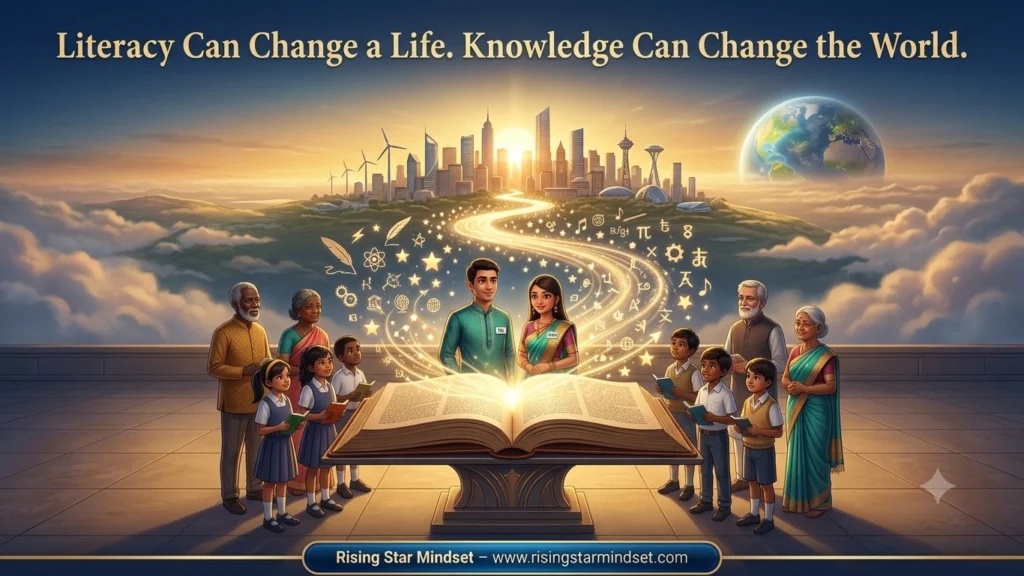
A book can change one person’s thinking.
Education can change one person’s future.
But widespread literacy can help change an entire society.
हिंदी में निष्कर्ष
अंतरराष्ट्रीय साक्षरता दिवस केवल 8 सितंबर को मनाया जाने वाला एक दिवस नहीं है।
यह हमें याद दिलाता है कि शिक्षा, ज्ञान और साक्षरता व्यक्ति और समाज दोनों का भविष्य बदल सकते हैं।
1966 में UNESCO द्वारा इसकी घोषणा से लेकर 1967 में पहली बार मनाए जाने तक और 2026 में इसके 60वें वर्ष तक, International Literacy Day ने बदलती दुनिया के साथ literacy की बदलती जरूरतों को सामने रखा है।
आज साक्षरता का अर्थ केवल पढ़ना और लिखना नहीं है। इसमें information को समझना, technology का सही उपयोग करना, misinformation को पहचानना, lifelong learning करना और समाज में जिम्मेदारी से भाग लेना भी शामिल है।
2026 की theme—
“Literacy for people, the planet and prosperity”
—हमें बताती है कि literacy व्यक्ति, पृथ्वी और आर्थिक-सामाजिक समृद्धि से जुड़ी हुई है।
दुनिया ने काफी प्रगति की है, लेकिन अभी भी करोड़ों युवा और वयस्क basic literacy skills से वंचित हैं।
इसलिए International Literacy Day का सबसे बड़ा संदेश यही है:
“खुद सीखिए, दूसरों को सीखने का अवसर दीजिए और ज्ञान को समाज की शक्ति बनाइए।”
Literacy is not just the ability to read a book.
It is the ability to understand the world.
साक्षरता केवल किताब पढ़ने की क्षमता नहीं है; यह दुनिया को समझने की क्षमता है।
Final Takeaway
International Literacy Day 2026 = 8 September 2026
60 Years of International Literacy Day
Theme: “Literacy for people, the planet and prosperity.”
Global Celebration: 8–9 September 2026, Chiapas, Mexico
Core Message: Literacy → Knowledge → Opportunity → Inclusion → Prosperity
🌟 Keep Learning with Rising Star Mindset
🌐 Website: www.risingstarmindset.com