

Natural Resources Class 9 Notes (English + Hindi)
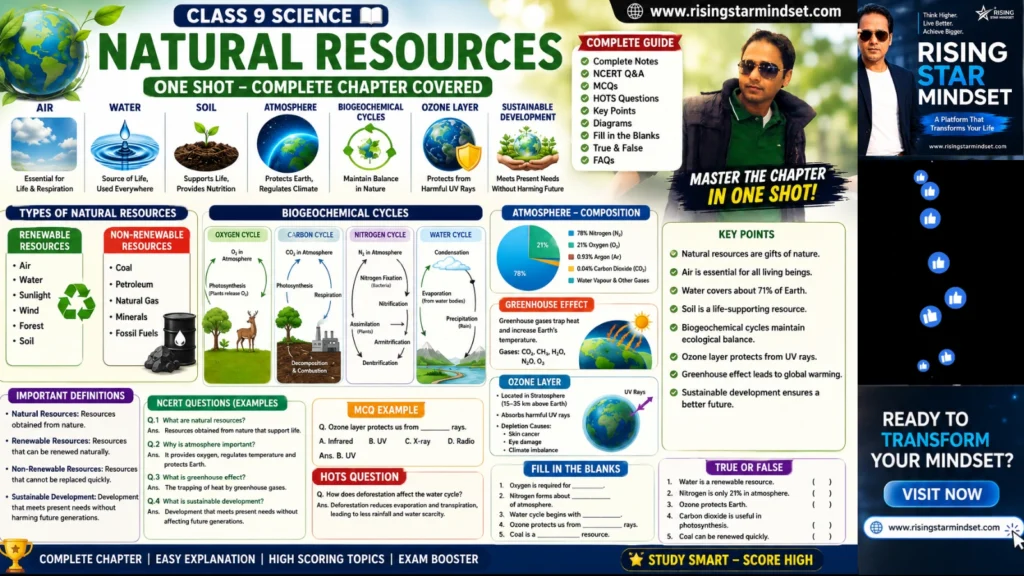
Natural Resources are one of the most important chapters of Class 9 Science. This chapter explains the importance of air, water, soil, atmosphere, ozone layer, biogeochemical cycles, and sustainable development. ( Natural Resources Class 9 )
अगर आप CBSE Board, State Board, Scholarship Exams या Competitive Exams की तैयारी कर रहे हैं, तो यह Complete Notes आपके लिए बहुत उपयोगी हैं। PREVIOUS TOPIC : Improvement in Food Resources
Table of Contents ( Natural Resources Class 9 )
- Introduction
- What are Natural Resources?
- Types of Natural Resources
- Atmosphere
- Air and Its Importance
- Oxygen Cycle
- Carbon Cycle
- Nitrogen Cycle
- Water Cycle
- Greenhouse Effect
- Ozone Layer
- Sustainable Development
- Important Abbreviations
- Key Points
- MCQs
- HOTS Questions
- NCERT Questions & Answers
- Fill in the Blanks
- True & False
- FAQs
- Conclusion
Introduction
Natural resources are gifts of nature that help living organisms survive.
Hindi Explanation
प्राकृतिक संसाधन प्रकृति द्वारा दिए गए ऐसे संसाधन हैं जिनकी सहायता से सभी जीव अपना जीवन व्यतीत करते हैं।
What are Natural Resources?
Natural resources are materials obtained from nature without human intervention.
Examples
- Air
- Water
- Soil
- Minerals
- Forests
- Wildlife
- Sunlight
Hindi
प्राकृतिक संसाधन वे संसाधन हैं जो हमें सीधे प्रकृति से प्राप्त होते हैं।
Types of Natural Resources
| Renewable Resources | Non-Renewable Resources |
|---|---|
| Air | Coal |
| Water | Petroleum |
| Sunlight | Natural Gas |
| Wind | Minerals |
| Forest | Fossil Fuels |
Hindi
Renewable Resources
जिनका पुनः निर्माण संभव है।
Non-Renewable Resources
जो सीमित मात्रा में उपलब्ध हैं।
Atmosphere
The atmosphere is a blanket of gases surrounding the Earth.
Main gases
- Nitrogen (78%)
- Oxygen (21%)
- Argon
- Carbon dioxide
- Water vapour
Hindi
वायुमंडल पृथ्वी के चारों ओर गैसों की परत है।
Importance of Air ( Natural Resources Class 9 )
- Helps in respiration
- Supports combustion
- Regulates climate
- Helps plants prepare food
Hindi
- श्वसन के लिए आवश्यक
- दहन में सहायक
- मौसम नियंत्रित करता है
- प्रकाश संश्लेषण में सहायक
Water
Water is essential for all living organisms.
Functions
- Digestion
- Transportation
- Temperature regulation
- Agriculture
Hindi
जल जीवन का आधार है।
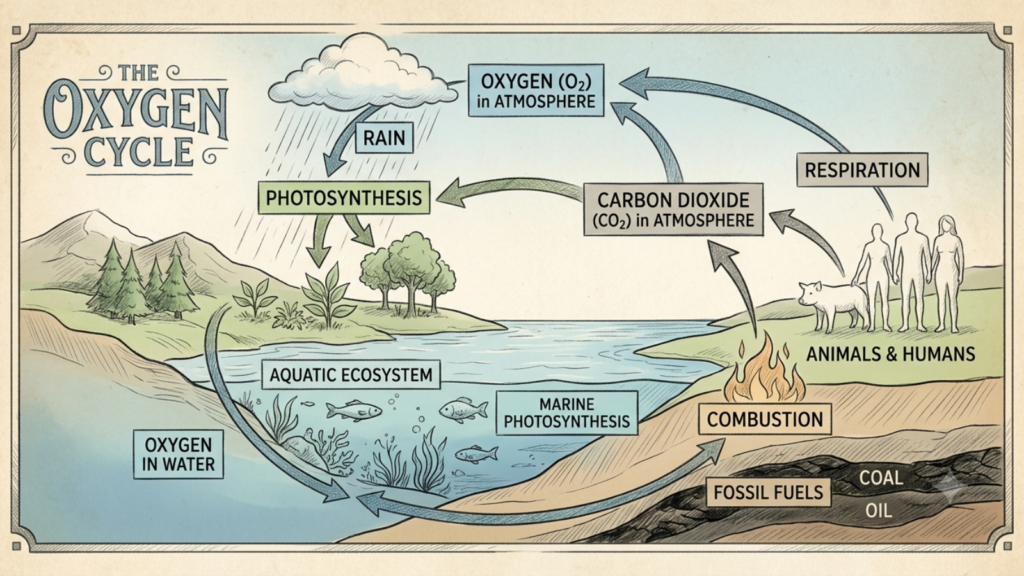
Oxygen Cycle ( Natural Resources Class 9 )
Plants release oxygen during photosynthesis.
Animals use oxygen for respiration.
Carbon Cycle
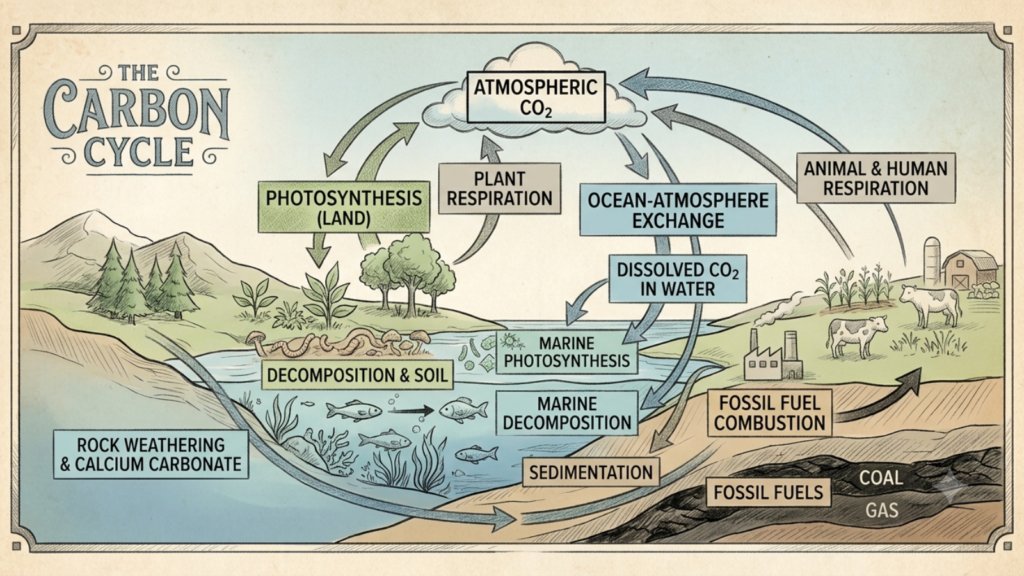
Carbon moves between
- Atmosphere
- Plants
- Animals
- Soil
- Oceans
Importance
Maintains ecological balance.
Nitrogen Cycle
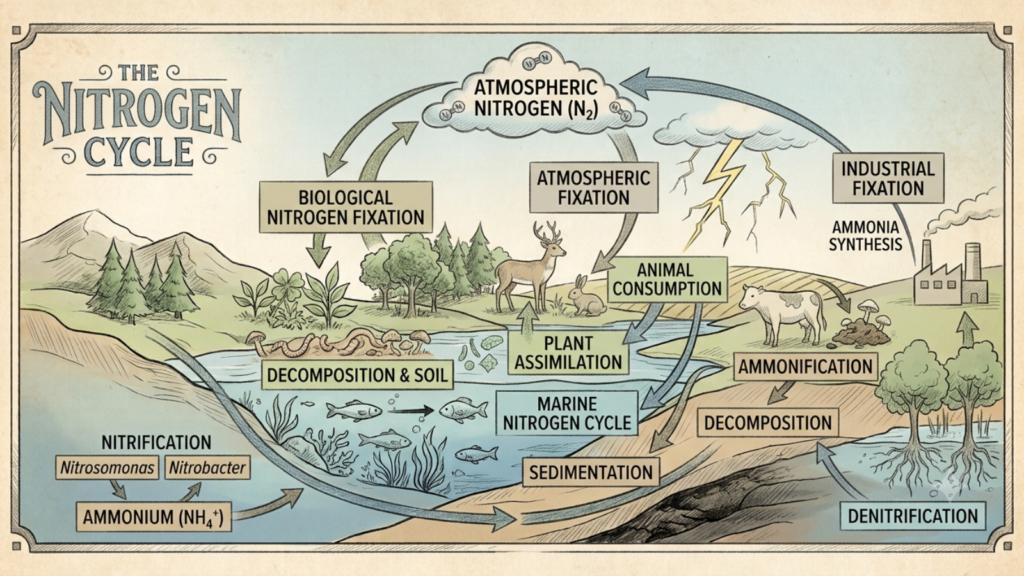
Steps
- Nitrogen Fixation
- Nitrification
- Assimilation
- Ammonification
- Denitrification
Hindi
नाइट्रोजन चक्र पौधों को उपयोगी नाइट्रोजन उपलब्ध कराता है।
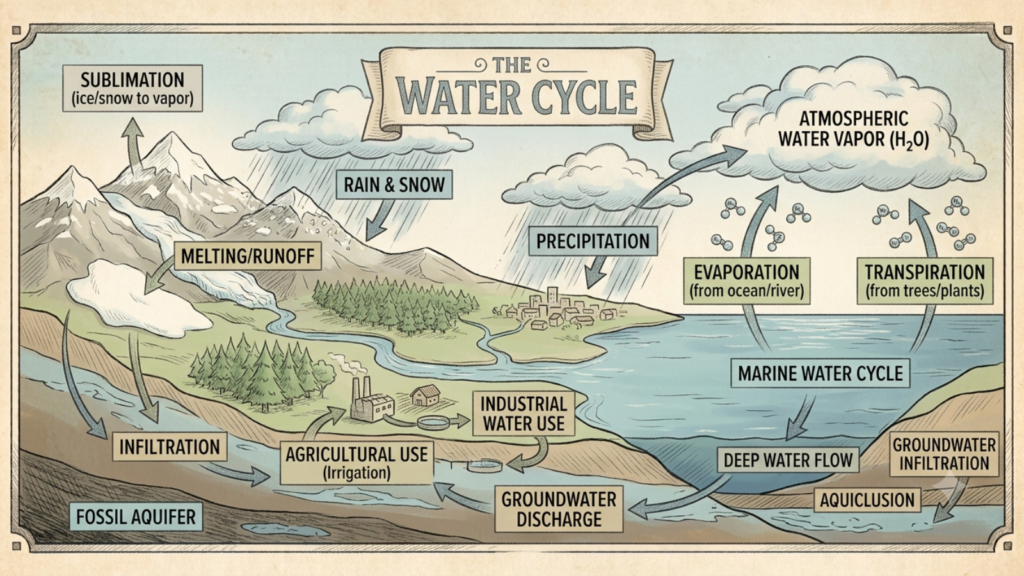
Water Cycle
Stages
- Evaporation
- Condensation
- Precipitation
- Collection
Hindi
जल चक्र पृथ्वी पर जल की निरंतर उपलब्धता बनाए रखता है।
Greenhouse Effect
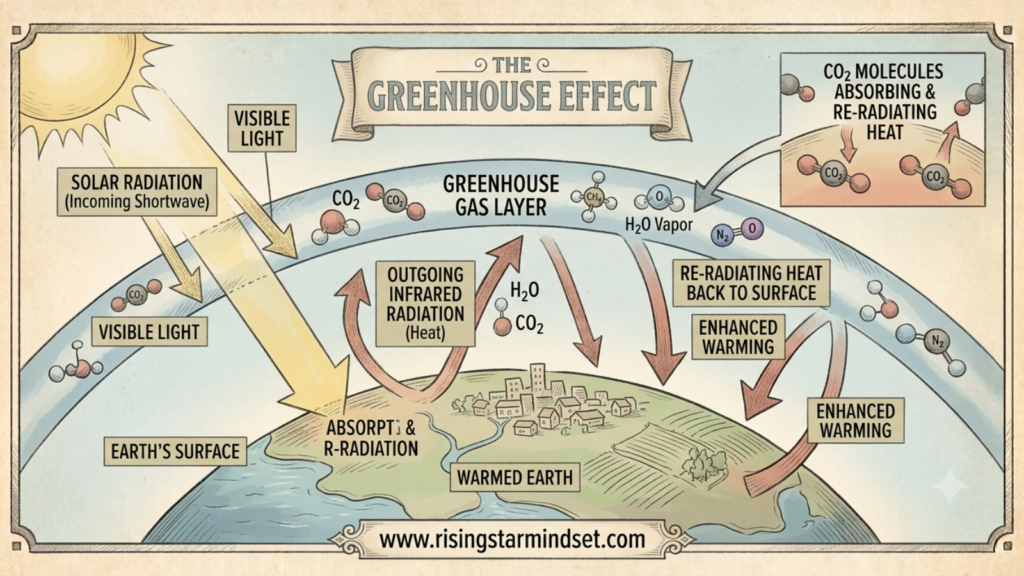
Greenhouse gases trap heat.
Examples
- Carbon dioxide
- Methane
- Water vapour
Hindi
ग्रीनहाउस प्रभाव पृथ्वी का तापमान बढ़ाता है।
Ozone Layer
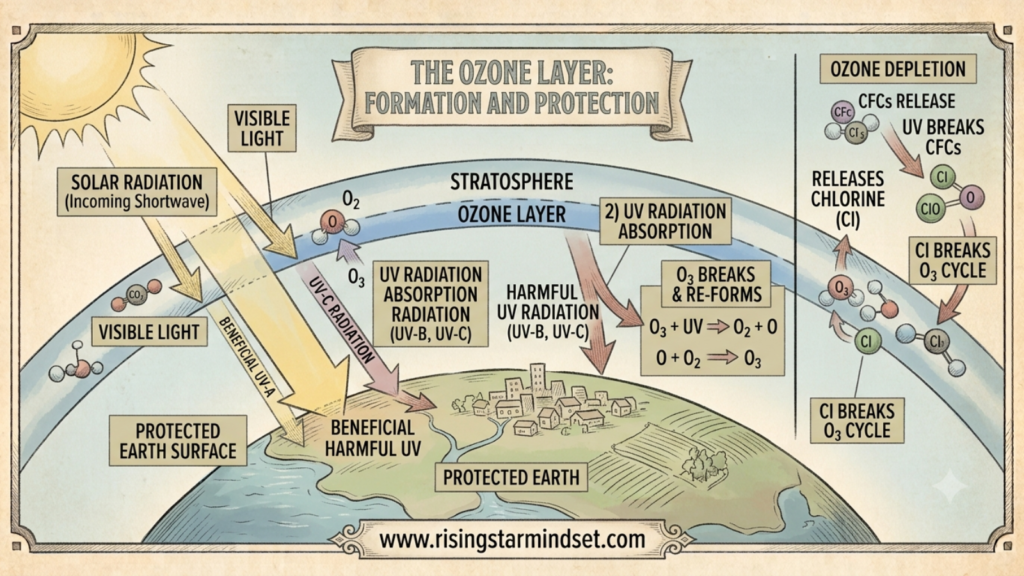
The ozone layer protects Earth from harmful UV rays.
Depletion causes
- Skin cancer
- Eye damage
- Climate imbalance
Hindi
ओजोन परत सूर्य की हानिकारक पराबैंगनी किरणों से रक्षा करती है।
Sustainable Development
Development that meets present needs without affecting future generations.
Hindi
ऐसा विकास जिससे वर्तमान आवश्यकताएँ पूरी हों और भविष्य सुरक्षित रहे।
Important Abbreviations
| Abbreviation | Full Form |
|---|---|
| UV | Ultraviolet |
| CO₂ | Carbon Dioxide |
| O₂ | Oxygen |
| N₂ | Nitrogen |
| H₂O | Water |
| CH₄ | Methane |
| CFC | Chlorofluorocarbon |
| O₃ | Ozone |
Key Points
| Natural resources are essential for life. |
| Atmosphere contains 78% nitrogen. |
| Oxygen supports respiration. |
| Water covers about 71% of Earth. |
| Ozone layer absorbs UV rays. |
| Carbon cycle maintains ecological balance. |
| Nitrogen cycle enriches soil. |
| Water cycle maintains water availability. |
| Greenhouse gases increase Earth’s temperature. |
| Sustainable development conserves resources. |
Most Important MCQs
Q1. Which gas is present in maximum amount in atmosphere?
A. Oxygen
B. Nitrogen
C. Carbon dioxide
D. Hydrogen
Answer: B
Q2. Which gas is essential for respiration?
A. Nitrogen
B. Oxygen
C. Helium
D. Hydrogen
Answer: B
Q3. Ozone layer protects us from
A. Infrared rays
B. UV rays
C. Radio waves
D. X-rays
Answer: B
Q4. Water cycle starts with
A. Rain
B. Condensation
C. Evaporation
D. Collection
Answer: C
Q5. Which gas causes greenhouse effect?
A. Oxygen
B. Carbon dioxide
C. Nitrogen
D. Neon
Answer: B
Q6. Which resource is renewable?
A. Coal
B. Petroleum
C. Water
D. Natural Gas
Answer: C
Q7. Nitrogen fixation is mainly done by
A. Fungi
B. Bacteria
C. Viruses
D. Algae
Answer: B
Q8. Which process releases oxygen?
A. Respiration
B. Photosynthesis
C. Digestion
D. Fermentation
Answer: B
Q9. Which layer protects Earth?
A. Troposphere
B. Ozone Layer
C. Mesosphere
D. Exosphere
Answer: B
Q10. Which resource is non-renewable?
A. Air
B. Wind
C. Coal
D. Water
Answer: C
HOTS Questions
Q1. Why is ozone depletion dangerous?
Answer: It increases UV radiation reaching Earth, causing skin cancer and environmental damage.
Q2. How does deforestation disturb the water cycle?
Answer: Trees reduce evaporation and rainfall when removed.
Q3. Explain the relationship between photosynthesis and respiration.
Answer: Photosynthesis produces oxygen and glucose, while respiration uses oxygen and releases carbon dioxide.
Q4. Why should fossil fuels be conserved?
Answer: They are limited and cause pollution.
Q5. Suggest methods to conserve natural resources.
Answer:
- Rainwater harvesting
- Tree plantation
- Recycling
- Renewable energy
- Water conservation
NCERT Questions & Answers
Q1. What are natural resources?
Answer: Resources obtained from nature that support life.
Q2. Why is atmosphere important?
Answer: It provides oxygen, regulates temperature and protects Earth.
Q3. Why is water considered essential?
Answer: It is necessary for all biological activities.
Q4. Explain greenhouse effect.
Answer: Trapping of heat by greenhouse gases.
Q5. What is sustainable development?
Answer: Development that protects resources for future generations.
Fill in the Blanks
- Oxygen is required for __________.
Answer: Respiration
- Nitrogen forms about __________ of atmosphere.
Answer: 78%
- Water cycle begins with __________.
Answer: Evaporation
- Ozone protects us from __________ rays.
Answer: UV
- Coal is a __________ resource.
Answer: Non-renewable
True or False
- Water is a renewable resource. ✔ True
- Nitrogen is only 21% in atmosphere. ✖ False
- Ozone protects Earth. ✔ True
- Carbon dioxide is useful in photosynthesis. ✔ True
- Coal can be renewed quickly. ✖ False
FAQs
What are natural resources?
Resources obtained directly from nature.
Which gas is maximum in atmosphere?
Nitrogen.
Why is ozone important?
It protects us from harmful UV radiation.
What is greenhouse effect?
Trapping of heat by greenhouse gases.
What is sustainable development?
Development that conserves resources for future generations.
Conclusion
Natural Resources are the foundation of life on Earth. Understanding the atmosphere, water, soil, and different natural cycles helps students appreciate the balance of nature. Conserving these resources through sustainable practices is essential for a healthy future. By mastering this chapter, students can perform well in school exams as well as competitive exams.
Keep Learning, Keep Growing! 🚀
P Kumar | Rising Star Mindset
www.risingstarmindset.com
Together We Will Make The Difference