
BPSC History Series – Part 4
Welcome to BPSC History Series Part 4 ( Most Important Medieval India ) on www.risingstarmindset.com.
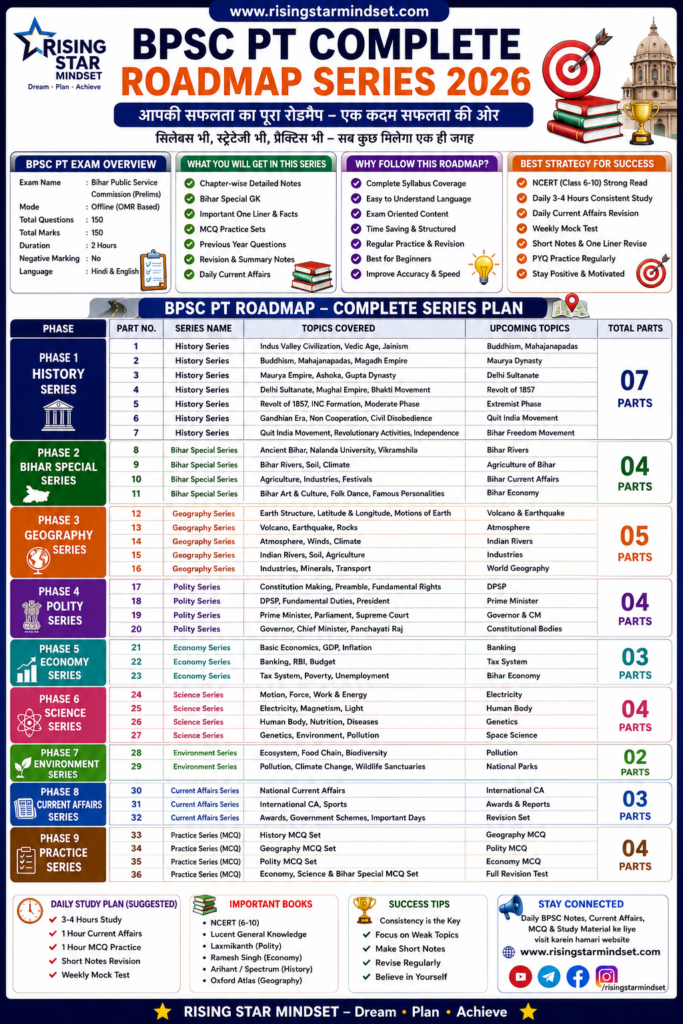
In the previous parts, we covered:
Maurya Empire
Emperor Ashoka
Gupta Dynasty
Now we move to Medieval Indian History and discuss:
- Delhi Sultanate
- Mughal Empire
- Bhakti Movement
These topics are extremely important for BPSC, UPSC, SSC CGL, Bihar Daroga, Railway, CTET, STET, and other competitive examinations.
Table of Contents
- Introduction
- Delhi Sultanate
- English Explanation
- Hindi Explanation
- Important Facts
- Mughal Empire
- English Explanation
- Hindi Explanation
- Important Facts
- Bhakti Movement
- English Explanation
- Hindi Explanation
- Important Saints
- Comparison Table
- Important MCQs
- Conclusion
- Next Topic Preview
Introduction
After the decline of ancient Indian empires such as the Mauryas and Guptas, India entered the medieval period. During this era, several Muslim dynasties ruled large parts of India and brought significant political, cultural, architectural, and administrative changes.
The Delhi Sultanate laid the foundation for centralized rule, while the Mughal Empire established one of the most powerful kingdoms in Indian history. Simultaneously, the Bhakti Movement emerged as a social and religious reform movement promoting devotion and equality.
1. Delhi Sultanate (1206–1526)
English Explanation
The Delhi Sultanate was established in 1206 AD by Qutb-ud-din Aibak after the death of Muhammad Ghori.
It was the first major Islamic kingdom in northern India and ruled for more than 300 years.
Five Dynasties of Delhi Sultanate
| Dynasty | Period |
|---|---|
| Mamluk (Slave) Dynasty | 1206–1290 |
| Khalji Dynasty | 1290–1320 |
| Tughlaq Dynasty | 1320–1414 |
| Sayyid Dynasty | 1414–1451 |
| Lodi Dynasty | 1451–1526 |
Important Rulers
Qutb-ud-din Aibak
- Founder of Delhi Sultanate
- Started construction of Qutub Minar
Iltutmish
- Consolidated the Sultanate
- Introduced Silver Tanka currency
Razia Sultan
- First and only woman ruler of Delhi Sultanate
Alauddin Khalji
- Market Control System
- Defeated Mongol invasions
- Expanded the empire
Muhammad Bin Tughlaq
- Shifted capital from Delhi to Daulatabad
- Introduced Token Currency
Ibrahim Lodi
- Last Sultan of Delhi Sultanate
हिन्दी व्याख्या
दिल्ली सल्तनत की स्थापना 1206 ई. में कुतुबुद्दीन ऐबक ने की थी।
यह भारत का पहला बड़ा मुस्लिम साम्राज्य था जिसने लगभग 320 वर्षों तक शासन किया।
प्रमुख शासक
कुतुबुद्दीन ऐबक
- दिल्ली सल्तनत का संस्थापक
- कुतुब मीनार का निर्माण प्रारम्भ कराया
इल्तुतमिश
- सल्तनत को मजबूत बनाया
- टंका मुद्रा चलाई
रज़िया सुल्तान
- दिल्ली की पहली महिला शासक
अलाउद्दीन खिलजी
- बाजार नियंत्रण नीति
- मंगोल आक्रमणों को रोका
मुहम्मद बिन तुगलक
- राजधानी दिल्ली से दौलताबाद स्थानांतरित की
- सांकेतिक मुद्रा जारी की
इब्राहिम लोदी
- दिल्ली सल्तनत का अंतिम शासक
Important Exam Facts
- First Sultan → Qutb-ud-din Aibak
- First Woman Sultan → Razia Sultan
- Market Reforms → Alauddin Khalji
- Token Currency → Muhammad Bin Tughlaq
- Last Sultan → Ibrahim Lodi
2. Mughal Empire (1526–1857)
English Explanation
The Mughal Empire was founded by Babur after defeating Ibrahim Lodi in the First Battle of Panipat (1526).
The Mughal period is considered one of the most significant phases of Indian history because of its administration, architecture, culture, and economic prosperity.
Major Mughal Emperors ( Most Important Medieval India )
Babur
- Founder of Mughal Empire
- Wrote Baburnama
Humayun
- Lost empire to Sher Shah Suri
- Regained throne later
Akbar
- Greatest Mughal ruler
- Introduced Sulh-i-Kul
- Founded Din-i-Ilahi
Jahangir
- Famous for justice
- Married Nur Jahan
Shah Jahan
- Built Taj Mahal
- Golden Age of Mughal Architecture
Aurangzeb
- Longest reigning Mughal ruler
- Expanded empire to maximum extent
हिन्दी व्याख्या
मुगल साम्राज्य की स्थापना 1526 ई. में बाबर ने प्रथम पानीपत युद्ध में इब्राहिम लोदी को हराकर की।
मुगल काल को भारतीय इतिहास का स्वर्णिम अध्याय माना जाता है क्योंकि इस काल में प्रशासन, कला, संस्कृति और वास्तुकला का विकास हुआ।
प्रमुख शासक
बाबर
- मुगल साम्राज्य का संस्थापक
- बाबरनामा का लेखक
हुमायूँ
- शेरशाह सूरी से पराजित
- बाद में पुनः सत्ता प्राप्त की
अकबर
- महान मुगल शासक
- सुलह-ए-कुल नीति
- दीन-ए-इलाही की स्थापना
जहाँगीर
- न्यायप्रिय शासक
- नूरजहाँ से विवाह
शाहजहाँ
- ताजमहल का निर्माण
- वास्तुकला का स्वर्ण युग
औरंगजेब
- सबसे लंबा शासन
- साम्राज्य का सबसे अधिक विस्तार
Important Mughal Facts
| Emperor | Contribution |
|---|---|
| Babur | Founder |
| Akbar | Din-i-Ilahi |
| Jahangir | Chain of Justice |
| Shah Jahan | Taj Mahal |
| Aurangzeb | Maximum Expansion |
3. Bhakti Movement ( Most Important Medieval India )
English Explanation
The Bhakti Movement emerged between the 7th and 17th centuries.
It emphasized:
- Devotion to God
- Equality among people
- Rejection of caste discrimination
- Simplicity in worship
The movement played a major role in social and religious reforms.
Major Saints ( Most Important Medieval India )
Ramanuja
Promoted Vishnu worship.
Ramananda
Spread Bhakti in North India.
Kabir
Opposed caste discrimination.
Guru Nanak
Founder of Sikhism.
Chaitanya Mahaprabhu
Promoted Krishna devotion.
Tulsidas
Author of Ramcharitmanas.
Mirabai
Famous devotee of Lord Krishna.
हिन्दी व्याख्या
भक्ति आंदोलन 7वीं से 17वीं शताब्दी के बीच विकसित हुआ।
इसके मुख्य सिद्धांत थे:
- ईश्वर के प्रति भक्ति
- जाति प्रथा का विरोध
- सामाजिक समानता
- सरल पूजा पद्धति
भक्ति आंदोलन ने भारतीय समाज में धार्मिक सुधार और सामाजिक जागरूकता पैदा की।
प्रमुख संत
रामानुजाचार्य
विष्णु भक्ति का प्रचार।
रामानंद
उत्तर भारत में भक्ति आंदोलन का प्रसार।
कबीर
जाति प्रथा और अंधविश्वास का विरोध।
गुरु नानक
सिख धर्म के संस्थापक।
चैतन्य महाप्रभु
कृष्ण भक्ति के प्रमुख प्रचारक।
तुलसीदास
रामचरितमानस के रचयिता।
मीराबाई
कृष्ण की महान भक्त।
Quick Comparison Table ( Most Important Medieval India )
| Topic | Delhi Sultanate | Mughal Empire | Bhakti Movement |
|---|---|---|---|
| Nature | Political Rule | Imperial Rule | Religious Movement |
| Period | 1206–1526 | 1526–1857 | 7th–17th Century |
| Founder | Qutb-ud-din Aibak | Babur | No Single Founder |
| Importance | Foundation of Muslim Rule | Cultural Golden Age | Social Reform |
Important MCQs for BPSC
1. Who founded the Delhi Sultanate?
A. Babur
B. Iltutmish
C. Qutb-ud-din Aibak
D. Alauddin Khalji
Answer: C
2. Who was the first woman ruler of Delhi?
A. Noor Jahan
B. Razia Sultan
C. Mirabai
D. Jahanara
Answer: B
3. Who introduced Din-i-Ilahi?
A. Babur
B. Jahangir
C. Akbar
D. Aurangzeb
Answer: C
4. Who built Taj Mahal?
A. Akbar
B. Shah Jahan
C. Jahangir
D. Babur
Answer: B
5. Who founded Sikhism?
A. Kabir
B. Ramananda
C. Guru Nanak
D. Chaitanya
Answer: C
Conclusion
The Delhi Sultanate established the foundation of medieval Muslim rule in India. The Mughal Empire brought political stability, administrative reforms, and architectural achievements, while the Bhakti Movement transformed Indian society through devotion, equality, and spiritual awakening.
For BPSC and other competitive examinations, understanding the chronology, rulers, reforms, and important personalities from these topics is essential.
Keep visiting: www.risingstarmindset.com for complete BPSC History Notes, MCQs, One-Shot Revision Charts, and Exam-Oriented Study Material.
Previous Topics Covered
Maurya Empire
Emperor Ashoka
Gupta Dynasty
Delhi Sultanate
Mughal Empire
Bhakti Movement
Coming Next in BPSC History Series Part 5
🔥 The Revolt of 1857 (First War of Indian Independence)
Topics to be covered:
- Causes of Revolt
- Major Leaders
- Role of Bihar in 1857
- Kunwar Singh
- Important Battles
- Consequences of Revolt
- BPSC Previous Year Questions
- MCQs & Revision Notes
Stay connected with Rising Star Mindset for Part 5! 🚀📚
1 thought on “Most Important Medieval India History”