

Management of Natural Resources Class 10
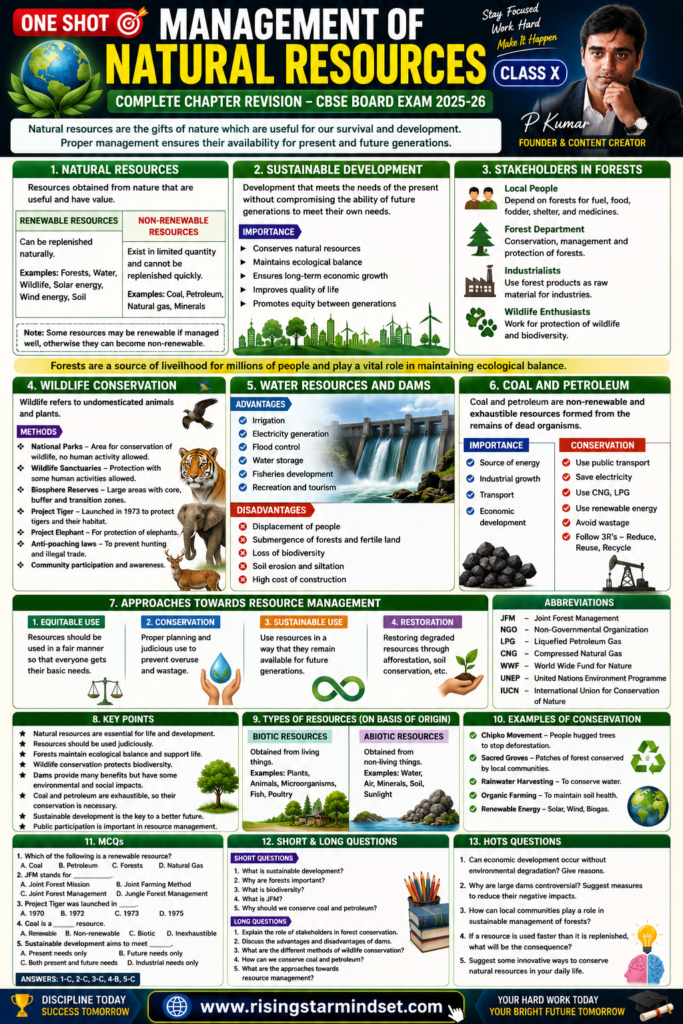
Natural resources are the backbone of human civilization. Proper management of natural resources is essential for sustainable development and environmental conservation. This chapter helps students understand the importance of forests, wildlife, water resources, coal, petroleum, and sustainable development.
Previous Year Class10 Science Paper Analysis /Chapter Wise Weightage Strategy / High Score-Tips
Table of Contents
- Introduction
- Natural Resources
- Sustainable Development
- Stakeholders in Forests
- Wildlife Conservation
- Water Resources and Dams
- Coal and Petroleum
- Abbreviations
- Key Points
- Important Questions and Answers
- HOTS Questions
- MCQs
- Previous Year Questions (PYQs)
- FAQs
- Conclusion
Introduction (परिचय)
English
Natural resources are resources obtained from nature and used by humans for survival and development. Their proper management ensures availability for future generations.
Hindi
प्राकृतिक संसाधन वे संसाधन हैं जो हमें प्रकृति से प्राप्त होते हैं और मानव जीवन के विकास एवं अस्तित्व के लिए आवश्यक हैं। इनका उचित प्रबंधन भविष्य की पीढ़ियों के लिए भी संसाधनों की उपलब्धता सुनिश्चित करता है।
Natural Resources (प्राकृतिक संसाधन)
Examples
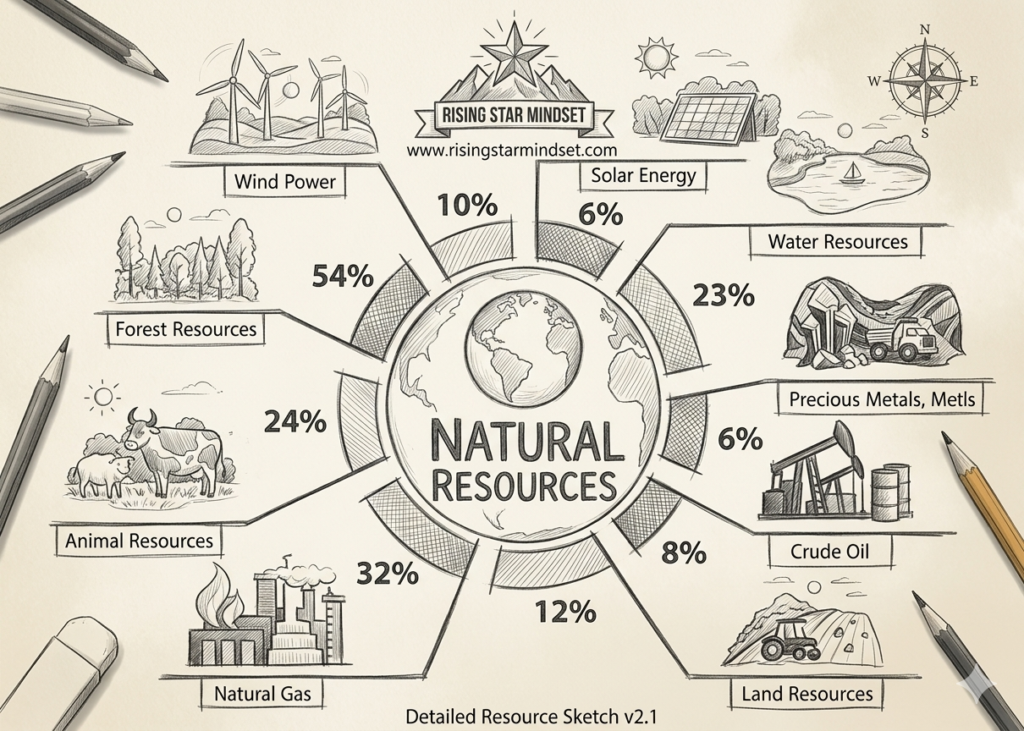
| Renewable Resources | Non-Renewable Resources |
|---|---|
| Forests | Coal |
| Water | Petroleum |
| Wildlife | Natural Gas |
| Solar Energy | Minerals |
Hindi
- नवीकरणीय संसाधन पुनः प्राप्त किए जा सकते हैं।
- अनवीकरणीय संसाधन सीमित मात्रा में उपलब्ध हैं।
Sustainable Development (सतत विकास)
Definition
Development that meets present needs without compromising the ability of future generations to meet their own needs.
Hindi
ऐसा विकास जो वर्तमान आवश्यकताओं को पूरा करे लेकिन भविष्य की पीढ़ियों की आवश्यकताओं को प्रभावित न करे।
Importance
- Environmental protection
- Conservation of resources
- Balanced economic growth
- Better quality of life
Stakeholders in Forests (वनों के हितधारक)
1. Local People
Depend on forests for fuel, food, fodder, and shelter.
2. Forest Department
Responsible for forest conservation.
3. Industrialists
Use forest products as raw materials.
4. Wildlife Enthusiasts
Work for biodiversity conservation.
Hindi
वनों के संरक्षण और उपयोग में स्थानीय लोग, वन विभाग, उद्योगपति तथा वन्यजीव प्रेमी सभी महत्वपूर्ण भूमिका निभाते हैं।
Wildlife Conservation (वन्यजीव संरक्षण)


Methods
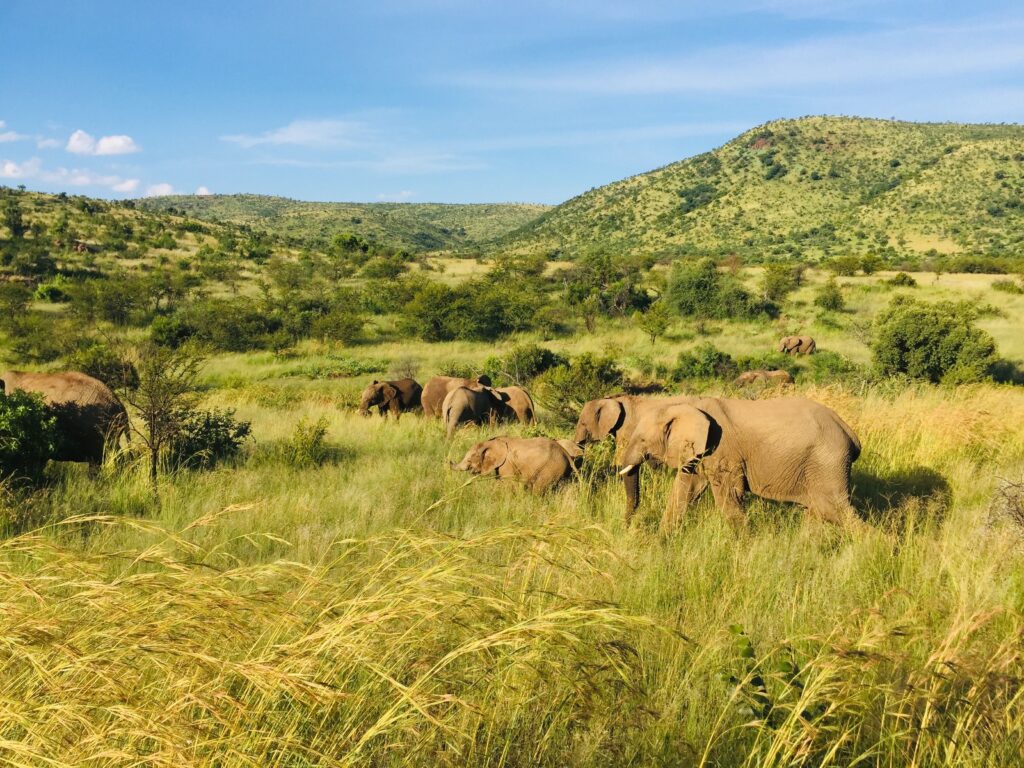
- National Parks
- Wildlife Sanctuaries
- Biosphere Reserves
- Afforestation
- Anti-poaching laws
Example
Project Tiger was launched to protect tigers in India.
Water Resources and Dams (जल संसाधन एवं बाँध)



Advantages of Dams
- Irrigation
- Electricity generation
- Flood control
- Water storage
Disadvantages
- Displacement of people
- Environmental damage
- Loss of biodiversity
Hindi
बाँध सिंचाई एवं बिजली उत्पादन में सहायक हैं, लेकिन इनके कारण लोगों का विस्थापन और पर्यावरणीय समस्याएँ भी उत्पन्न होती हैं।
Coal and Petroleum (कोयला एवं पेट्रोलियम)

Importance
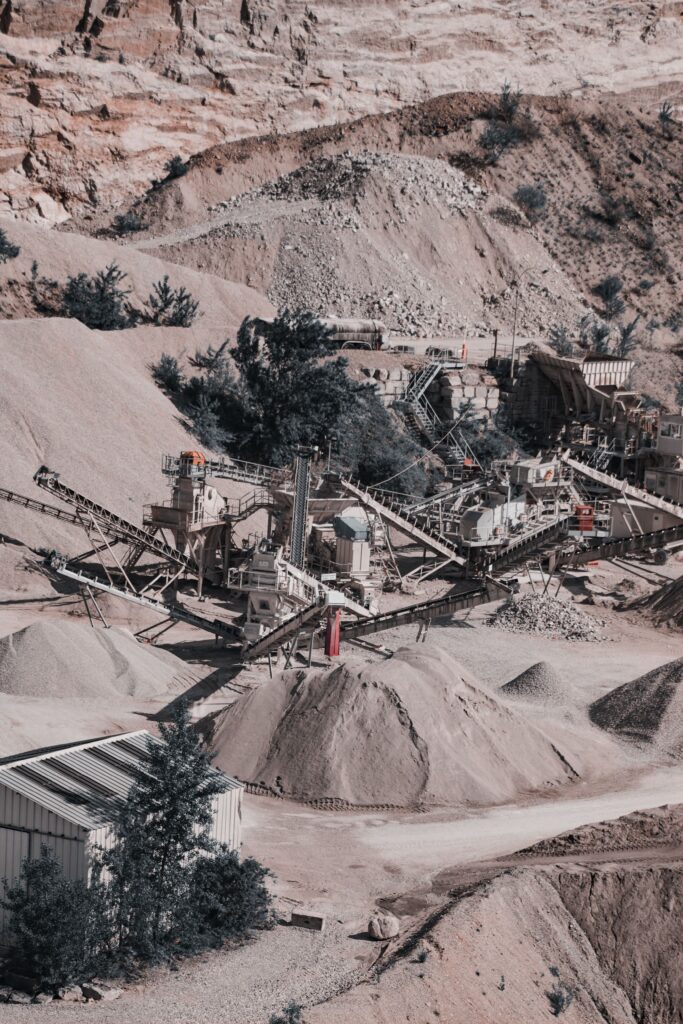
- Source of energy
- Industrial development
- Transportation
Conservation Methods
- Use public transport
- Save electricity
- Use renewable energy
- Avoid wastage
Hindi
कोयला और पेट्रोलियम सीमित संसाधन हैं, इसलिए इनका विवेकपूर्ण उपयोग आवश्यक है।
Abbreviations
| Abbreviation | Full Form |
|---|---|
| JFM | Joint Forest Management |
| NGO | Non-Governmental Organization |
| LPG | Liquefied Petroleum Gas |
| CNG | Compressed Natural Gas |
| WWF | World Wide Fund for Nature |
| UNEP | United Nations Environment Programme |
Key Points (Quick Revision)
| Natural resources are essential for life. |
| Sustainable development balances growth and conservation. |
| Forests help maintain ecological balance. |
| Wildlife conservation protects biodiversity. |
| Dams have both advantages and disadvantages. |
| Coal and petroleum are exhaustible resources. |
| Renewable resources should be promoted. |
| Public participation is important for resource management. |
Important Question Answers ( Management of Natural Resources )
Q1. What is sustainable development?
Answer
Development that fulfills present needs without harming future generations’ needs is called sustainable development.
Q2. Why are forests important?
Answer
Forests provide oxygen, maintain ecological balance, prevent soil erosion, and support biodiversity.
Q3. What is biodiversity?
Answer
The variety of living organisms found in a particular area is called biodiversity.
Q4. What is JFM?
Answer
Joint Forest Management is a program in which local communities participate in forest conservation.
Q5. Why should coal and petroleum be conserved?
Answer
Because they are non-renewable resources and may get exhausted in the future.
HOTS Questions ( Management of Natural Resources )
Q1.
How can local communities contribute to forest conservation?
Answer
By preventing illegal cutting, promoting afforestation, and participating in Joint Forest Management programs.
Q2.
Why is sustainable development important for India?
Answer
India has a large population and limited resources. Sustainable development ensures long-term resource availability.
Q3.
Can economic development occur without environmental degradation?
Answer
Yes, through sustainable development and use of renewable energy sources.
Q4.
Why are large dams controversial?
Answer
Because they provide benefits but also cause displacement and ecological damage.
MCQs
1. Which of the following is a renewable resource?
A. Coal
B. Petroleum
C. Forest ✔️
D. Natural Gas
2. JFM stands for
A. Joint Forest Management ✔️
B. Jungle Forest Mission
C. Joint Farming Method
D. None
3. Which project was launched to save tigers?
A. Project Elephant
B. Project Tiger ✔️
C. Project Forest
D. Project Wildlife
4. Coal is a
A. Renewable resource
B. Non-renewable resource ✔️
C. Biotic resource
D. None
5. Sustainable development aims at
A. Fast growth only
B. Industrialization only
C. Present and future needs ✔️
D. Profit maximization
6. Which gas is used as a cleaner fuel?
A. CNG ✔️
B. Coal
C. Diesel
D. Kerosene
7. Forests help in
A. Soil conservation
B. Biodiversity protection
C. Climate regulation
D. All of these ✔️
8. Wildlife sanctuaries are established for
A. Mining
B. Industrial use
C. Wildlife protection ✔️
D. Urbanization
9. Petroleum is a
A. Renewable resource
B. Exhaustible resource ✔️
C. Inexhaustible resource
D. None
10. The best method of resource conservation is
A. Overuse
B. Sustainable utilization ✔️
C. Wasteful use
D. Deforestation
Previous Year Questions (PYQs)
1 Mark Questions
Q1.
What is biodiversity?
Q2.
What is JFM?
Q3.
Name one renewable resource.
2 Mark Questions
Q4.
Mention two advantages of dams.
Q5.
Why is wildlife conservation necessary?
3 Mark Questions
Q6.
Explain the role of local communities in forest conservation.
Q7.
Write three methods of conserving coal and petroleum.
5 Mark Questions
Q8.
Discuss the concept of sustainable development with examples.
Q9.
Explain the advantages and disadvantages of dams.
Frequently Asked Questions (FAQs)
1. What is Management of Natural Resources?
It refers to the proper use and conservation of natural resources for present and future generations.
2. What are the main natural resources?
Forests, water, wildlife, coal, petroleum, minerals, and sunlight.
3. What is sustainable development?
Development that balances present needs with future requirements.
4. What is biodiversity?
The variety of plants, animals, and microorganisms in an ecosystem.
5. Why are forests important?
Forests maintain ecological balance and support life on Earth.
6. Why are coal and petroleum called exhaustible resources?
Because they are limited in quantity and cannot be replaced quickly.
7. What is Joint Forest Management?
A program involving local people in forest conservation activities.
8. Why is wildlife conservation important?
To protect endangered species and maintain ecological balance.
One-Shot Revision
Remember These Keywords
- Natural Resources
- Sustainable Development
- Biodiversity
- Forest Conservation
- Wildlife Sanctuary
- National Park
- Joint Forest Management (JFM)
- Dams
- Coal
- Petroleum
- Renewable Resources
- Non-Renewable Resources
- Afforestation
Conclusion
Management of Natural Resources is an important chapter for CBSE Class 10 Board Exams. Students should focus on sustainable development, forest conservation, biodiversity, dams, coal, petroleum, MCQs, HOTS, and PYQs. Understanding these concepts helps in scoring high marks and developing environmental awareness.
For more Class 10 Science Notes, MCQs, HOTS, PYQs and Board Exam Preparation visit: www.risingstarmindset.com 🚀📚
Keep Learning, Keep Growing! 🚀
P Kumar | Rising Star Mindset
www.risingstarmindset.com
Together We Will Make The Difference