
🔹 What is Nutrition? ( Class 7 SCIENCE )
Plants are one of the most important living organisms on Earth. They provide us with food, oxygen, medicines, fibres and many other useful materials. But have you ever wondered where plants get their food from? ( Class 7 SCIENCE )
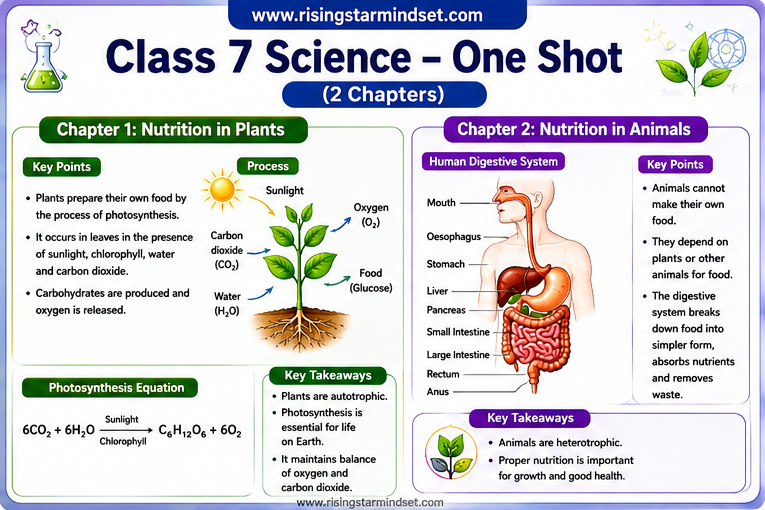
Most green plants prepare their own food with the help of sunlight, carbon dioxide, water and chlorophyll. This process is called photosynthesis.
In this chapter, we will learn about:
- What is nutrition?
- Modes of nutrition in plants
- Autotrophic nutrition
- Photosynthesis
- Role of chlorophyll
- Raw materials required for photosynthesis
- How plants obtain carbon dioxide and water
- Other modes of nutrition
- Parasitic plants
- Insectivorous plants
- Saprotrophic nutrition
- Symbiotic relationship
- Replenishment of nutrients in soil
- RELATED POST : Healthy Body, Calm Mind | Quote of the Day – 17 August
हिंदी में परिचय ( Class 7 SCIENCE )
पौधे पृथ्वी पर जीवन के लिए बहुत महत्वपूर्ण हैं। वे हमें भोजन, ऑक्सीजन, औषधियाँ, रेशे और कई अन्य उपयोगी वस्तुएँ प्रदान करते हैं।
अधिकांश हरे पौधे अपना भोजन स्वयं बनाते हैं। वे सूर्य के प्रकाश, कार्बन डाइऑक्साइड, पानी और क्लोरोफिल की सहायता से भोजन बनाते हैं। इस प्रक्रिया को प्रकाश संश्लेषण (Photosynthesis) कहते हैं।
🌿 इस अध्याय में क्या-क्या पढ़ेंगे?
- Nutrition क्या है?
- Plants में Nutrition
- Autotrophic Nutrition
- Photosynthesis
- Photosynthesis के लिए आवश्यक चीजें
- Carbon Dioxide और Water पौधों तक कैसे पहुँचते हैं?
- Other Modes of Nutrition
- Parasitic Plants
- Insectivorous Plants
- Saprotrophic Nutrition
- Symbiosis
- Soil में Nutrients की Replenishment
- Important Terms
- Important Questions
- MCQs
- HOTS Questions
- Quick Revision
🔹 2. Modes of Nutrition ( Class 7 SCIENCE )
पोषण के प्रकार
🌿 (A) Autotrophic Nutrition (स्वपोषी पोषण)
English:
Plants make their own food using sunlight, carbon dioxide, and water.
Hindi:
पौधे सूर्य के प्रकाश, कार्बन डाइऑक्साइड और जल की मदद से अपना भोजन स्वयं बनाते हैं।
👉 Plants are called Autotrophs (स्वपोषी)
(B) Heterotrophic Nutrition (परपोषी पोषण)
English:
Some organisms depend on others for food.
Hindi:
कुछ जीव अपने भोजन के लिए दूसरों पर निर्भर होते हैं। 👉 These are called Heterotrophs (परपोषी)
🔹 3. Photosynthesis (प्रकाश संश्लेषण) ( Class 7 SCIENCE )
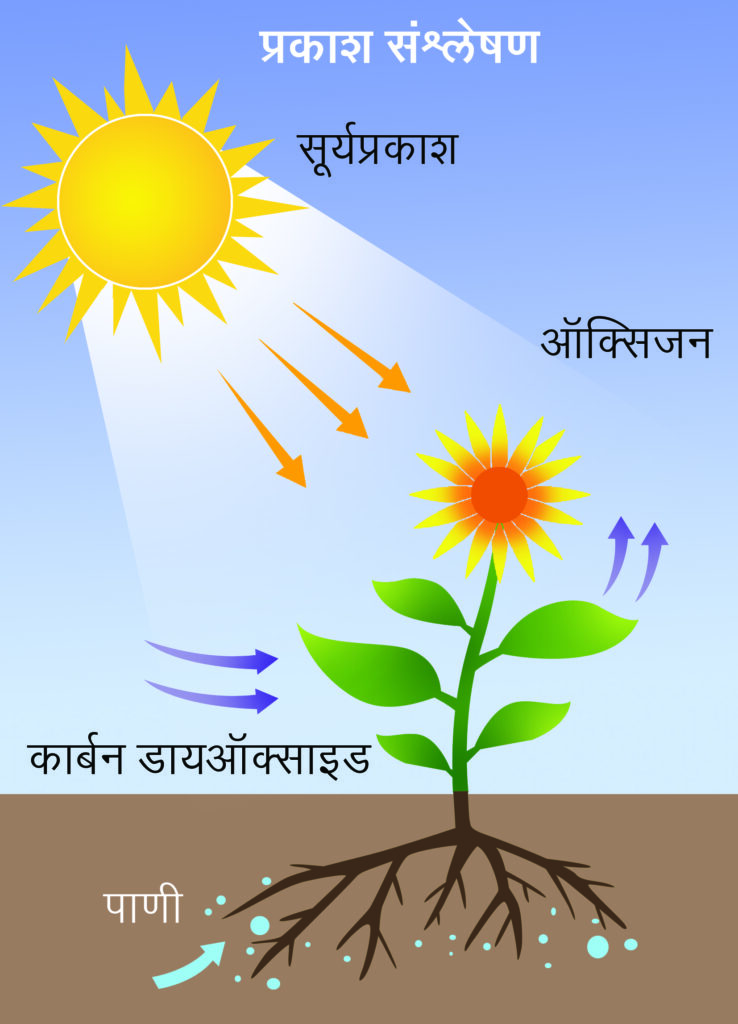
Photosynthesis is the process by which green plants make food using sunlight, carbon dioxide, and water in the presence of chlorophyll.
Hindi:
प्रकाश संश्लेषण वह प्रक्रिया है जिसमें हरे पौधे सूर्य के प्रकाश, कार्बन डाइऑक्साइड और जल की सहायता से क्लोरोफिल की उपस्थिति में भोजन बनाते हैं।
🧪 Equation (Formula)
Carbon dioxide + Water → Glucose + Oxygen (in presence of sunlight & chlorophyll)
🌿 Steps of Photosynthesis
English:
- Leaves take in carbon dioxide
- Roots absorb water
- Sunlight is trapped by chlorophyll
- Food (glucose) is prepared
- Oxygen is released
Hindi:
- पत्तियाँ कार्बन डाइऑक्साइड लेती हैं
- जड़ें पानी अवशोषित करती हैं
- क्लोरोफिल सूर्य के प्रकाश को पकड़ता है
- भोजन (ग्लूकोज) बनता है
- ऑक्सीजन बाहर निकलती है
🔹 4. Role of Leaves (पत्तियों की भूमिका) ( Class 7 SCIENCE )
English:
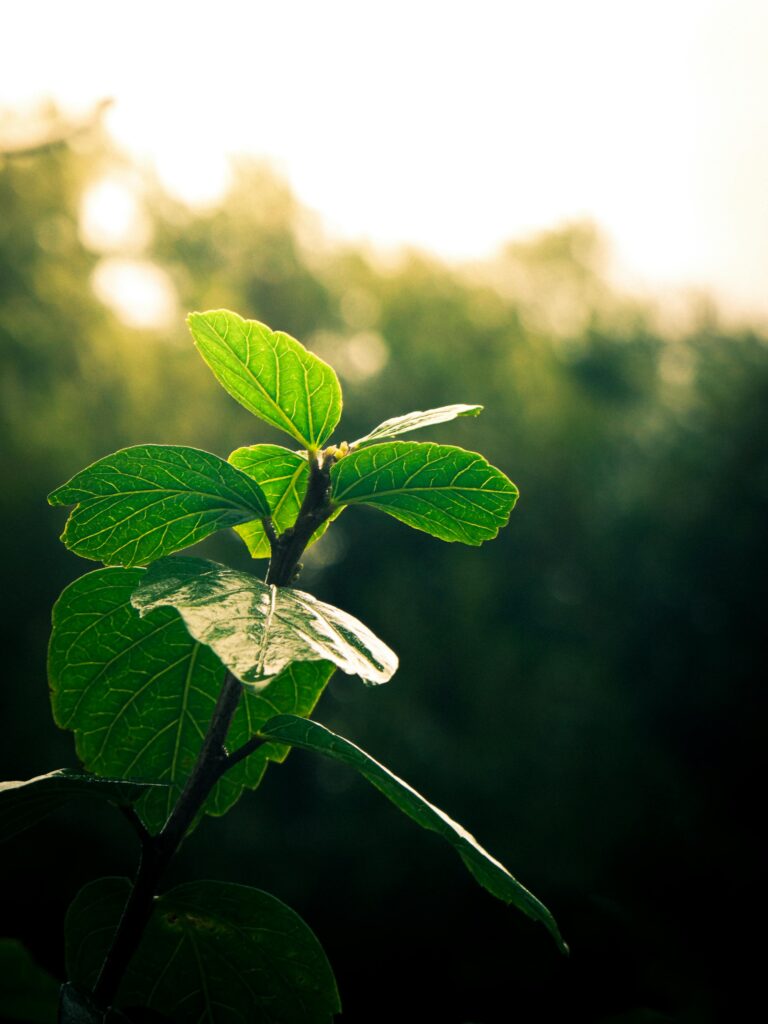
- Leaves are the food factory of plants
- They contain chlorophyll
Hindi:
- पत्तियाँ पौधों का भोजन बनाने का कारखाना हैं
- इनमें क्लोरोफिल होता है
🔹 5. Stomata (रंध्र) ( Class 7 SCIENCE )
English:
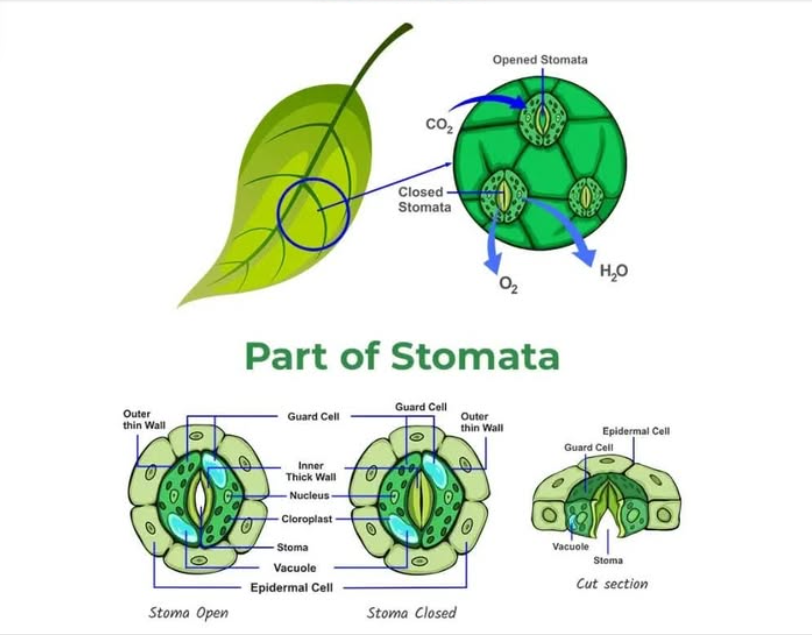
Tiny pores on leaves that help in gas exchange.
Hindi:
पत्तियों पर छोटे-छोटे छिद्र जो गैसों का आदान-प्रदान करते हैं।
Other Modes of Nutrition in Plants
पौधों में अन्य पोषण के प्रकार
🪴 (A) Parasite (परजीवी)
English:
Plants that take food from other plants.
Example: Cuscuta (Amarbel)
Hindi:
दूसरे पौधों से भोजन लेने वाले पौधे।
🍄 (B) Saprotrophs (मृतजीवी)
English:
Organisms that feed on dead matter.
Example: Fungi
Hindi:
मरे हुए पदार्थों से भोजन लेने वाले जीव।
🐜 (C) Insectivorous Plants (कीटभक्षी पौधे)
English:
Plants that eat insects.
Example: Pitcher plant
Hindi:
कीड़े खाने वाले पौधे।
🤝 (D) Symbiosis (सहजीवन)
English:
Two organisms live together and help each other.
Example: Lichen
Hindi:
दो जीव साथ रहते हैं और एक-दूसरे की मदद करते हैं।
🔹 7. Replenishment of Nutrients in Soil
मिट्टी में पोषक तत्वों की पूर्ति
English:
- By fertilizers and manure
- By nitrogen-fixing bacteria (Rhizobium)
Hindi:
- खाद और उर्वरक द्वारा
नाइट्रोजन स्थिरीकरण करने वाले जीवाणु (राइजोबियम
7. Raw Materials Required for Photosynthesis
Plants need four major things for photosynthesis:
| Requirement | Source/Role |
|---|---|
| Sunlight | Provides energy |
| Chlorophyll | Absorbs sunlight |
| Carbon dioxide | Obtained from air |
| Water | Absorbed from soil |
हिंदी में
| आवश्यक चीज | स्रोत/कार्य |
| सूर्य का प्रकाश | ऊर्जा प्रदान करता है |
| क्लोरोफिल | सूर्य के प्रकाश को अवशोषित करता है |
| कार्बन डाइऑक्साइड | वायु से प्राप्त होती है |
| पानी | मिट्टी से प्राप्त होता है |
8. How Do Plants Obtain Carbon Dioxide?
Plants obtain carbon dioxide from the atmosphere.
Leaves have tiny pores called stomata through which gases enter and leave the leaf.
हिंदी में
पौधे वायुमंडल से कार्बन डाइऑक्साइड प्राप्त करते हैं।
पत्तियों की सतह पर बहुत छोटे-छोटे छिद्र होते हैं जिन्हें रंध्र (Stomata) कहा जाता है।
इन रंध्रों के माध्यम से गैसों का आदान-प्रदान होता है।
Important Point ( Class 7 SCIENCE )
Stomata = Tiny pores present mainly on leaves for exchange of gases.
रंध्र = पत्तियों पर पाए जाने वाले छोटे छिद्र, जिनके माध्यम से गैसों का आदान-प्रदान होता है।
9. How Do Plants Obtain Water? ( Class 7 SCIENCE )
Plants absorb water from the soil through their roots.
The roots contain tiny structures called root hairs, which help in absorbing water and minerals from the soil.
हिंदी में ( Class 7 SCIENCE )
पौधे अपनी जड़ों के द्वारा मिट्टी से पानी और खनिज लवण प्राप्त करते हैं।
जड़ों पर छोटे-छोटे मूल रोम (Root Hairs) होते हैं, जो मिट्टी से पानी और खनिजों के अवशोषण में सहायता करते हैं।
The absorbed water is transported to different parts of the plant through conducting tissues.
10. Role of Sunlight in Photosynthesis
Sunlight provides the energy required for photosynthesis.
Without sufficient light, green plants cannot perform photosynthesis effectively.
हिंदी में ( Class 7 SCIENCE )
सूर्य का प्रकाश प्रकाश संश्लेषण के लिए आवश्यक ऊर्जा प्रदान करता है।
पर्याप्त प्रकाश के बिना हरे पौधे प्रभावी रूप से प्रकाश संश्लेषण नहीं कर सकते।
11. What Happens to the Food Prepared by Plants?
The glucose prepared during photosynthesis can be used by the plant for:
- Energy
- Growth
- Development
- Repair
- Formation of other substances
Some of the food is stored as starch.
हिंदी में ( Class 7 SCIENCE )
प्रकाश संश्लेषण के दौरान बना ग्लूकोज़ पौधे के लिए:
- ऊर्जा
- वृद्धि
- विकास
- मरम्मत
- अन्य पदार्थों के निर्माण
में उपयोग होता है।
अतिरिक्त भोजन स्टार्च (Starch) के रूप में संचित किया जा सकता है।
12. Test for Starch in a Leaf ( Class 7 SCIENCE )
A common experiment can be used to show the presence of starch in a leaf.
Basic idea
If a leaf contains starch, it gives a blue-black colour when tested with iodine solution.
हिंदी में ( Class 7 SCIENCE )
यदि पत्ती में स्टार्च उपस्थित है, तो आयोडीन विलयन डालने पर वह नीला-काला (Blue-Black) रंग दिखाती है।
Why is this test important?
It helps us understand that food produced during photosynthesis can be stored as starch.
13. Other Modes of Nutrition in Plants
Not all plants obtain nutrition in exactly the same way.
Some plants depend partly or completely on other organisms.
Such modes are called heterotrophic modes of nutrition.
Important examples include:
- Parasitic nutrition
- Insectivorous nutrition
- Saprotrophic nutrition
- Symbiotic nutrition
14. Parasitic Plants ( Class 7 SCIENCE )
A parasitic plant obtains food from another living plant called the host.
One well-known example is Cuscuta.
Cuscuta is commonly called Amarbel.
It is yellowish and does not have enough chlorophyll to prepare sufficient food by itself.
It obtains nutrients from the host plant.
हिंदी में ( Class 7 SCIENCE )
परजीवी पौधे (Parasitic Plants) अपना भोजन किसी दूसरे जीवित पौधे से प्राप्त करते हैं। जिस पौधे से भोजन प्राप्त किया जाता है उसे Host यानी पोषक पौधा कहते हैं।
Cuscuta (अमरबेल) इसका एक प्रमुख उदाहरण है।
यह दूसरे पौधों पर लिपटकर उनसे पोषक पदार्थ प्राप्त करती है।
Key Terms
Parasite = परजीवी
Host = पोषक/आश्रयदाता
15. Insectivorous Plants ( Class 7 SCIENCE )
Some green plants obtain additional nutrients by trapping and digesting insects.
These plants are called insectivorous plants.
Examples:
- Pitcher plant
- Venus flytrap
- Sundew
हिंदी में
कुछ हरे पौधे कीटों को पकड़कर उनसे अतिरिक्त पोषक पदार्थ प्राप्त करते हैं। ऐसे पौधों को कीटभक्षी पौधे (Insectivorous Plants) कहते हैं।
उदाहरण:
- Pitcher Plant
- Venus Flytrap
- Sundew
Why Do Insectivorous Plants Eat Insects?
Insectivorous plants are generally found in soils that are poor in certain nutrients, especially nitrogen.
They trap insects to obtain additional nutrients.
हिंदी में ( Class 7 SCIENCE )
कीटभक्षी पौधे अक्सर ऐसी मिट्टी में पाए जाते हैं जिसमें कुछ आवश्यक पोषक तत्व, विशेषकर नाइट्रोजन, कम होते हैं।
इसलिए वे कीटों को पकड़कर अतिरिक्त पोषक पदार्थ प्राप्त करते हैं।
Important
The main food-making process in green insectivorous plants is still photosynthesis.
Insects mainly provide additional nutrients.
16. Saprotrophic Nutrition
Some organisms obtain nutrients from dead and decaying organic matter.
This mode of nutrition is called saprotrophic nutrition.
Examples include:
- Mushroom
- Many fungi
हिंदी में
कुछ जीव मृत एवं सड़े-गले जैविक पदार्थों से पोषक तत्व प्राप्त करते हैं।
इस प्रकार के पोषण को मृतजीवी पोषण (Saprotrophic Nutrition) कहते हैं।
Mushrooms और कई fungi इसके उदाहरण हैं।
How does it work?
Saprotrophs release digestive substances onto the dead matter. The complex substances are broken down into simpler substances, which are then absorbed.
हिंदी में ( Class 7 SCIENCE )
मृतजीवी जीव मृत पदार्थों पर पाचक पदार्थ छोड़ते हैं। ये जटिल पदार्थों को सरल पदार्थों में बदल देते हैं और फिर उन्हें अवशोषित कर लेते हैं।
17. Symbiotic Relationship
Sometimes two different organisms live together and both benefit from the relationship.
This is called symbiosis.
A common example is lichen.
Lichen consists of:
- Algae
- Fungus
The algae prepare food by photosynthesis, while the fungus provides water, minerals and shelter.
हिंदी में ( Class 7 SCIENCE )
जब दो अलग-अलग जीव साथ रहते हैं और दोनों को लाभ होता है, तो इसे सहजीवी संबंध (Symbiosis) कहते हैं।
Lichen इसका एक अच्छा उदाहरण है।
Lichen में:
- Algae (शैवाल)
- Fungus (कवक)
होते हैं।
शैवाल प्रकाश संश्लेषण द्वारा भोजन बनाता है, जबकि कवक पानी, खनिज और आश्रय प्रदान करता है।
18. Replenishment of Nutrients in the Soil
Plants continuously absorb nutrients from the soil.
Therefore, the amount of nutrients in soil may decrease over time.
Farmers add manure and fertilizers to increase nutrients in the soil.
Another important natural process is carried out by Rhizobium bacteria.
हिंदी में
पौधे लगातार मिट्टी से पोषक तत्व प्राप्त करते हैं। इसलिए समय के साथ मिट्टी में पोषक तत्वों की मात्रा कम हो सकती है।
किसान मिट्टी की उर्वरता बनाए रखने के लिए खाद और उर्वरक का उपयोग करते हैं।
इसके अलावा Rhizobium bacteria भी महत्वपूर्ण भूमिका निभाते हैं।
19. Role of Rhizobium Bacteria
Rhizobium bacteria are commonly found in the root nodules of leguminous plants such as:
- Pea
- Gram
- Bean
- Groundnut
Rhizobium helps convert atmospheric nitrogen into forms that plants can use.
हिंदी में
Rhizobium जीवाणु दलहनी पौधों की जड़ों में बनी Root Nodules (जड़ ग्रंथियों) में पाए जाते हैं।
उदाहरण:
- मटर
- चना
- सेम
- मूंगफली
Rhizobium वायुमंडलीय नाइट्रोजन को ऐसे रूप में बदलने में सहायता करता है जिसे पौधे उपयोग कर सकें।
Important
This process helps improve soil fertility.
⭐ Important Differences ( Class 7 SCIENCE )
Autotrophic vs Heterotrophic Nutrition
| Autotrophic Nutrition | Heterotrophic Nutrition |
| Organism prepares its own food | Organism depends on other sources |
| Common in green plants | Seen in parasites, saprotrophs etc. |
| Photosynthesis is usually involved | Food is obtained from other organisms/materials |
| Example: Green plants | Example: Cuscuta, fungi |
Parasite vs Saprotroph ( Class 7 SCIENCE )
| Parasite | Saprotroph |
| Obtains nutrition from a living host | Obtains nutrition from dead and decaying matter |
| Host is living | Source is dead/decaying material |
| Example: Cuscuta | Example: Mushroom |
📚 Important Terms ( Class 7 SCIENCE )
| Term | Meaning |
| Nutrition | Process of obtaining and using food |
| Autotroph | Organism that makes its own food |
| Heterotroph | Organism that depends on other sources for food |
| Photosynthesis | Process of food preparation by green plants |
| Chlorophyll | Green pigment that absorbs sunlight |
| Stomata | Tiny pores on leaves |
| Parasite | Organism obtaining food from a living host |
| Host | Organism from which a parasite obtains food |
| Saprotroph | Organism obtaining nutrients from dead matter |
| Symbiosis | Living together with mutual benefit |
| Rhizobium | Nitrogen-fixing bacterium associated with legume roots |
📗 Important Questions ( Class 7 SCIENCE )
Q1. What is photosynthesis?
Hindi: प्रकाश संश्लेषण क्या है?
👉 (Definition above)
Q2. Why are leaves called food factories?
English: Because they prepare food.
Hindi: क्योंकि वे भोजन बनाती हैं।
Q3. What is stomata?
👉 Small pores on leaves
30 MCQs with Answers ( Class 7 SCIENCE )
1. The process by which green plants prepare their own food is called:
A) Respiration
B) Digestion
C) Photosynthesis
D) Transpiration
Answer: C) Photosynthesis
2. Which pigment is essential for photosynthesis?
A) Hemoglobin
B) Chlorophyll
C) Melanin
D) Keratin
Answer: B) Chlorophyll
3. Which gas is taken in by plants during photosynthesis?
A) Oxygen
B) Nitrogen
C) Carbon dioxide
D) Hydrogen
Answer: C) Carbon dioxide
4. Plants are called autotrophs because they:
A) Eat other organisms
B) Make their own food
C) Live in water
D) Reproduce rapidly
Answer: B) Make their own food
5. The food prepared by plants is mainly stored as:
A) Protein
B) Vitamins
C) Starch
D) Minerals
Answer: C) Starch
6. Tiny pores on leaves are called:
A) Veins
B) Roots
C) Stomata
D) Petals
Answer: C) Stomata
7. Water is absorbed from the soil by:
A) Leaves
B) Flowers
C) Root hairs
D) Stem
Answer: C) Root hairs
8. Which of the following is a parasite?
A) Mushroom
B) Cuscuta
C) Rose
D) Mango
Answer: B) Cuscuta
9. Cuscuta is commonly known as:
A) Dodder
B) Lotus
C) Moss
D) Fern
Answer: A) Dodder
10. Which plant traps insects?
A) Neem
B) Pitcher Plant
C) Banyan
D) Sunflower
Answer: B) Pitcher Plant
11. Mushroom obtains food by:
A) Photosynthesis
B) Saprotrophic nutrition
C) Parasitic nutrition
D) Insectivorous nutrition
Answer: B) Saprotrophic nutrition
12. The leaves of plants appear green due to:
A) Carotene
B) Chlorophyll
C) Starch
D) Glucose
Answer: B) Chlorophyll
13. Oxygen released during photosynthesis comes out through:
A) Roots
B) Flowers
C) Stomata
D) Fruits
Answer: C) Stomata
14. Which of the following is NOT required for photosynthesis?
A) Sunlight
B) Carbon dioxide
C) Water
D) Oxygen
Answer: D) Oxygen
15. Rhizobium bacteria live in:
A) Leaves
B) Flowers
C) Root nodules of legumes
D) Stem
Answer: C) Root nodules of legumes
16. Rhizobium helps plants by:
A) Producing oxygen
B) Fixing nitrogen
C) Absorbing water
D) Making flowers
Answer: B) Fixing nitrogen
17. Lichens are an example of:
A) Parasitism
B) Saprotrophism
C) Symbiosis
D) Insectivory
Answer: C) Symbiosis
18. Which organism is a saprotroph?
A) Cuscuta
B) Mushroom
C) Pitcher Plant
D) Rose Plant
Answer: B) Mushroom
19. The raw material for photosynthesis obtained from air is:
A) Oxygen
B) Nitrogen
C) Carbon dioxide
D) Hydrogen
Answer: C) Carbon dioxide
20. Plants convert solar energy into:
A) Mechanical energy
B) Heat energy
C) Chemical energy
D) Sound energy
Answer: C) Chemical energy
21. Which part of the plant mainly performs photosynthesis?
A) Root
B) Stem
C) Leaf
D) Flower
Answer: C) Leaf
22. The mode of nutrition in green plants is:
A) Heterotrophic
B) Autotrophic
C) Saprotrophic
D) Parasitic
Answer: B) Autotrophic
23. Which nutrient is added to soil by Rhizobium?
A) Potassium
B) Calcium
C) Nitrogen
D) Iron
Answer: C) Nitrogen
24. Insectivorous plants trap insects mainly to obtain:
A) Water
B) Nitrogen
C) Oxygen
D) Sugar
Answer: B) Nitrogen
25. The product of photosynthesis is:
A) Glucose
B) Carbon dioxide
C) Nitrogen
D) Minerals
Answer: A) Glucose
26. Which of the following is a leguminous plant?
A) Pea
B) Mango
C) Rose
D) Coconut
Answer: A) Pea
27. Symbiosis means:
A) Competition between organisms
B) One organism harming another
C) Living together for mutual benefit
D) Living alone
Answer: C) Living together for mutual benefit
28. The test used to detect starch is:
A) Iodine Test
B) Litmus Test
C) Benedict Test
D) Flame Test
Answer: A) Iodine Test
29. Which structure transports water from roots to leaves?
A) Xylem
B) Phloem
C) Stomata
D) Petiole
Answer: A) Xylem
30. Photosynthesis helps maintain the balance of:
A) Oxygen and Carbon Dioxide
B) Nitrogen and Hydrogen
C) Calcium and Iron
D) Potassium and Magnesium
Answer: A) Oxygen and Carbon Dioxide
HOTS (Higher Order Thinking Skills) Questions
1.
A plant is kept in complete darkness for a week. What changes would you expect in its food production and why?
Answer: The plant will not be able to perform photosynthesis and therefore cannot produce food.
2.
Why do insectivorous plants trap insects even though they can perform photosynthesis?
Answer: They grow in nitrogen-deficient soils and obtain nitrogen from insects.
3.
How would life on Earth be affected if chlorophyll disappeared from all plants?
Answer: Photosynthesis would stop, food chains would collapse, and oxygen levels would decrease drastically.
4.
Explain why mushrooms are not considered producers.
Answer: They cannot make their own food and depend on dead and decaying matter.
5.
A farmer grows leguminous crops before wheat. How does this help the soil?
Answer: Rhizobium bacteria in legume roots enrich the soil with nitrogen.
6.
Can a plant survive if its stomata are permanently closed? Give reasons.
Answer: No. Gas exchange and transpiration would stop, affecting photosynthesis and plant growth.
7.
Why is photosynthesis considered the foundation of almost all food chains?
Answer: Plants are primary producers and provide food directly or indirectly to all organisms.
8.
If carbon dioxide concentration in the atmosphere decreases sharply, what will happen to plants?
Answer: Photosynthesis rate will decrease, reducing food production and plant growth.
9.
How are lichens a perfect example of cooperation in nature?
Answer: Algae prepare food while fungi provide shelter, water, and minerals. Both benefit from the association.
10.
A yellow-colored leaf and a green-colored leaf are exposed to sunlight. Which one will produce more food and why?
Answer: The green leaf will produce more food because it contains more chlorophyll for photosynthesis.
Conclusion (English)
Nutrition in Plants is one of the most important chapters in Class 7 Science because it explains how plants prepare their own food through the process of photosynthesis. Green plants are called autotrophs as they produce food using sunlight, water, carbon dioxide, and chlorophyll. We also learned about different modes of nutrition such as parasitic, saprotrophic, insectivorous, and symbiotic nutrition. Understanding this chapter helps students appreciate the vital role of plants in maintaining life on Earth by providing food and oxygen. A strong understanding of this topic is essential for school exams, competitive tests, and future science studies.
निष्कर्ष (Hindi)
पौधों में पोषण (Nutrition in Plants) कक्षा 7 विज्ञान का एक महत्वपूर्ण अध्याय है, जो हमें यह समझाता है कि पौधे प्रकाश संश्लेषण (Photosynthesis) की प्रक्रिया द्वारा अपना भोजन स्वयं कैसे बनाते हैं। हरे पौधों को स्वपोषी (Autotrophs) कहा जाता है क्योंकि वे सूर्य के प्रकाश, जल, कार्बन डाइऑक्साइड और क्लोरोफिल की सहायता से भोजन तैयार करते हैं। इस अध्याय में हमने परजीवी (Parasitic), मृतोपजीवी (Saprotrophic), कीटभक्षी (Insectivorous) तथा सहजीवी (Symbiotic) पोषण के बारे में भी अध्ययन किया। यह अध्याय हमें प्रकृति में पौधों के महत्व तथा पृथ्वी पर जीवन बनाए रखने में उनकी भूमिका को समझने में सहायता करता है। बोर्ड परीक्षाओं, प्रतियोगी परीक्षाओं और विज्ञान की आगे की पढ़ाई के लिए इस अध्याय की अच्छी समझ अत्यंत आवश्यक है।
Think High, Rise Higher.
Keep Learning with Rising Star Mindset
Website: www.risingstarmindset.com
6 thoughts on “Class 7 SCIENCE-Nutrition In Plants Full Chapter Explained”