
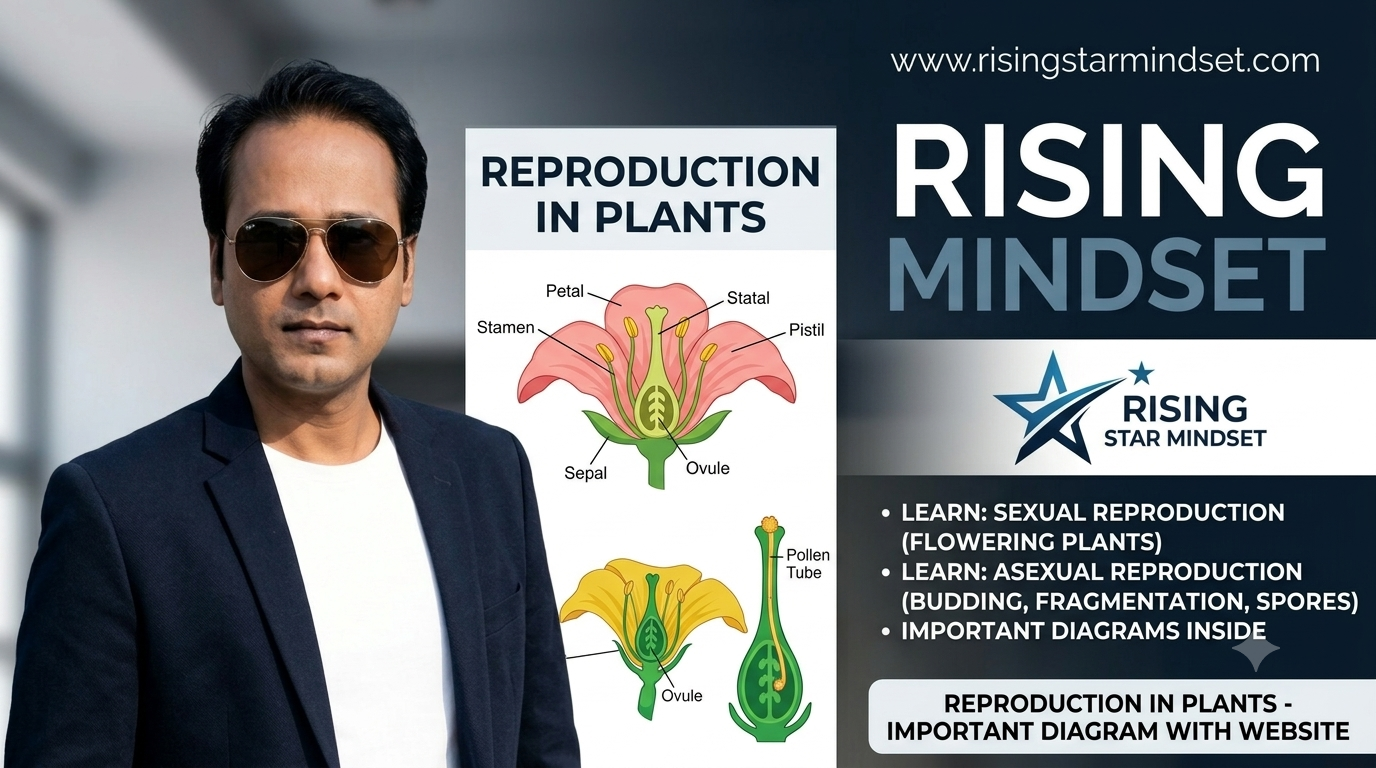
Reproduction in Plants (पौधों में जनन)
Table of Contents
- Introduction
- What is Reproduction?
- Modes of Reproduction in Plants
- Asexual Reproduction
- Vegetative Propagation
- Budding
- Fragmentation
- Spore Formation
- Sexual Reproduction in Plants
- Parts of a Flower
- Pollination
- Fertilization
- Seed and Fruit Formation
- Seed Dispersal
- Importance of Reproduction
- Key Points
- Abbreviations
- Frequently Asked Questions (FAQs)
- Conclusion
Introduction | परिचय ( Reproduction in Plants )
Plants are living organisms. Like all living beings, plants also produce new plants of their own kind. This process is called reproduction. ( Reproduction in Plants )
पौधे भी जीवित प्राणी हैं। सभी जीवों की तरह पौधे भी अपने जैसे नए पौधे उत्पन्न करते हैं। इस प्रक्रिया को जनन (Reproduction) कहते हैं।
What is Reproduction? | जनन क्या है? ( Reproduction in Plants )
English
Reproduction is the biological process by which living organisms produce new individuals of their own kind.
हिन्दी
वह प्रक्रिया जिसके द्वारा जीव अपने समान नए जीवों को उत्पन्न करते हैं, जनन (Reproduction) कहलाती है।
Example
- Mango plant → New mango plant
- Rose plant → New rose plant
Modes of Reproduction in Plants
पौधों में जनन के प्रकार
Plants reproduce in two ways:
1. Asexual Reproduction (अलैंगिक जनन)
Only one parent is involved.
2. Sexual Reproduction (लैंगिक जनन)
Two reproductive cells take part in reproduction.
Asexual Reproduction
अलैंगिक जनन
English
A new plant is produced from a single parent without the formation of seeds.
हिन्दी
जब एक ही जनक पौधे से बिना बीज के नया पौधा बनता है तो उसे अलैंगिक जनन कहते हैं।
Types
- Vegetative Propagation
- Budding
- Fragmentation
- Spore Formation
Vegetative Propagation
वानस्पतिक प्रवर्धन
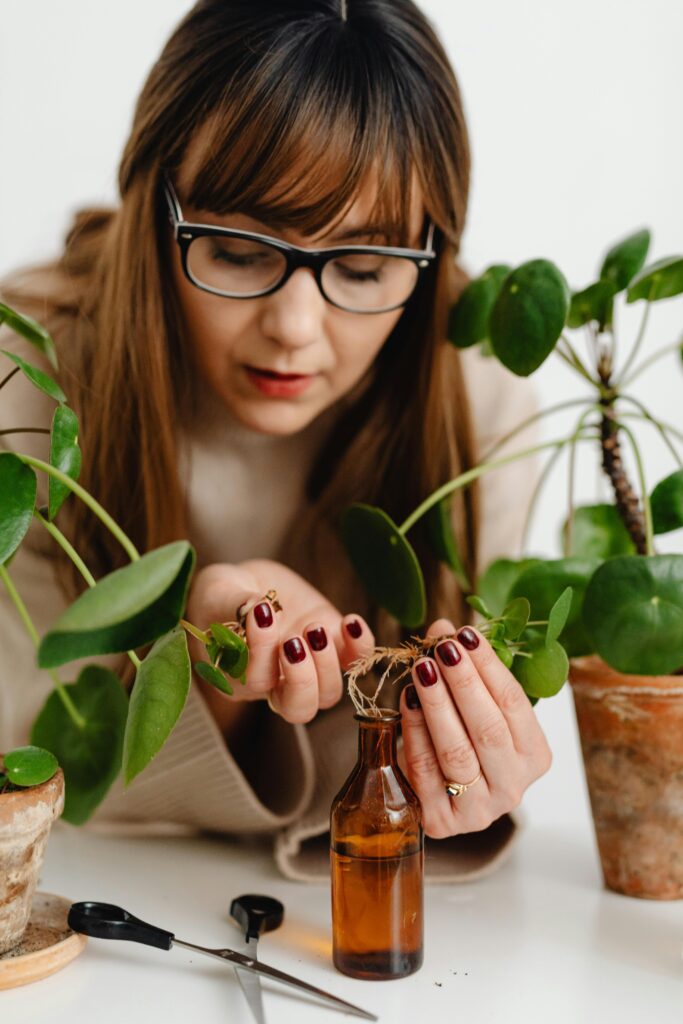
English
New plants grow from roots, stems, or leaves.
हिन्दी
जब पौधे की जड़, तना या पत्ती से नया पौधा बनता है तो इसे वानस्पतिक प्रवर्धन कहते हैं।
Examples
| Plant | Vegetative Part |
|---|---|
| Potato | Stem |
| Ginger | Stem |
| Onion | Bulb |
| Bryophyllum | Leaf |
| Sugarcane | Stem |
Advantages
- Faster growth
- Identical plants
- Useful for agriculture
लाभ
- तेजी से पौधे तैयार होते हैं।
- पौधे समान गुणों वाले होते हैं।
- कृषि में उपयोगी है।
Budding
मुकुलन
English
A small bud develops on the parent body and grows into a new organism.
हिन्दी
जनक शरीर पर एक छोटी कली (Bud) विकसित होती है जो आगे चलकर नया जीव बनती है।
Example
- Yeast
Fragmentation
विखंडन
English
The body breaks into pieces and each piece develops into a new organism.
हिन्दी
शरीर के टुकड़े हो जाते हैं और प्रत्येक टुकड़ा नया जीव बन जाता है।
Example
- Spirogyra
Spore Formation
बीजाणु निर्माण
English
Spores are tiny reproductive units that grow into new plants under suitable conditions.
हिन्दी
बीजाणु छोटे जनन कण होते हैं जो अनुकूल परिस्थितियों में नए पौधे बनाते हैं।
Examples
- Fern
- Moss
- Bread mould
Sexual Reproduction in Plants
पौधों में लैंगिक जनन
English
Flowers are the reproductive organs of plants.
हिन्दी
फूल पौधों का जनन अंग होता है।
Parts of a Flower
फूल के भाग
Main Parts
| Part | Function |
|---|---|
| Sepal | Protects flower bud |
| Petal | Attracts insects |
| Stamen | Male reproductive part |
| Pistil | Female reproductive part |
Male Reproductive Part (Stamen)
पुंकेसर
Consists of
- Anther
- Filament
Function
Produces pollen grains.
Female Reproductive Part (Pistil)
स्त्रीकेसर
Consists of
- Stigma
- Style
- Ovary
Function
Produces ovules.
Pollination
परागण
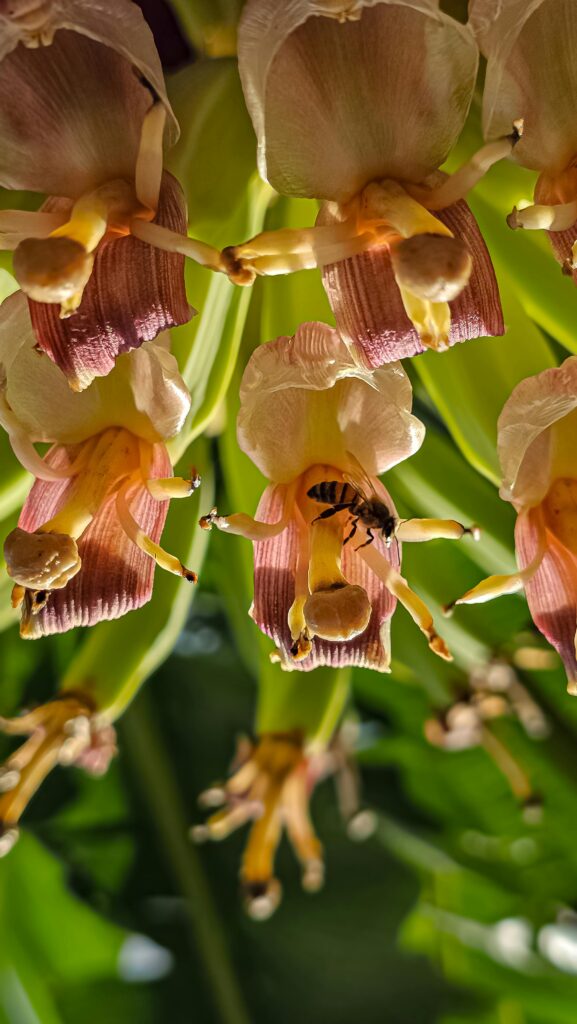
Definition
Transfer of pollen grains from anther to stigma is called pollination.
हिन्दी
परागकणों का पुंकेसर से स्त्रीकेसर के वर्तिकाग्र (Stigma) तक पहुँचना परागण कहलाता है।
Types
1. Self-Pollination
Same flower or same plant.
2. Cross-Pollination
Different flowers of the same species.
Agents of Pollination
- Wind (वायु)
- Water (जल)
- Insects (कीट)
- Birds (पक्षी)
Fertilization
निषेचन
English
Fusion of male and female reproductive cells is called fertilization.
हिन्दी
नर एवं मादा जनन कोशिकाओं के मिलन को निषेचन कहते हैं।
Process
Pollen Grain
      ↓
    Stigma
      ↓
Pollen Tube
      ↓
    Ovule
      ↓
Fertilization
Seed and Fruit Formation
बीज एवं फल का निर्माण
English
After fertilization:
- Ovule becomes seed.
- Ovary becomes fruit.
हिन्दी
निषेचन के बाद:
- बीजांड → बीज
- अंडाशय → फल
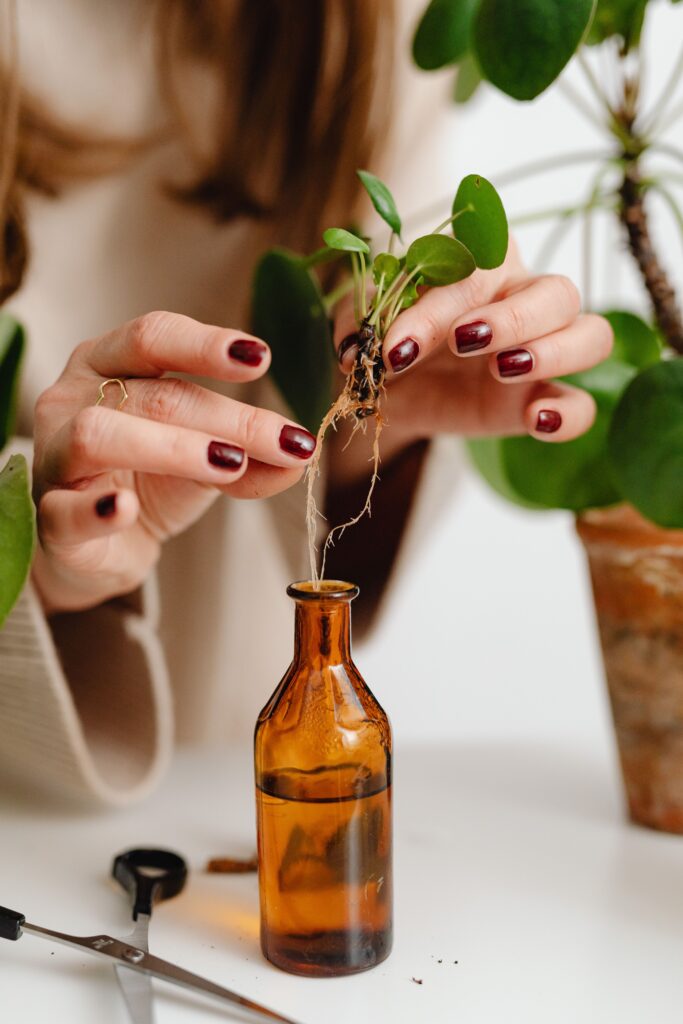
Seed Germination
बीज अंकुरण
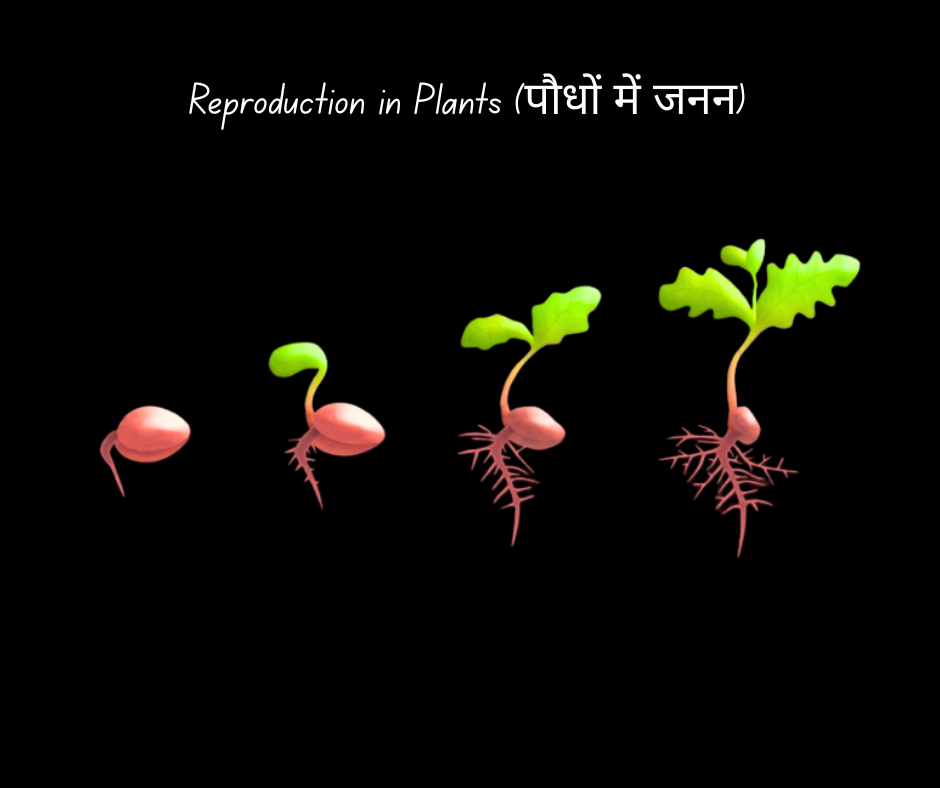
Conditions Required
- Water
- Air
- Suitable temperature
हिन्दी
बीज अंकुरण के लिए आवश्यक है:
- जल
- वायु
- उचित तापमान
Seed Dispersal
बीजों का फैलाव
Definition
Movement of seeds away from the parent plant.
Methods
| Method | Example |
|---|---|
| Wind | Cotton |
| Water | Coconut |
| Animals | Xanthium |
| Explosion | Pea |
Importance
- Reduces competition.
- Helps plants spread to new areas.
Key Points for Revision
- Reproduction helps maintain plant species.
- Two modes: Sexual and Asexual
- Vegetative propagation occurs through root, stem, and leaf.
- Flower is the reproductive organ.
- Stamen is male reproductive part.
- Pistil is female reproductive part.
- Pollination precedes fertilization.
- Ovule becomes seed.
- Ovary becomes fruit.
- Seed dispersal helps plants spread.
Abbreviations
| Abbreviation | Full Form |
|---|---|
| VP | Vegetative Propagation |
| SR | Sexual Reproduction |
| AR | Asexual Reproduction |
| PG | Pollen Grain |
| SG | Seed Germination |
Frequently Asked Questions (FAQs)
Q1. What is reproduction?
Reproduction is the process of producing new organisms of the same kind.
जनन वह प्रक्रिया है जिससे नए जीव उत्पन्न होते हैं।
Q2. What is vegetative propagation?
Production of new plants from roots, stems, or leaves.
जड़, तना या पत्ती से नए पौधे बनने की प्रक्रिया।
Q3. Which part of the flower produces pollen grains?
Anther (परागकोष)
Q4. What is pollination?
Transfer of pollen grains from anther to stigma.
Q5. Name two agents of pollination.
- Wind
- Insects
Q6. What happens after fertilization?
Ovule becomes seed and ovary becomes fruit.
Q7. Why is seed dispersal important?
It reduces competition and helps plants grow in new places.
Conclusion
Reproduction is an essential life process that ensures the continuation of plant species. Plants reproduce through both asexual and sexual methods. Flowers play a vital role in sexual reproduction, while vegetative propagation provides a quick way of producing new plants. Understanding pollination, fertilization, seed formation, and seed dispersal helps students build a strong foundation in biology.
हमें यह समझना चाहिए कि जनन पौधों के अस्तित्व और उनकी प्रजातियों को बनाए रखने के लिए अत्यंत आवश्यक है। परागण, निषेचन, बीज निर्माण तथा बीजों के फैलाव की प्रक्रिया प्रकृति के संतुलन को बनाए रखने में महत्वपूर्ण भूमिका निभाती है।
Suggested Internal Link for Your Website
Read Also: Transportation in Animals and Plants Class 7 Notes and other Class 7 Science chapters on Rising Star Mindset
Copyright © P Kumar | Rising Star Mindset (www.risingstarmindset.com)
1 thought on “Class 7 Reproduction in Plants Complete Notes with Diagrams”