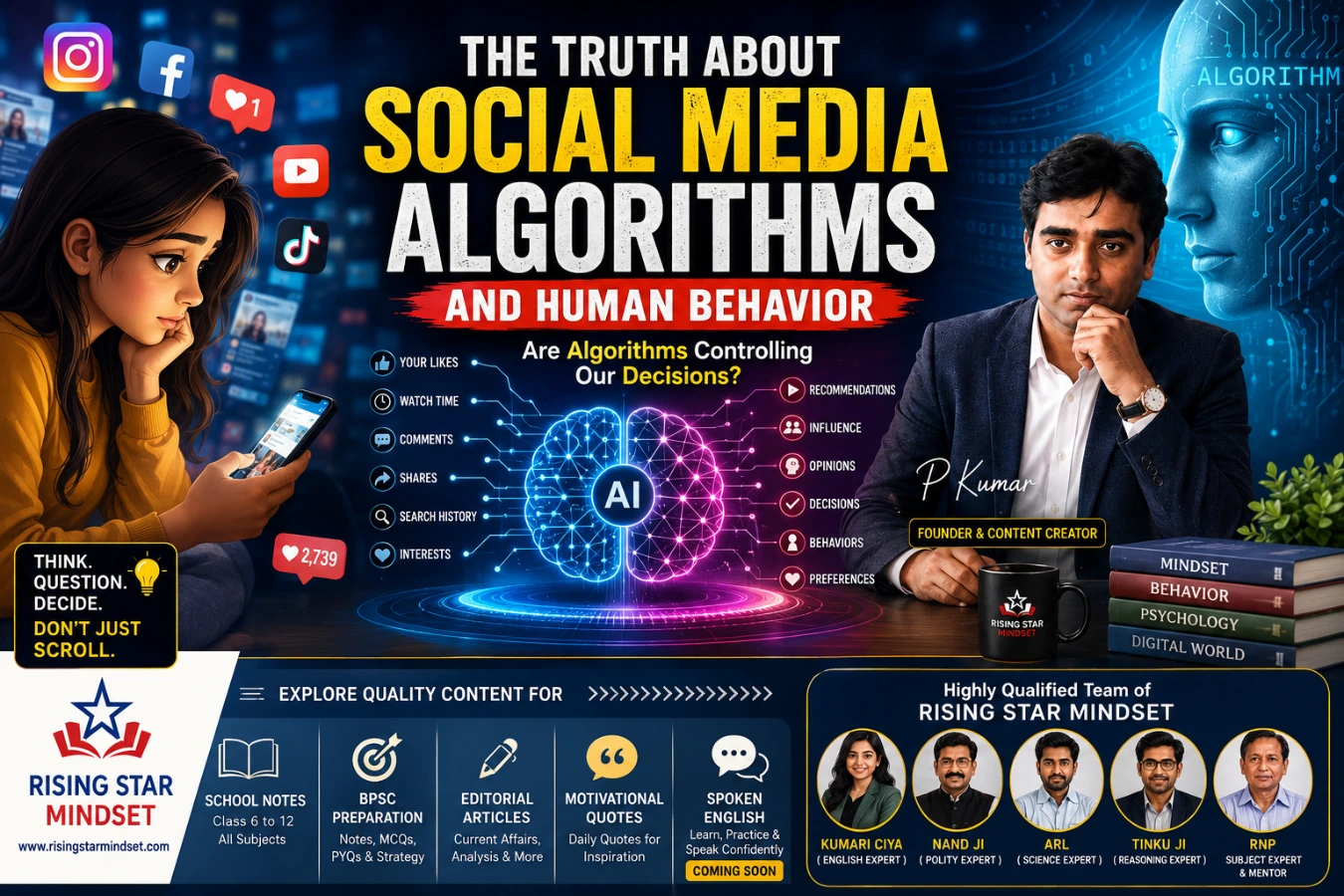
Are Social Media Algorithms Controlling Our Decisions?
How Algorithms Shape Our Thoughts, Choices, and Daily Life
Table of Contents ( Social Media Algorithms )
- Introduction
- What Are Social Media Algorithms?
- How Do Algorithms Work?
- Why Are Algorithms So Powerful?
- Positive Effects of Social Media Algorithms
- Negative Effects on Human Thinking
- Are We Really Making Our Own Decisions?
- The Psychology Behind Algorithms
- How Algorithms Influence Society
- How to Take Back Control
- Key Facts
- Common Abbreviations
- Conclusion
- FAQs
Introduction
Every day, billions of people open social media platforms without realizing that invisible computer programs decide what they see first. These programs are called algorithms. ( Social Media Algorithms )
From Instagram Reels to YouTube recommendations and TikTok videos, algorithms determine which content appears on your screen. Over time, these recommendations can influence your interests, opinions, shopping habits, political views, and even relationships.
But an important question remains:
Are we making our own decisions, or are algorithms quietly making them for us?
This article explores how social media algorithms affect our thinking, the benefits they provide, the risks they create, and how we can use social media more consciously. RELATED TOPIC : Can AI Become a Better Teacher Than Humans?
Introduction (हिंदी)
आज दुनिया भर में अरबों लोग रोज़ सोशल मीडिया का उपयोग करते हैं। लेकिन बहुत कम लोग जानते हैं कि वे जो भी पोस्ट, वीडियो या रील देखते हैं, उनमें से अधिकांश किसी इंसान ने नहीं बल्कि एल्गोरिदम (Algorithm) ने चुने होते हैं।
एल्गोरिदम हमारी पसंद, सर्च हिस्ट्री, लाइक, शेयर और देखने के समय के आधार पर यह तय करते हैं कि हमें आगे क्या दिखाया जाए।
यही कारण है कि आज यह सवाल बहुत महत्वपूर्ण हो गया है—
क्या हम अपने फैसले खुद लेते हैं या सोशल मीडिया एल्गोरिदम हमारी सोच को प्रभावित कर रहे हैं?
What Are Social Media Algorithms?
A social media algorithm is a computer program that decides which posts, videos, or advertisements appear on your screen.
Instead of showing everything in chronological order, platforms analyze your online behavior and predict what you are most likely to watch, like, comment on, or share.
Popular platforms using advanced algorithms include:
- YouTube
- TikTok
- X (Twitter)
सोशल मीडिया एल्गोरिदम क्या हैं?
सोशल मीडिया एल्गोरिदम ऐसे कंप्यूटर प्रोग्राम हैं जो यह तय करते हैं कि आपकी स्क्रीन पर कौन-सा कंटेंट पहले दिखाई देगा।
ये आपके व्यवहार का विश्लेषण करते हैं जैसे—
- आपने क्या देखा
- कितनी देर देखा
- क्या लाइक किया
- क्या शेयर किया
- किसे फॉलो किया
फिर उसी के अनुसार नया कंटेंट दिखाते हैं।
How Do Algorithms Work?
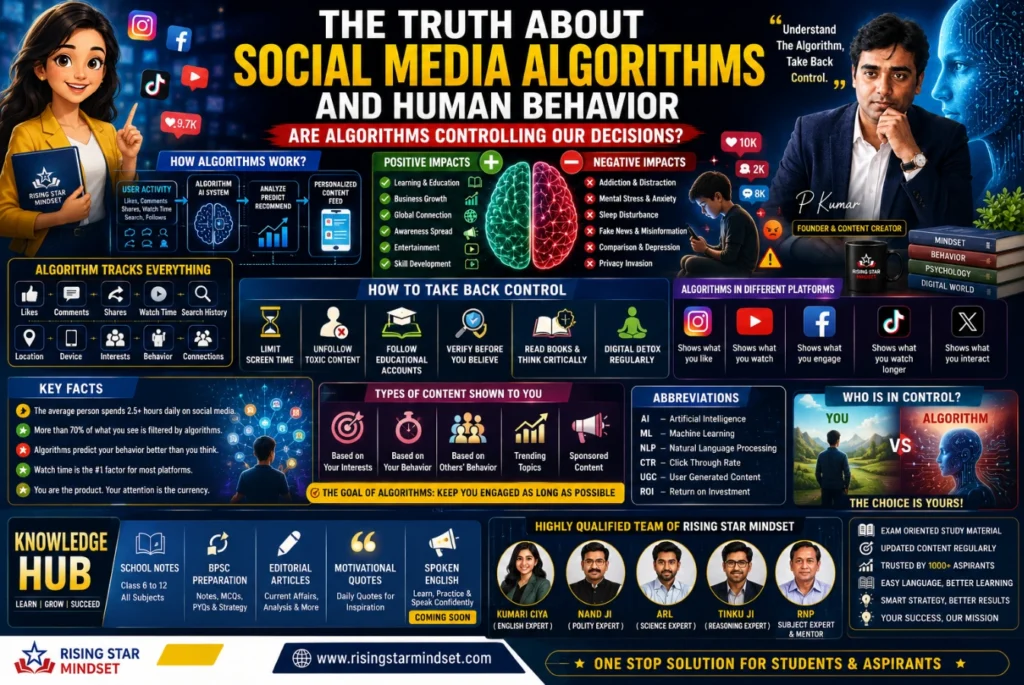
Algorithms collect data from users every second.
They analyze:
- Search history
- Watch time
- Likes
- Comments
- Shares
- Location
- Device
- Interests
Using Artificial Intelligence (AI) and Machine Learning (ML), they predict what content will keep users engaged for the longest time.
Why Are Algorithms So Powerful?
Algorithms influence:
- Shopping decisions
- Political opinions
- Career choices
- Entertainment preferences
- News consumption
- Mental health
- Learning habits
The longer users stay on a platform, the more advertising revenue companies earn.
Positive Effects
Algorithms are not entirely harmful.
Benefits include:
- Personalized learning
- Better educational recommendations
- Faster information
- Improved business marketing
- Discovering useful content
- Finding communities with similar interests
For students, algorithms can recommend educational videos, online courses, and study materials.
Positive Effects (हिंदी)
एल्गोरिदम के कई फायदे भी हैं।
- बेहतर शिक्षा सामग्री
- उपयोगी वीडियो
- नई स्किल सीखने के अवसर
- सही जानकारी तक तेज़ पहुंच
- व्यवसायों को सही ग्राहकों तक पहुंचाने में मदद
यदि सही तरीके से उपयोग किया जाए तो एल्गोरिदम सीखने की प्रक्रिया को आसान बना सकते हैं।
Negative Effects
Algorithms also create several challenges.
These include:
- Addiction
- Echo Chambers
- Confirmation Bias
- Fake News
- Polarization
- Reduced Attention Span
- Anxiety
- Depression
- Fear of Missing Out (FOMO)
Many users unknowingly spend hours scrolling because algorithms continuously provide engaging content.
Are We Really Making Our Own Decisions?
Many experts believe algorithms don’t directly force decisions.
Instead, they gradually influence our thinking.
Repeated exposure to similar content changes:
- Opinions
- Beliefs
- Preferences
- Buying behavior
- Political thinking
This influence is often subtle and difficult to notice.
The Psychology Behind Algorithms
Algorithms use psychological principles such as:
- Dopamine rewards
- Variable rewards
- Curiosity gap
- Emotional triggers
- Social validation
These techniques encourage users to keep returning to the platform.
समाज पर प्रभाव
सोशल मीडिया एल्गोरिदम केवल व्यक्तियों को ही नहीं बल्कि पूरे समाज को प्रभावित करते हैं।
इनका असर देखा जा सकता है—
- चुनावों में
- शिक्षा में
- व्यापार में
- स्वास्थ्य जागरूकता में
- सामाजिक बहसों में
इसलिए डिजिटल साक्षरता (Digital Literacy) आज पहले से अधिक आवश्यक हो गई है।
How to Take Back Control
You can use social media wisely by:
- Limiting screen time
- Following educational creators
- Verifying news before sharing
- Taking regular digital breaks
- Reading books
- Learning offline skills
- Diversifying information sources
Remember:
You should control technology—not let technology control you.
Key Facts
| Topic | Fact |
| Daily Users | Billions of people use social media every day |
| Main Goal | Increase user engagement |
| Technologies | AI, Machine Learning, Big Data |
| Biggest Risk | Addiction and misinformation |
| Biggest Benefit | Personalized learning and content discovery |
Common Abbreviations
| Abbreviation | Full Form |
| AI | Artificial Intelligence |
| ML | Machine Learning |
| FOMO | Fear Of Missing Out |
| UI | User Interface |
| UX | User Experience |
| SEO | Search Engine Optimization |
| CTR | Click Through Rate |
| ROI | Return On Investment |
Conclusion
Social media algorithms are neither completely good nor completely bad.
They are powerful tools designed to personalize our online experience. However, without awareness, they can gradually influence our thoughts, behaviors, and decisions.
The responsibility ultimately lies with us.
By developing critical thinking, verifying information, and maintaining healthy digital habits, we can enjoy the benefits of technology without becoming controlled by it.
निष्कर्ष (हिंदी)
सोशल मीडिया एल्गोरिदम स्वयं अच्छे या बुरे नहीं होते। उनका प्रभाव इस बात पर निर्भर करता है कि हम उनका उपयोग कैसे करते हैं।
यदि हम जागरूक रहकर सोशल मीडिया का उपयोग करें, विभिन्न स्रोतों से जानकारी प्राप्त करें और अपनी सोच को स्वतंत्र रखें, तो हम तकनीक का लाभ उठा सकते हैं बिना उसके प्रभाव में आए।

Frequently Asked Questions (FAQs)
Q1. What is a social media algorithm?
A social media algorithm is a computer program that decides which content users see based on their behavior and interests.
Q2. Do algorithms control our decisions?
Algorithms do not directly control decisions, but they can strongly influence opinions, habits, and choices by repeatedly showing similar content.
Q3. Why do social media platforms use algorithms?
Their main goal is to keep users engaged for longer, improve user experience, and increase advertising revenue.
Q4. Can algorithms spread misinformation?
Yes. If misleading or sensational content receives high engagement, algorithms may recommend it to more users.
Q5. How can I reduce the influence of algorithms?
Limit screen time, verify information, follow diverse and reliable sources, and regularly take breaks from social media.
Q6. Are algorithms always harmful?
No. They also help users discover educational content, useful communities, and personalized learning resources when used responsibly.
Keep Learning, Keep Growing! 🚀
P Kumar | Rising Star Mindset
www.risingstarmindset.com
Together We Will Make The Difference