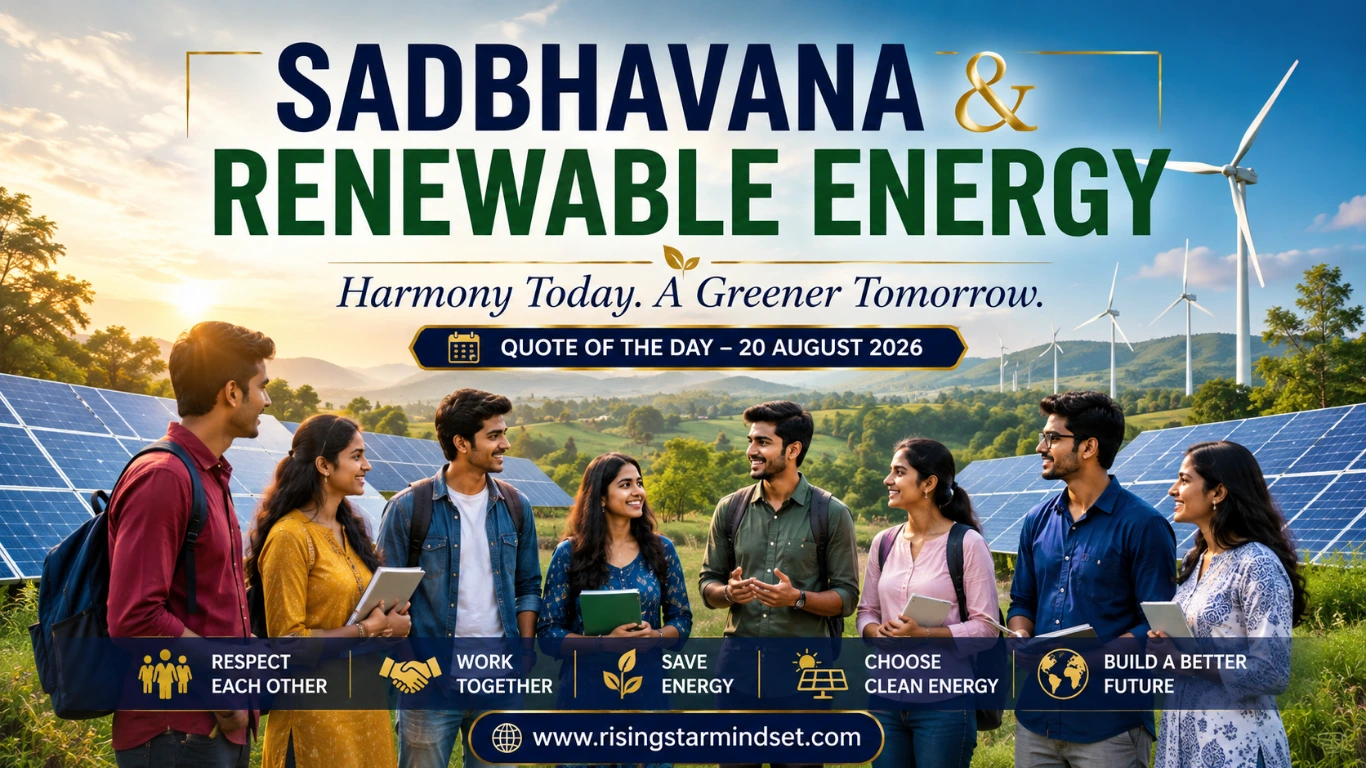
🌿 Quote of the Day – 20 August 2026
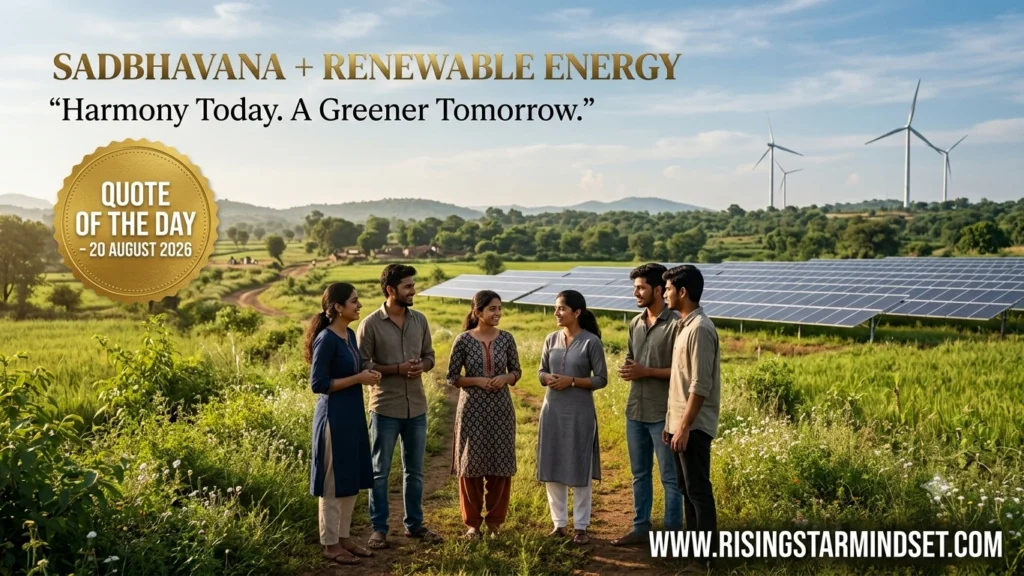
Harmony Today, a Greener Tomorrow
“When we choose harmony over division and clean energy over waste, we build a better tomorrow for everyone.”
🇮🇳 हिन्दी भावार्थ ( Sadbhavana & Renewable Energy )
“जब हम विभाजन के बजाय सद्भावना और अपव्यय के बजाय स्वच्छ ऊर्जा को चुनते हैं, तब हम सभी के लिए एक बेहतर कल का निर्माण करते हैं।”
20 August का दिन भारत में दो meaningful themes से जुड़ता है—Sadbhavana Diwas, जो पूर्व प्रधानमंत्री राजीव गांधी की जयंती पर मनाया जाता है, और Indian Renewable Energy Day से जुड़ा clean-energy awareness message। सरकारी MyBharat के अनुसार Sadbhavana Diwas 20 August को Rajiv Gandhi की birth anniversary के अवसर पर observe किया जाता है।
इसलिए, आज का Quote of the Day केवल motivation तक सीमित नहीं है। बल्कि, यह हमें याद दिलाता है कि एक बेहतर future के लिए समाज में harmony और प्रकृति के प्रति responsibility—दोनों जरूरी हैं।
🧭 आज के विचार की पूरी यात्रा ( Sadbhavana & Renewable Energy)
- आज के Quote का परिचय
- English Explanation
- हिन्दी में विस्तृत व्याख्या
- Sadbhavana Diwas क्या है?
- Rajiv Gandhi Jayanti और सद्भावना का संदेश
- Indian Renewable Energy Day का महत्व
- Harmony और Clean Energy का Connection
- आज के Quote से हमें क्या सीखना चाहिए?
- Students और Young Generation के लिए Message
- Sustainable Lifestyle में छोटे कदम
- Renewable Energy के बारे में महत्वपूर्ण Facts
- Important Abbreviations
- Key Points at a Glance
- Today’s Reflection Questions
- FAQs
- Conclusion – निष्कर्ष
- Previous Post : Mental Health Quote of the Day | Give Your Mind Space
🌱 आज के Quote का मुख्य विचार
Harmony + Responsibility = Better Future
एक peaceful society केवल बड़ी policies से नहीं बनती। इसके बजाय, इसकी शुरुआत हमारे everyday behaviour से होती है—दूसरों का सम्मान करने, differences को स्वीकार करने और मिलकर आगे बढ़ने से।
इसी तरह, clean energy की ओर बढ़ना केवल सरकार या बड़े organisations की responsibility नहीं है। बल्कि, individuals भी energy बचाकर, unnecessary consumption कम करके और sustainable choices अपनाकर योगदान दे सकते हैं।
इस प्रकार, आज के दोनों themes हमें एक common lesson देते हैं:
“A better future begins with better choices today.”
🇬🇧 English Explanation ( Sadbhavana & Renewable Energy )
The quote “When we choose harmony over division and clean energy over waste, we build a better tomorrow for everyone” connects two powerful ideas: social harmony and environmental responsibility.
On one side, harmony reminds us that people may have different opinions, backgrounds and perspectives. However, these differences do not have to create permanent divisions.
Instead, respect, cooperation and empathy can help communities move forward together.
On the other side, clean energy reminds us that the way we produce and consume energy affects the environment and our future.
Therefore, choosing renewable and cleaner sources of energy, while also avoiding unnecessary waste, can support a more sustainable future.
India’s renewable-energy transition has been expanding rapidly. A recent PIB backgrounder reported that India had 220.10 GW of clean power capacity in FY 2024–25, while the country’s solar capacity continued to grow strongly.
Consequently, today’s quote is not simply about celebrating a day. Rather, it encourages us to think about the kind of society and planet we want to leave for the next generation.
🇮🇳 हिन्दी में विस्तृत व्याख्या ( Sadbhavana & Renewable Energy )
आज का विचार हमें दो important responsibilities के बारे में सोचने के लिए प्रेरित करता है।
पहली है—लोगों के बीच सद्भावना बनाए रखना।
दूसरी है—प्रकृति और energy resources का responsible use करना।
हमारे समाज में सभी लोग एक जैसे नहीं होते। हमारी सोच, भाषा, culture और opinions अलग हो सकते हैं। फिर भी, differences का मतलब यह नहीं है कि हम एक-दूसरे के विरोधी बन जाएँ।
इसके बजाय, respect और understanding के साथ differences को स्वीकार किया जा सकता है।
इसी तरह, energy की जरूरत हर व्यक्ति को होती है। लेकिन, energy का इस्तेमाल किस तरह किया जाए, यह भी महत्वपूर्ण है।
Solar, wind और अन्य renewable sources हमें cleaner energy की दिशा में आगे बढ़ने के अवसर देते हैं। भारत की renewable-energy capacity में भी लगातार विस्तार हुआ है; सरकारी आंकड़ों के अनुसार 31 July 2026 तक installed solar capacity 164.59 GW और wind capacity 58.14 GW थी।
इसलिए, आज का message हमें केवल “energy बचाओ” नहीं कहता। बल्कि, यह हमें एक broader idea देता है:
लोगों के बीच harmony और प्रकृति के साथ responsibility—दोनों मिलकर बेहतर भविष्य बनाते हैं।
🤝 Sadbhavana Diwas क्या है? ( Sadbhavana & Renewable Energy )
Sadbhavana Diwas, जिसे Harmony Day के रूप में भी जाना जाता है, भारत में 20 August को observe किया जाता है। यह former Prime Minister Rajiv Gandhi की birth anniversary से जुड़ा है।
इस दिन का मूल संदेश है:
Peace • Unity • Harmony • Understanding
अर्थात, समाज में लोगों के बीच goodwill और mutual respect को बढ़ावा देना।
इसलिए, आज का दिन हमें याद दिलाता है कि development केवल roads, buildings या technology से नहीं होता। बल्कि, एक developed society में social harmony भी महत्वपूर्ण होती है।
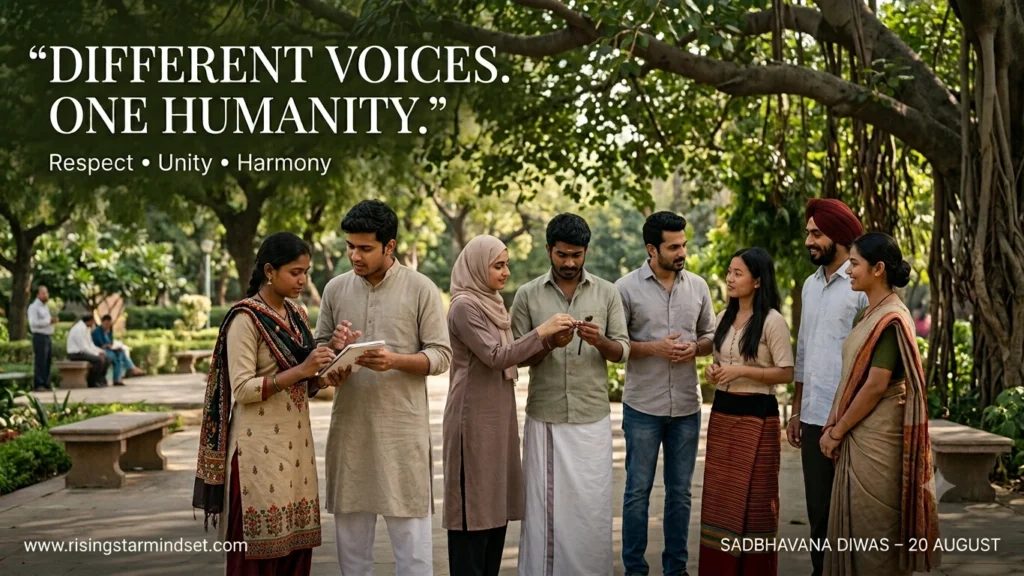
🇮🇳 Rajiv Gandhi Jayanti और सद्भावना का संदेश ( Sadbhavana & Renewable Energy )
20 August को Rajiv Gandhi की birth anniversary के अवसर पर Sadbhavana Diwas observe किया जाता है।
इस संदर्भ में आज का quote एक simple lesson देता है:
Differences can exist, but respect should remain.
हिन्दी:
“मतभेद हो सकते हैं, लेकिन सम्मान बना रहना चाहिए।”
क्योंकि, जब बातचीत की जगह hostility और cooperation की जगह division बढ़ता है, तो society के लिए आगे बढ़ना कठिन हो सकता है।
इसके विपरीत, mutual respect और collaboration लोगों को common goals की ओर ले जा सकते हैं।
☀️ Indian Renewable Energy Day का संदेश ( Sadbhavana & Renewable Energy )
Renewable energy का अर्थ ऐसी energy sources से है जो naturally replenish होती रहती हैं, जैसे:
- ☀️ Solar Energy
- 🌬️ Wind Energy
- 💧 Hydropower
- 🌱 Biomass
- 🌊 कुछ अन्य renewable sources
भारत में renewable energy development को Ministry of New and Renewable Energy (MNRE) lead करती है।
भारत की clean-energy journey में solar और wind दोनों महत्वपूर्ण भूमिका निभा रहे हैं। सरकारी energy factsheet के अनुसार, July 2026 के अंत तक solar और wind capacities में substantial expansion हो चुका था।
इसलिए, Renewable Energy Day का broader message केवल technology के बारे में नहीं है। बल्कि, यह energy security, sustainability और आने वाली generations के लिए responsible development से भी जुड़ा है।
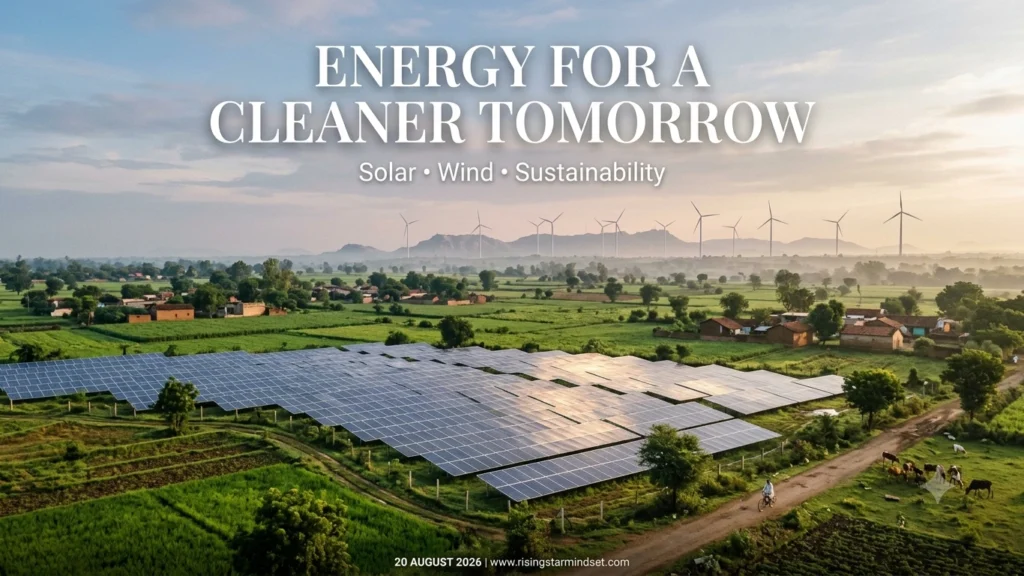
🌍 Harmony और Clean Energy का Connection
पहली नजर में Sadbhavana और Renewable Energy दो बिल्कुल अलग topics लग सकते हैं।
लेकिन, दोनों के बीच एक interesting connection है:
🤝 Harmony
People + People
🌱 Sustainability
People + Planet
एक healthy future के लिए दोनों relationships मजबूत होने चाहिए।
यदि लोग एक-दूसरे के साथ cooperation से रहें, और यदि वे natural resources का भी responsible use करें, तो society अधिक sustainable direction में आगे बढ़ सकती है।
इसलिए: ( Sadbhavana & Renewable Energy )
Harmony creates social strength.
Clean energy supports environmental responsibility.
Together, they create a stronger future.
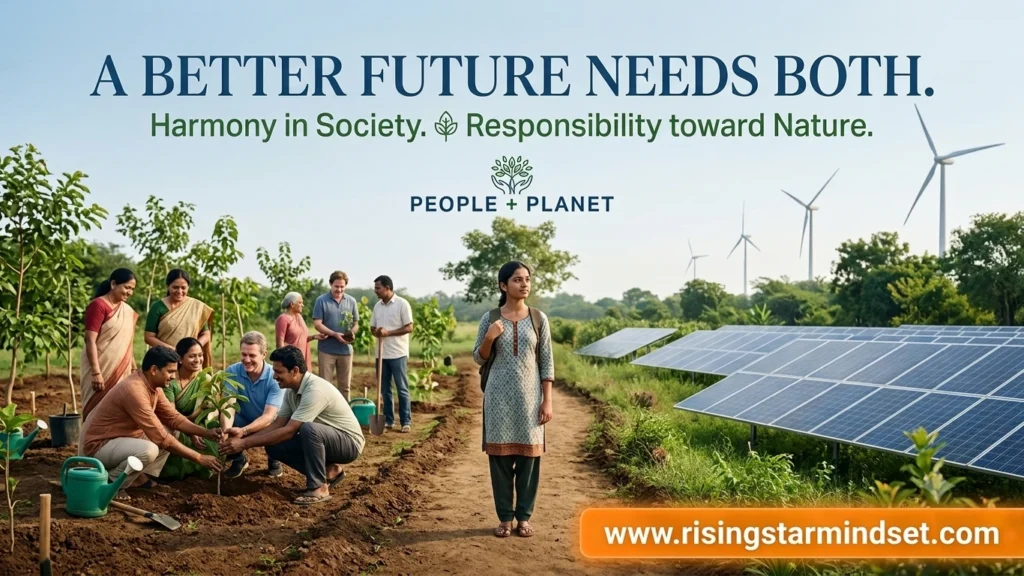
🎓 Students और Young Generation के लिए Message
आज के students केवल future citizens नहीं हैं। बल्कि, वे future decision-makers, professionals, innovators और leaders भी होंगे।
इसलिए, आज से ही दो habits develop की जा सकती हैं:
🤝 People के लिए: ( Sadbhavana & Renewable Energy )
- दूसरों की opinions का सम्मान करें।
- Differences को समझने की कोशिश करें।
- बिना जरूरत arguments को conflicts में न बदलें।
- Teamwork को importance दें।
- किसी को उसकी background के कारण judge न करें।
🌱 Planet के लिए: ( Sadbhavana & Renewable Energy )
- जरूरत न होने पर lights और appliances बंद करें।
- Water waste न करें।
- Unnecessary consumption कम करें।
- Reusable products को preference दें।
- Renewable energy के बारे में सीखें।
इस तरह, छोटी habits future में बड़े impact का हिस्सा बन सकती हैं।
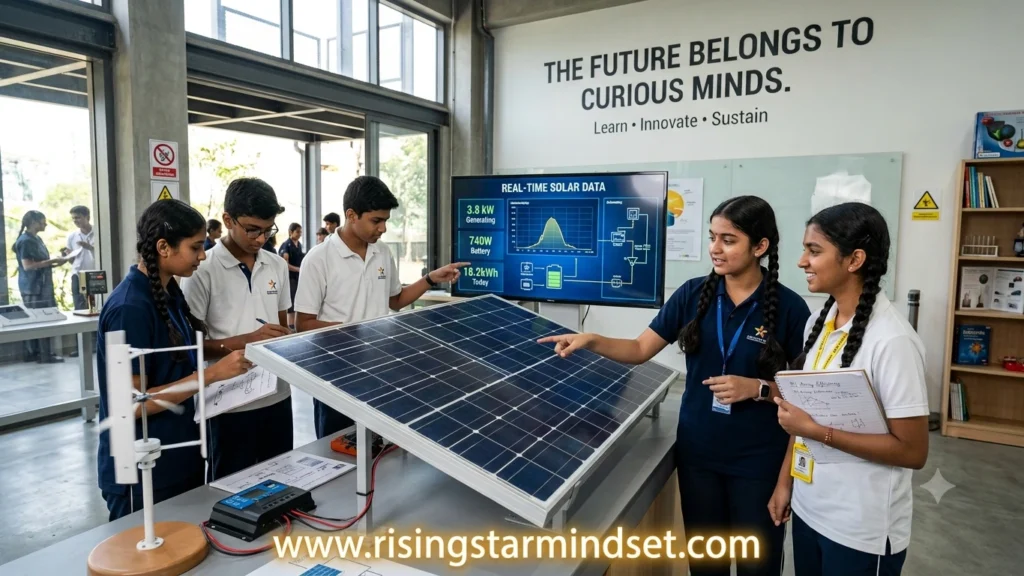
⚡ Sustainable Lifestyle में छोटे कदम (Sadbhavana & Renewable Energy )
Renewable energy केवल solar panels लगाने तक सीमित नहीं है।
बल्कि, energy awareness रोजमर्रा की habits से भी शुरू हो सकती है।
💡 1. Save Electricity
जब जरूरत न हो, lights और electronics बंद करें।
☀️ 2. Learn About Solar Energy
Solar power कैसे काम करता है, यह समझें।
🔌 3. Avoid Energy Waste
Devices को unnecessarily charging पर न छोड़ें।
🚲 4. Choose Efficient Travel When Possible
जहाँ practical हो, walking, cycling या public transport जैसे options consider करें।
♻️ 5. Reduce Waste
कम consumption और responsible disposal को routine का हिस्सा बनाएं।
हालाँकि, हर व्यक्ति हर sustainable action तुरंत नहीं अपना सकता। फिर भी, awareness और छोटे practical changes एक useful beginning हो सकते हैं।
📊 Renewable Energy: कुछ महत्वपूर्ण Facts (Sadbhavana & Renewable Energy )
भारत की renewable-energy growth के बारे में recent government data कुछ interesting figures दिखाता है:
- July 2026 के अंत तक India’s installed solar capacity 164.59 GW थी।
- उसी समय wind capacity 58.14 GW थी।
- Government data के अनुसार India की renewable-energy expansion में solar अब सबसे बड़ा component है।
- PIB के अनुसार, India renewable-energy installed capacity में global ranking में भी ऊपर आया है।
इसलिए, renewable energy अब केवल future technology का विषय नहीं है। बल्कि, यह India’s present energy transition का महत्वपूर्ण हिस्सा बन चुकी है।
📚 Important Abbreviations ( Sadbhavana & Renewable Energy )
| Abbreviation | Full Form | हिन्दी अर्थ |
| RE | Renewable Energy | अक्षय ऊर्जा |
| MNRE | Ministry of New and Renewable Energy | नवीन एवं नवीकरणीय ऊर्जा मंत्रालय |
| GW | Gigawatt | ऊर्जा क्षमता की इकाई |
| PV | Photovoltaic | प्रकाश से विद्युत उत्पादन तकनीक |
| CO₂ | Carbon Dioxide | कार्बन डाइऑक्साइड |
| SDG | Sustainable Development Goal | सतत विकास लक्ष्य |
| IRENA | International Renewable Energy Agency | अंतर्राष्ट्रीय अक्षय ऊर्जा एजेंसी |
💭 आज के Quote से हमें क्या सीखना चाहिए?
आज का message हमें पाँच important lessons देता है।
1. Respect Differences
हर व्यक्ति की सोच एक जैसी नहीं होगी।
2. Choose Cooperation
Competition के साथ collaboration भी जरूरी है।
3. Reduce Waste
Resources unlimited नहीं हैं।
4. Think Long-Term
आज का decision future को प्रभावित कर सकता है।
5. Lead by Example
दूसरों को बदलने से पहले अपने behaviour में छोटे positive changes लाएँ।
अंततः, change हमेशा बड़े speeches से नहीं आता। कई बार, वह एक छोटे decision से शुरू होता है।
🔎 Today’s Reflection Questions ( Sadbhavana & Renewable Energy )
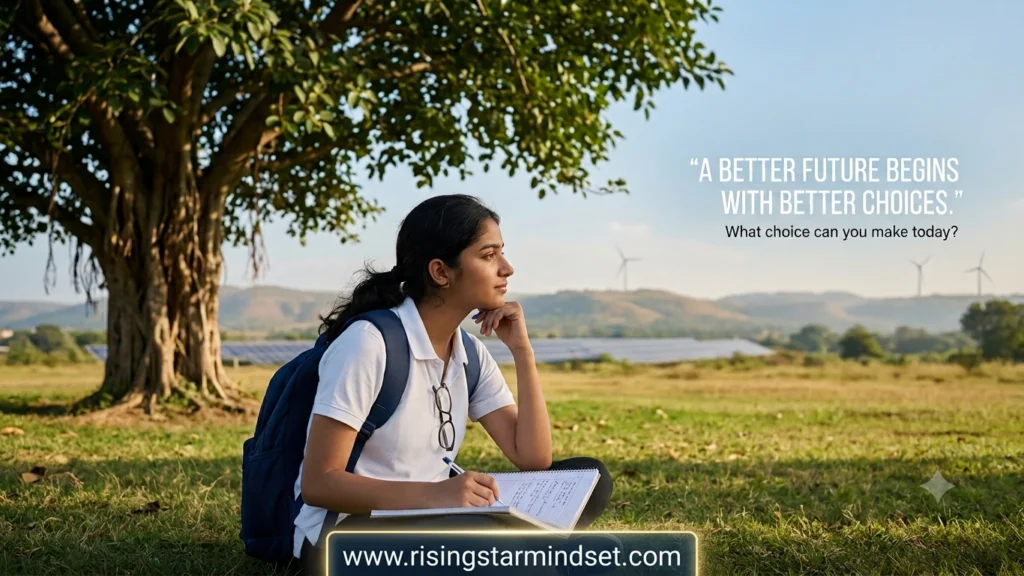
आज खुद से ये questions पूछिए:
🤝 1. क्या मैं differences के बावजूद दूसरों का सम्मान करता हूँ?
🌱 2. क्या मैं अपने daily life में energy waste कम कर सकता हूँ?
☀️ 3. Renewable energy के बारे में मुझे कितना पता है?
💬 4. क्या मैं disagreement को respectful conversation में बदल सकता हूँ?
🌍 5. ऐसा कौन-सा छोटा कदम है जो आज मैं society या environment के लिए उठा सकता हूँ?
इसके बाद, केवल एक question का answer action में बदलने की कोशिश करें।
🌟 Today’s Simple Formula ( Sadbhavana & Renewable Energy )
HARMONY + RESPONSIBILITY + ACTION = BETTER FUTURE
Harmony → लोगों को जोड़ती है।
Responsibility → resources को सुरक्षित रखती है।
Action → ideas को reality में बदलता है।
इसलिए, केवल अच्छे future की उम्मीद करना पर्याप्त नहीं है।
हमें उसे बनाने में भी योगदान देना होगा।
📖 English Learning Corner ( Sadbhavana & Renewable Energy )
आज के topic से जुड़े useful English words:
| English | Hindi |
| Harmony | सद्भावना / सामंजस्य |
| Unity | एकता |
| Respect | सम्मान |
| Renewable | नवीकरणीय / अक्षय |
| Sustainable | टिकाऊ / सतत |
| Conservation | संरक्षण |
| Responsibility | जिम्मेदारी |
| Cooperation | सहयोग |
| Environment | पर्यावरण |
| Future | भविष्य |
Useful Sentences
“We can disagree without disrespecting each other.”
→ “हम एक-दूसरे का अनादर किए बिना असहमत हो सकते हैं।”
“Renewable energy can support a cleaner future.”
→ “अक्षय ऊर्जा एक स्वच्छ भविष्य को support कर सकती है।”
“Small responsible choices can create meaningful change.”
→ “छोटे जिम्मेदार निर्णय meaningful बदलाव ला सकते हैं।”
❓ Frequently Asked Questions ( Sadbhavana & Renewable Energy)
What is Sadbhavana Diwas?
Sadbhavana Diwas is observed in India on 20 August, associated with the birth anniversary of former Prime Minister Rajiv Gandhi. Its theme centres on harmony and goodwill.
Why is 20 August associated with Rajiv Gandhi?
20 August marks the birth anniversary of Rajiv Gandhi and is observed as Sadbhavana Diwas.
What is renewable energy?
Renewable energy comes from naturally replenishing sources such as sunlight, wind and flowing water.
Why is renewable energy important?
It can help diversify energy sources and support a cleaner and more sustainable energy system.
What is India’s renewable-energy progress?
India has expanded its solar, wind, hydro and other renewable-energy capacities significantly. Recent government data shows particularly strong growth in solar and wind capacity.
How can students support renewable energy?
Students can learn about clean energy, reduce unnecessary electricity use, avoid waste and encourage environmentally responsible habits.
What is the connection between Sadbhavana and sustainability?
Both encourage responsible choices for a better future—Sadbhavana focuses on social harmony, while sustainability focuses on responsible use of resources.
🔑 Key Points at a Glance ( Sadbhavana & Renewable Energy )
| 20 August is associated with Sadbhavana Diwas and Rajiv Gandhi’s birth anniversary. |
| Sadbhavana highlights harmony, goodwill and mutual respect. |
| Renewable energy focuses on cleaner and sustainable energy sources. |
| Solar and wind power are important parts of India’s expanding clean-energy capacity. |
| Small daily choices can contribute to responsible energy use. |
| A better future requires both social cooperation and environmental responsibility. |
🌈 Conclusion | निष्कर्ष ( Sadbhavana & Renewable Energy )
🇬🇧 English
Today’s Quote of the Day brings two important ideas together: harmony among people and responsibility toward the planet.
On the one hand, Sadbhavana reminds us to value unity, respect and goodwill. On the other hand, renewable energy reminds us to think beyond today’s needs and consider the environmental impact of our choices.
Therefore, a better future cannot be created by technology alone. Similarly, social progress cannot be measured only by economic growth.
Instead, real progress becomes stronger when people cooperate with one another and use natural resources responsibly.
So, today, don’t just remember the message—practice it.
Respect someone whose opinion is different from yours.
Save some energy.
Reduce some waste.
Learn something about renewable energy.
And, most importantly, encourage others through your actions.
“When we choose harmony over division and clean energy over waste, we build a better tomorrow for everyone.”
🇮🇳 हिन्दी ( Sadbhavana & Renewable Energy )
आज का Quote of the Day हमें दो महत्वपूर्ण विचारों को एक साथ समझने का अवसर देता है—लोगों के बीच सद्भावना और पृथ्वी के प्रति जिम्मेदारी।
एक ओर, सद्भावना हमें unity, respect और cooperation का महत्व समझाती है। दूसरी ओर, अक्षय ऊर्जा हमें यह सोचने के लिए प्रेरित करती है कि हमारी आज की choices आने वाली generations को कैसे प्रभावित कर सकती हैं।
इसलिए, बेहतर भविष्य केवल technology से नहीं बनेगा। इसी तरह, केवल economic development भी पर्याप्त नहीं है।
बल्कि, वास्तविक progress तब मजबूत होती है जब लोग एक-दूसरे के साथ cooperation करें और natural resources का responsible use करें।
इसलिए, आज केवल इस message को पढ़कर आगे न बढ़ें। बल्कि, इसे अपने व्यवहार में एक छोटे action के रूप में शामिल करें।
किसी अलग opinion वाले व्यक्ति का सम्मान करें।
Energy बचाएँ।
Waste कम करें।
Renewable energy के बारे में कुछ नया सीखें।
और, सबसे महत्वपूर्ण, अपने actions से दूसरों को inspire करें।
“जब हम विभाजन के बजाय सद्भावना और अपव्यय के बजाय स्वच्छ ऊर्जा को चुनते हैं, तब हम सभी के लिए एक बेहतर कल का निर्माण करते हैं।”
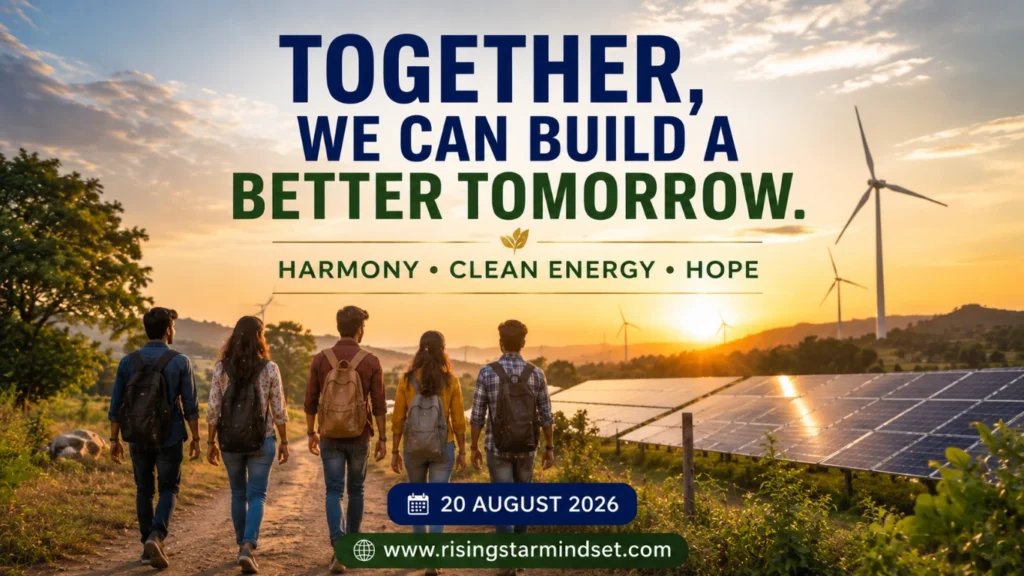
🌿 Today’s Final Reminder ( Sadbhavana & Renewable Energy)
Choose Harmony.
Respect People.
Protect Nature.
Use Energy Wisely.
Build Tomorrow Today.
सद्भावना केवल एक विचार नहीं है।
स्वच्छ ऊर्जा केवल एक technology नहीं है।
दोनों मिलकर एक जिम्मेदार और बेहतर भविष्य की दिशा दिखाते हैं।
💙 Rising Star Mindset
Think High • Rise Higher
📘 Spoken English Course
🏛️ BPSC Preparation
🎓 School Notes
💡 Daily Motivation
Sources & Fact Check: Sadbhavana Diwas information is supported by MyBharat, while renewable-energy figures are based on recent Government of India/PIB and MNRE data.