
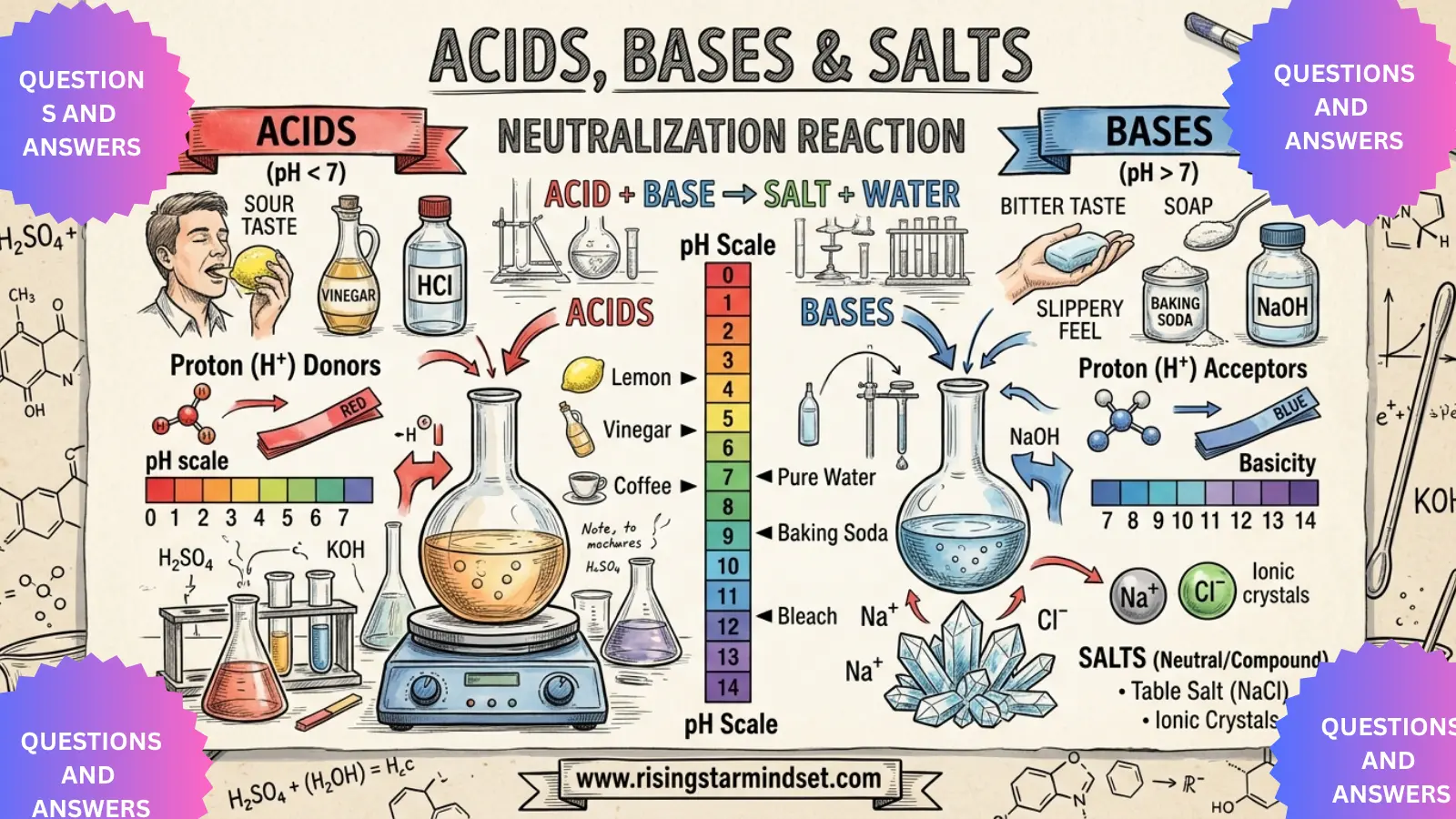
📝 Important Questions & Answers- Acids Bases and Salts
🔹 Short Questions (English) Acids Bases and Salts
Q1. What is an acid? ( Acids Bases and Salts )
👉 A substance that tastes sour and turns blue litmus red.
Q2. What is a base?
👉 A substance that tastes bitter and turns red litmus blue.
Q3. What is neutralization?
👉 Reaction between acid and base to form salt and water.
Q4. Give one use of neutralization.
👉 Antacids reduce stomach acidity.
🔹 लघु प्रश्न (Hindi)
🔹 लघु प्रश्न (Hindi) Acids Bases and Salts
प्र1. अम्ल क्या है?
👉 खट्टा पदार्थ जो नीला लिटमस लाल करता है।
प्र2. क्षार क्या है?
👉 कड़वा पदार्थ जो लाल लिटमस नीला करता है।
प्र3. उदासीनीकरण क्या है?
👉 अम्ल और क्षार की अभिक्रिया जिससे लवण और पानी बनते हैं।
🔹 🔥 Important Exam Questions
🔹 🔥 Important Exam Questions Class 7 CH-02
- Define acids, bases, and salts
- Explain neutralization with example
- Name 2 indicators and their uses
- Write differences between acids and bases
🧪 Real-Life Examples (English)
🔹 Acids in Daily Life
- Lemon, orange → contain acid (sour taste)
- Vinegar → used in food
- Curd → slightly acidic
👉 That’s why these taste sour
🔹 Bases in Daily Life
- Soap → slippery
- Toothpaste → basic (protects teeth)
- Baking soda → used in cooking
🔹 Neutralization in Life
- Stomach acidity → we take antacids (base)
- Bee sting (acidic) → relief with mild base like baking soda
- Wasp sting (basic) → relief with weak acid like vinegar
🧪 दैनिक जीवन के उदाहरण (Hindi) Class 7 CH-02
🧪 दैनिक जीवन के उदाहरण (Hindi)
🔹 अम्ल (Acids)
- नींबू, संतरा → खट्टा
- सिरका → भोजन में
- दही → हल्का अम्लीय
🔹 क्षार (Bases)
- साबुन → फिसलन वाला
- टूथपेस्ट → दांतों की सुरक्षा
- बेकिंग सोडा
🔹 उदासीनीकरण (Neutralization)
- पेट की जलन → एंटासिड
- मधुमक्खी का डंक → बेस से राहत
- ततैया का डंक → अम्ल से राहत
🔬 Easy Home Experiments (Safe)
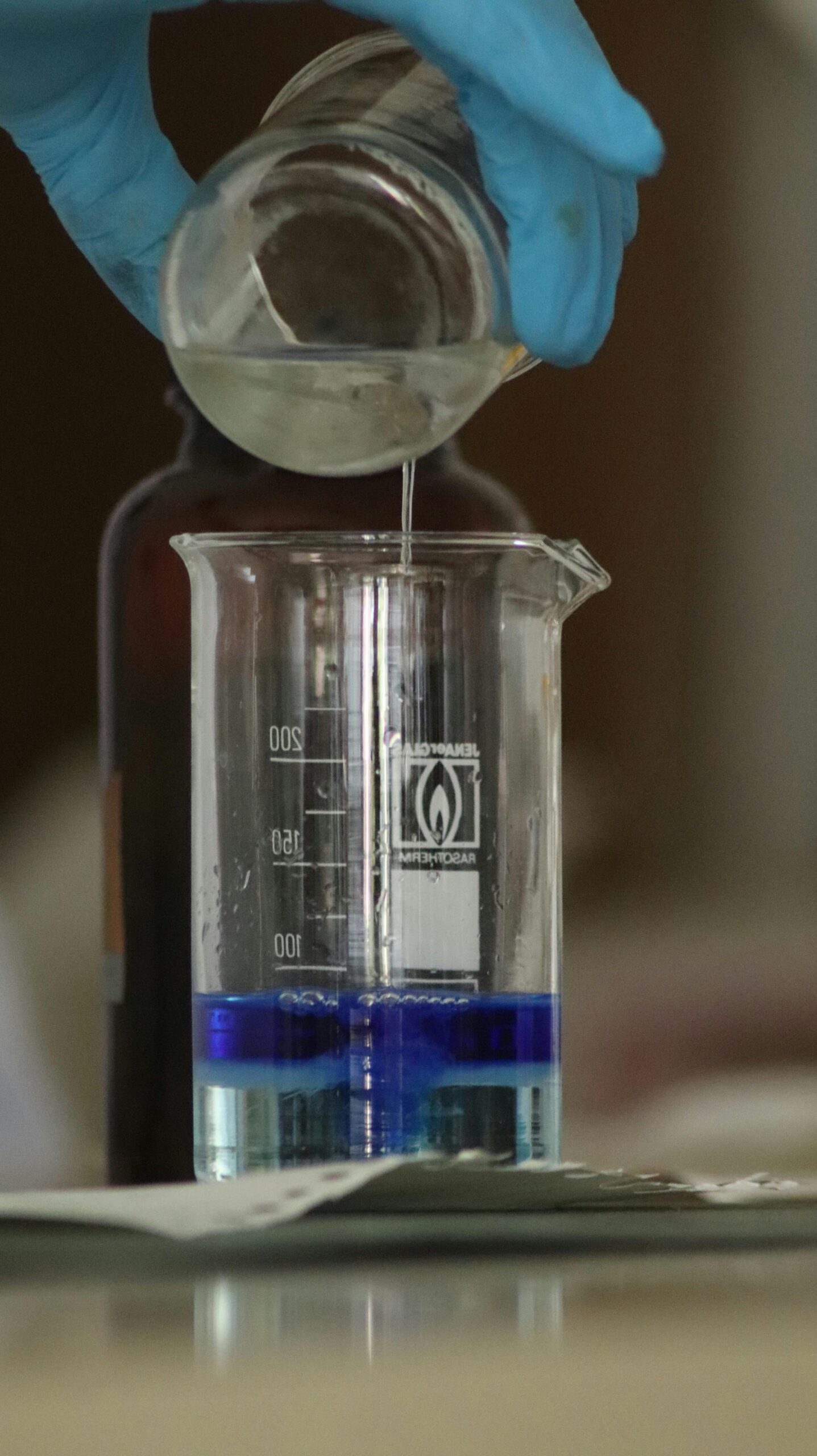
🧪 Experiment 1: Litmus Test
🧾 Materials:
- Blue & Red litmus paper
- Lemon juice
- Soap solution
👉 Steps:
- Put lemon juice on blue litmus
- Put soap solution on red litmus
✅ Result:
- Lemon → blue to red (Acid)
- Soap → red to blue (Base)
🧪 प्रयोग 1 (Hindi)
- नींबू → नीला लिटमस लाल
- साबुन → लाल लिटमस नीला
🧪 Experiment 2: Turmeric Indicator
🧾 Materials:
- Turmeric paste/powder
- Soap solution
👉 Steps:
- Apply turmeric on paper
- Add soap solution
✅ Result:
- Turns reddish → shows base
🧪 प्रयोग 2 (Hindi)
- हल्दी + साबुन → लाल/भूरा रंग
👉 यह क्षार दर्शाता है
🧪 Experiment 3: Neutralization Reaction
🧾 Materials:
- Vinegar (acid)
- Baking soda (base)
👉 Steps:
- Mix both in a bowl
✅ Result:
- Bubbling (gas forms)
- Shows neutralization
🧪 प्रयोग 3 (Hindi)
- सिरका + बेकिंग सोडा
👉 झाग बनता है → उदासीनीकरण
⚠️ Safety Tips
- Don’t taste unknown substances
- Use small quantities
- Wash hands after experiment
🧠 Quick Understanding Trick
- Sour → Acid 🍋
- Slippery → Base 🧼
- Mix → Neutral (Salt + Water)
Acids, Bases and Salts Class 7 – FAQs
1. What are acids?
English: Acids are substances that have a sour taste and turn blue litmus paper red.
हिंदी: अम्ल (Acids) ऐसे पदार्थ हैं जिनका स्वाद खट्टा होता है और जो नीले लिटमस को लाल कर देते हैं।
2. What are bases?
English: Bases are substances that feel soapy and turn red litmus paper blue.
हिंदी: क्षार (Bases) ऐसे पदार्थ हैं जो छूने पर साबुन जैसे लगते हैं और लाल लिटमस को नीला कर देते हैं।
3. What are salts?
English: Salts are compounds formed when an acid reacts with a base.
हिंदी: लवण (Salts) अम्ल और क्षार की अभिक्रिया से बनने वाले यौगिक हैं।
4. What is a neutralization reaction?
English: A neutralization reaction occurs when an acid reacts with a base to form salt and water.
हिंदी: जब अम्ल और क्षार आपस में अभिक्रिया करके लवण और जल बनाते हैं, तो उसे उदासीनीकरण (Neutralization) कहते हैं।
Formula:
Acid + Base → Salt + Water
5. What is the litmus test?
English: Litmus paper is used to identify whether a substance is acidic or basic.
हिंदी: लिटमस पेपर का उपयोग यह पहचानने के लिए किया जाता है कि कोई पदार्थ अम्लीय है या क्षारीय।
6. Why are acids dangerous?
English: Strong acids can burn the skin and damage materials.
हिंदी: प्रबल अम्ल त्वचा को जला सकते हैं और कई पदार्थों को नुकसान पहुँचा सकते हैं।
7. What are some common examples of acids?
English: Lemon juice, vinegar, curd, tamarind, and orange juice contain acids.
हिंदी: नींबू, सिरका, दही, इमली और संतरे के रस में अम्ल पाए जाते हैं।
8. What are some common examples of bases?
English: Soap solution, baking soda, lime water, and toothpaste are common bases.
हिंदी: साबुन का घोल, बेकिंग सोडा, चूने का पानी और टूथपेस्ट सामान्य क्षार हैं।
9. What is the pH scale?
English: The pH scale measures how acidic or basic a substance is. It ranges from 0 to 14.
हिंदी: pH स्केल किसी पदार्थ की अम्लीय या क्षारीय प्रकृति को मापता है। इसका मान 0 से 14 तक होता है।
- pH < 7: Acidic (अम्लीय)
- pH = 7: Neutral (उदासीन)
- pH > 7: Basic (क्षारीय)
10. What is the importance of neutralization in daily life?
English: Neutralization is used in antacids, treating insect stings, agriculture, and wastewater treatment.
हिंदी: उदासीनीकरण का उपयोग एंटासिड, कीट के डंक के उपचार, कृषि तथा अपशिष्ट जल शोधन में किया जाता है।
11. Which indicator is commonly used in laboratories?
English: Litmus, phenolphtha
CONCLUSION
Acids, Bases and Salts play an important role in science as well as daily life. Although acids and bases have different properties, they react together through neutralization to form salt and water. Therefore, understanding this chapter helps students connect science concepts with real-life examples like toothpaste, antacids, vinegar, soap, and baking soda.
Moreover, indicators such as litmus, turmeric, and china rose make it easy to identify acidic and basic substances. The experiments and important questions included in this chapter also help students improve practical knowledge and exam preparation.
By revising these notes regularly, students can easily remember key concepts and score better in examinations. Keep visiting Rising Star Mindset for more Class 7 Science notes, important questions, educational posts, and study materials.
Keep Learning, Keep Growing! 🚀
P Kumar | Rising Star Mindset
www.risingstarmindset.com
Together We Will Make The Difference
2 thoughts on “Acids Bases and Salts Class 7 | Most Important Questions”